Note that if you purchase something via one of our links, including Amazon, we may earn a small commission.
The old factories in Winston-Salem, North Carolina, had potential outside their industrial history. Reusing them preserved materials, avoided landfill waste, and gave the downtown a new life.
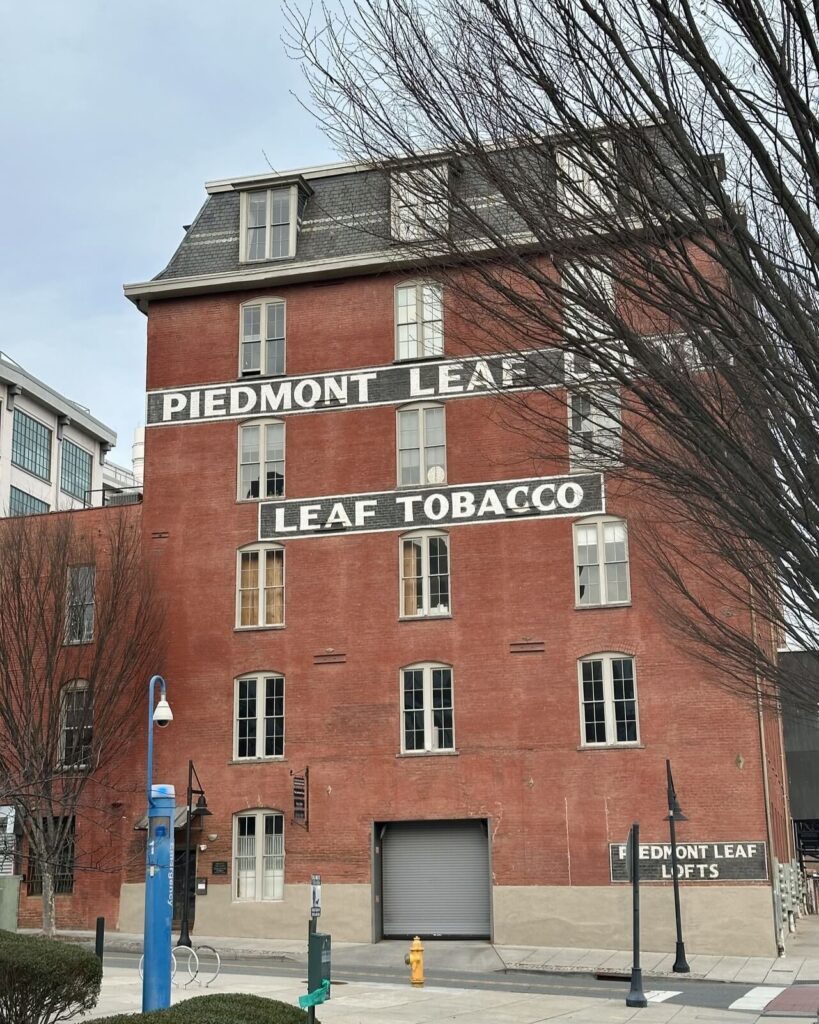
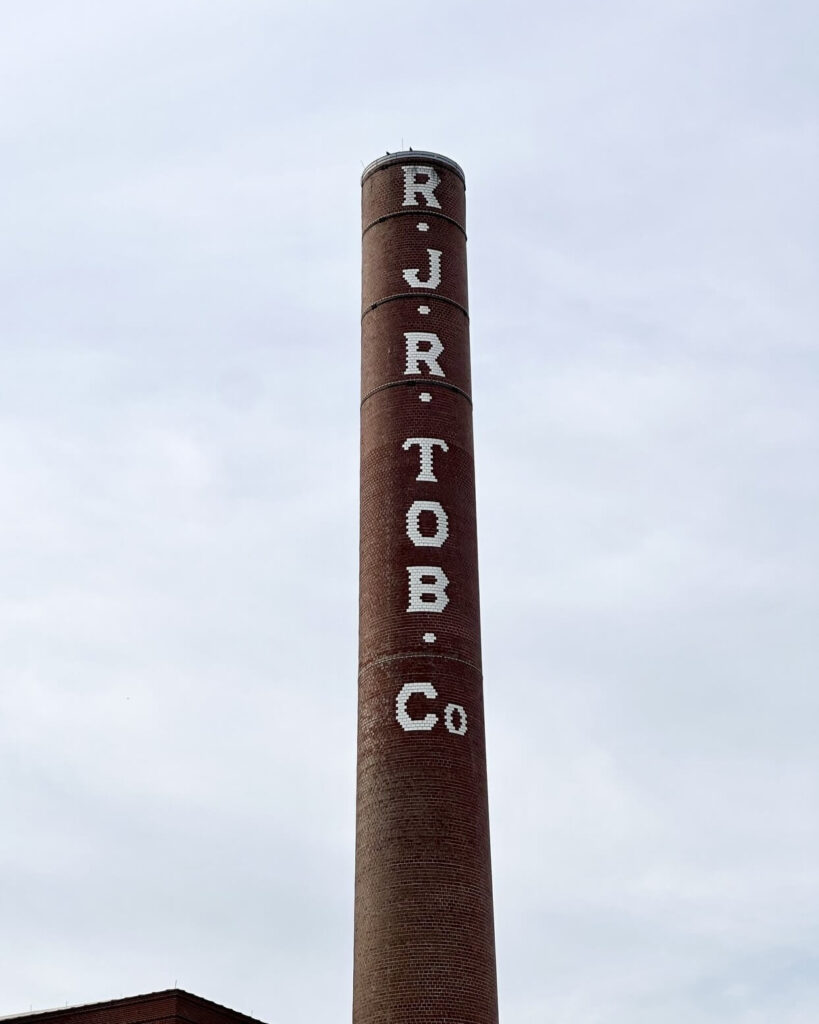
Downtown Winston-Salem, North Carolina, still carries the architectural blueprint of the manufacturing industry that built it. R.J. Reynolds, creator of Camel cigarettes, once filled entire city blocks with brick factories and warehouses for his tobacco company. But when production left town, downtown Winston-Salem inherited huge buildings that stood empty for years.
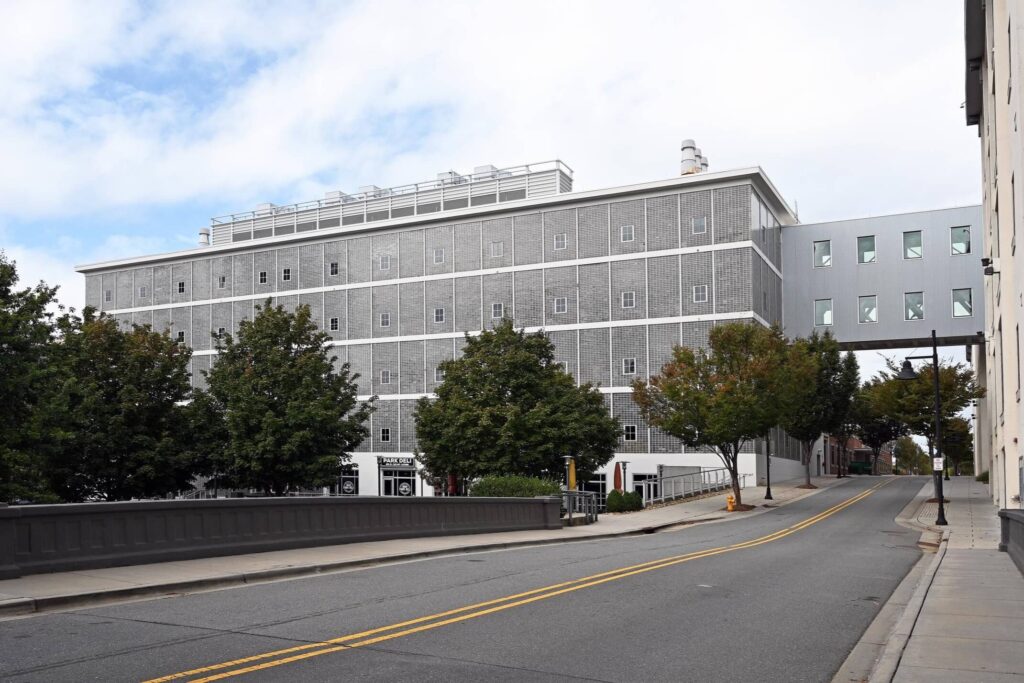
Now, after decades of neglect, some of those buildings have been revitalized. One of them, Wake Forest Biotech Place, was recently converted into a laboratory and office complex connected to the local university and its medical school.
Historic tax credits helped finance the adaptive reuse project, but the 1937 building supplied the pieces of its own repair. Its façade alone contained nearly 66,000 glass blocks, and when crews needed replacements during the renovations, they found additional pieces inside the old factory. They removed salvageable blocks from a wall that would be hidden and paired them with the others found in storage.
And that’s not the only thing they repurposed: Inside, crews incorporated original maple floorboards and kept several columns.

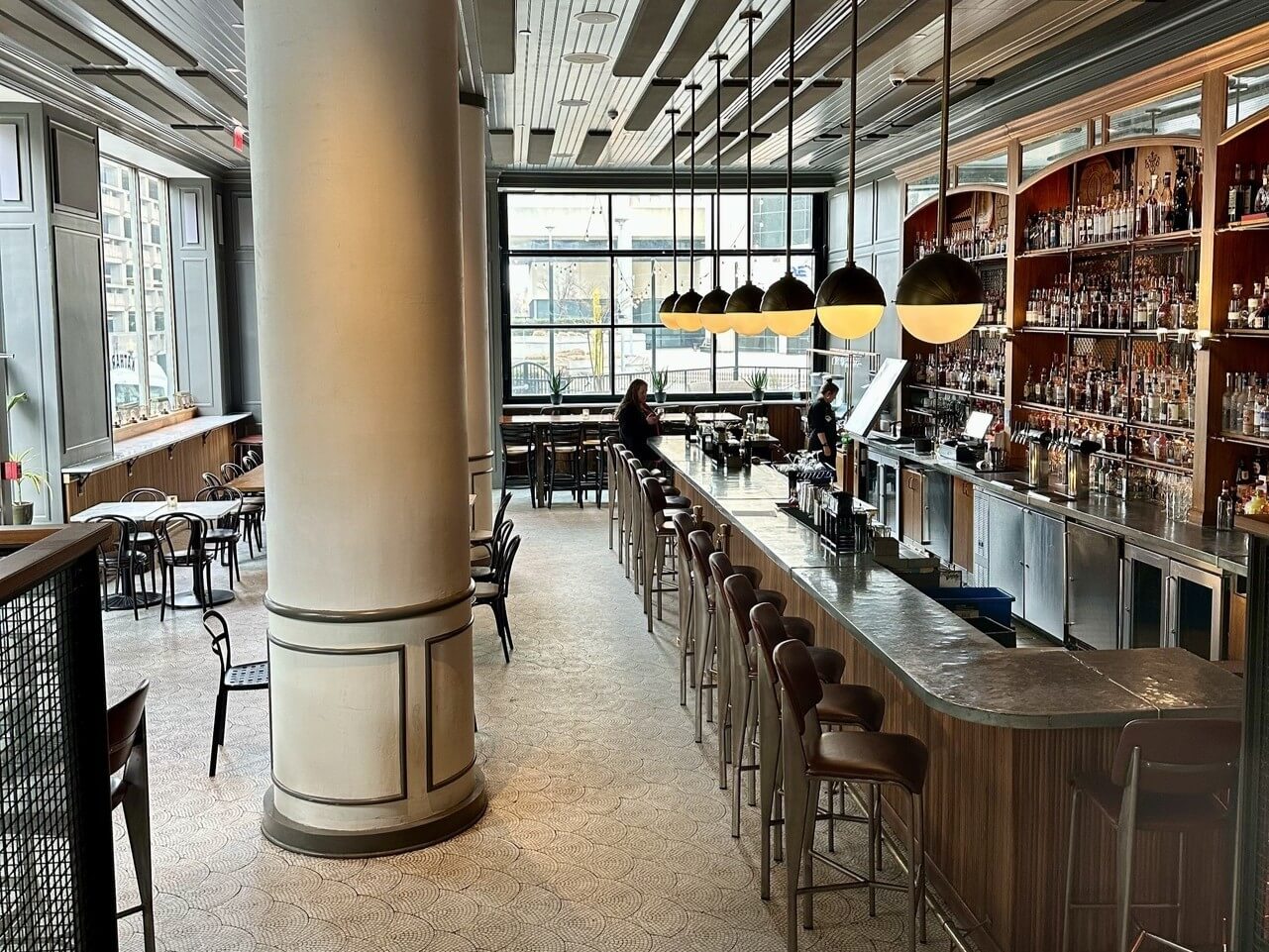
The building sits in the Innovation Quarter, also known as the iQ, a downtown research district forged from the remnants of the former Reynolds manufacturing complex. Biotech Place is not the only repurposed space: Former tobacco-production buildings in the iQ now hold laboratories, classrooms, offices, restaurants, and community spaces, many of which maintained existing usable walls, floors, and roofs. Every piece spared meant less landfill waste and less new building materials to manufacture.
The Benefits of Old Bones
The iQ is just one part of a broader reuse effort in the city. Elsewhere downtown, the old Reynolds headquarters became The Cardinal Hotel, and the Nissen Building now holds apartments above ground-floor businesses. (The Reynolds’ own family estate, now a public museum and botanic garden, is another example of adaptive reuse in Winston-Salem. Read more here.)
Asheville, North Carolina–based architect Miles Smith says old buildings come with assets new projects would have to create, such as established locations, utility connections, and nearby transportation. Their large windows and exposed structures can also be expensive to reproduce.
Reusing buildings also keeps the carbon already spent to make them. Brick, concrete, and steel carry emissions from extraction, manufacturing, delivery, and construction. Tear them down, and a second emissions cycle begins with the replacement.
A National Trust for Historic Preservation study found that a new, energy-efficient building can take 10 to 80 years to overcome the climate effects of demolition and construction. Robert Crawshaw of Work Program Architects, a firm whose work includes adaptive reuse projects, adds that development on untouched land often requires new roads and utilities, increases runoff, and destroys habitat.
Perhaps most valuable, though, is the history the old industrial buildings carry. In Winston-Salem, they were “prominent factories, employing the loved ones and ancestors of those who still reside in the area,” Smith says. “They demonstrate the history of the city, creating a window into the past.”
Overcoming the Hurdles to Reuse
Reuse can have expensive surprises. The crew working on Biotech Place, for example, had to lift the third floor by two feet to make room overhead for the fume hoods and ventilation that labs require.
“The hard parts are usually invisible from the street,” said Howard Kozloff, founder of Agora Partners, an urban planning firm in New York City and Los Angeles. Open walls and floors may reveal lead, asbestos, contaminated soil, or structural problems that require remediation before modern systems can go in.
Kozloff says that rehabilitation is often more expensive than building new. The original materials and natural daylight from old buildings’ large windows may justify the cost, but some buildings are too damaged or poorly laid out for modern uses. What’s more, cities often add requirements for projects, making renovations even more difficult.
Winston-Salem’s central business district, however, removed two of the common obstacles. To support the city’s urban development plan, qualifying adaptive reuse projects in the central business zone do not need special zoning approval or a prescribed number of parking spaces.
North Carolina native Celeste Frye, founder and CEO of the urban planning firm Public Works Partners, explains that parking requirements often mean demolishing nearby buildings to make room for cars. She noted that many of Winston-Salem’s brick factories were built in clusters that made the city easily walkable. Eliminating parking minimums helps preserve the surrounding neighborhood and that walkability. When businesses and apartments connect via pedestrian routes, it reduces the need to drive.
Winston-Salem shows what can happen when a city sees usable material where others might see future rubble. And as Kozloff shared, “Reuse delivers the climate benefit now, not someday.”
What Can You Do?
The experts interviewed for this story suggested several ways residents from all over can make a difference in their communities:
- Form a group to speak with city-planning officials about the environmental and tax benefits of preservation. Build support for adapting unused public buildings on social media or through a historical society.
- Track local planning and zoning agendas, and keep inventory of local buildings and features worth protecting.
- Ask officials to compare the embodied carbon of reuse with the full environmental cost of proposed demolition and replacement projects. Back your pitch for reuse with research around economic development, the tax base, and climate impact.