Note that if you purchase something via one of our links, including Amazon, we may earn a small commission.
The renovated Fowler Clark Epstein Farm in Mattapan provides its neighborhood with fresh food, education, and community activities.
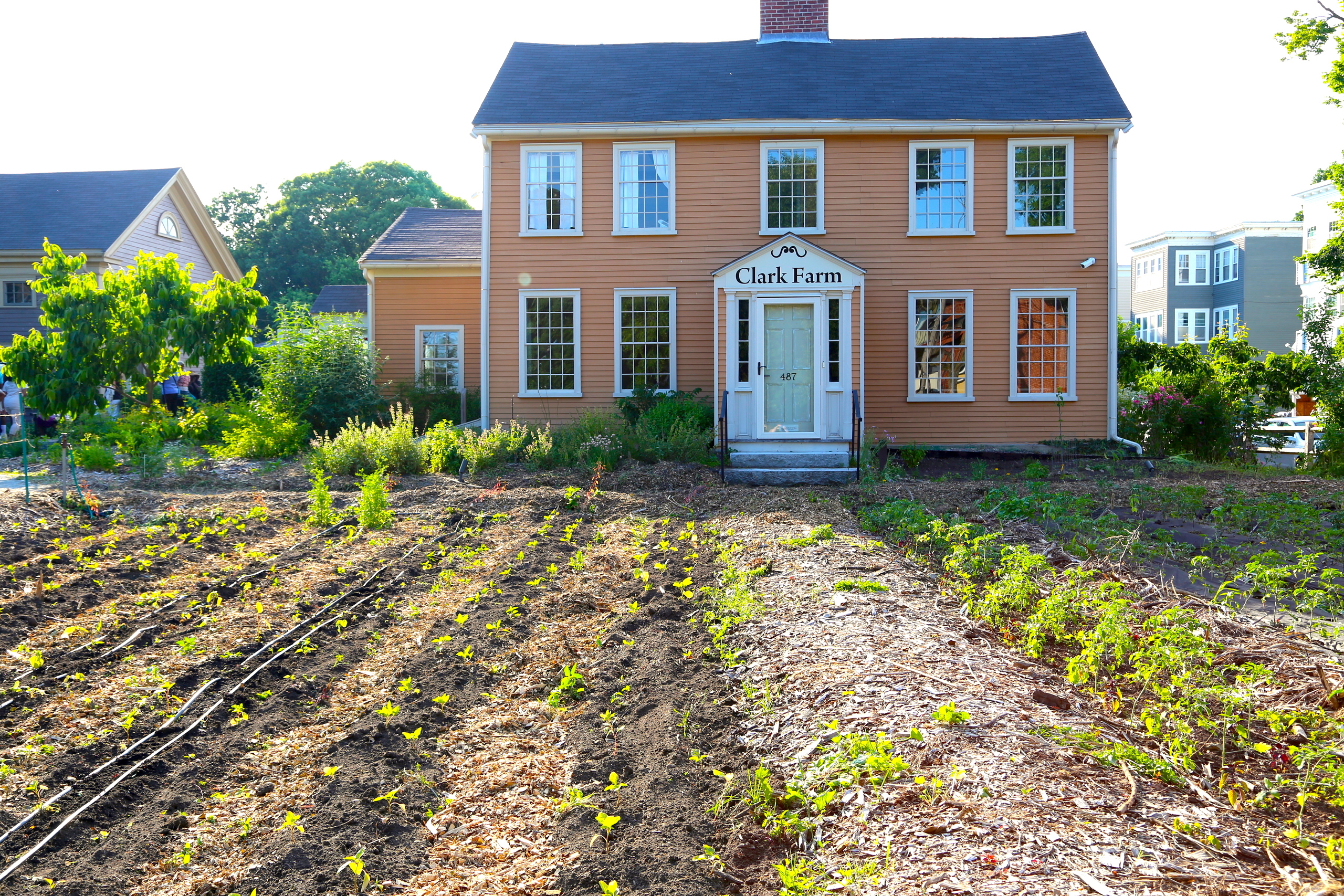
When Pat Spence and her brother were growing up near the Fowler Clark Epstein Farm in Mattapan, they usually hurried past the tumbledown house and overgrown lot because “this was the creepy place,” she said. Now, Spence welcomes visitors to the farm’s restored 18th century house, barn, and grounds. The neat rows of peas, cucumbers, and dozens of other crops demonstrate the vision of the Urban Farming Institute (UFI), where Spence is the President and CEO.
UFI started in 2011 by reclaiming a vacant lot in Dorchester for farming, training locals to garden, and distributing food in the community. UFI now oversees six different sites — three in Dorchester, two in Mattapan, and one in Roxbury.
“Our goal is to get people trained on farming, to bring the food into the market so they can share it with their families and eat better in their own homes. The major pluses are the opportunity for economic development — not only for people to learn how to grow food, but how to take it from the farm to the market in a legitimate business way,” said Angel Mendez, UFI’s interim Board Chair.
At a recent celebration to rededicate the Fowler Clark Epstein Farm, Spence said that given the tremendous development pressure in Boston, “This could have been condos.” Instead, eggplant and purple basil sprout in a greenhouse behind the restored home. Vegetables and raspberry bushes fill its one-acre lot.


The farm is a good example of how UFI addresses social equity and sustainability, establishing a model for urban farming in New England. UFI treats its land as a community asset and welcomes people of all ages to benefit from it.
“Not only do we grow and provide fresh fruits, vegetables, and herbs to those in the community,” said Amber Dickerson, Deputy Executive Director, “but we also acknowledge the power and autonomy that comes with teaching others the importance of growing their own food, in even the smallest of spaces — like a felt bag.”
Fowler Clark Epstein Farm now harvests about 18,000 pounds of produce in a typical year, according to Gregory Basile, Office Administrator. The farm distributes some of this through CSA shares and as occasional gifts to neighbors and volunteers; it sells the rest at the farm from June through November at Farm Stand Fridays, at which visitors can also enjoy arts and cultural activities.
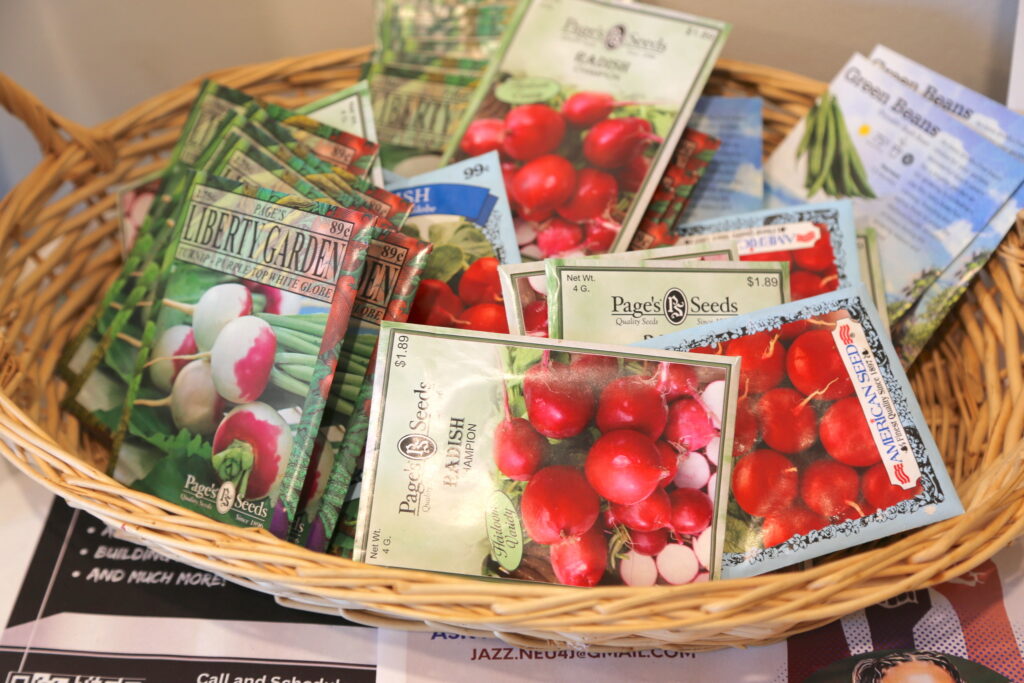
Basile said that the farm likes to focus on, “What do you want to see us grow?” A recent greenhouse sale offered 150 types of seedlings, including callaloo and okra (see recipe below), crops that are culturally relevant to community families with ties to the Caribbean.

“Callaloo is always in demand — there’s never enough,” said Sapher Meyers, a Mattapan neighbor and volunteer at the farm who grew up with this leafy green vegetable in her native Trinidad. She and her late husband, along with their granddaughter, took a training session and worked together to harvest and bundle the callaloo. “[My granddaughter] has been able to learn about growing food and understand how important it is,” Meyers said.
Meyers’ friend, Maureen Reeves, also originally from Trinidad, has volunteered at the farm since 2018. She said that working outdoors to harvest crops like callaloo “makes you feel calm. It’s relaxing.”
The Urban Farming Institute (UFI) purchased Fowler Clark Epstein farm in January of 2024 after leasing it since 2018. Its renovation required cooperation between several groups, including Historic Boston Incorporated, which purchased the land in 2015 and partnered with the Trust for Public Land and the North Bennet Street School to restore it. The farmhouse, which dates back to 1786, when it was part of a 330-acre estate that sprawled into neighboring Dorchester, now houses UFI’s headquarters. The adjacent barn has been transformed into a kitchen, where chefs including Top Chef competitor Valentine Howell Jr. and New England Culinary Arts Training instructor Chris Faison have led cooking demonstrations.
Cooking is just one of the offerings at UFI. The “Grow Series” teaches people the basics of growing: garden bed preparation, crop maintenance, composting, and more. These programs are especially valuable in an urban neighborhood like Mattapan, said UFI board member Greg Maslowe, who also is the Farm Manager at Newton Community Farm. “Children can come here and see where food grows. It’s a more holistic emphasis.”


Through the weekly “Fit at the Farm” series, seniors do yoga and learn about nutrition and other topics of interest. “Yarn in the Barn” invites knitters to come in with their projects, especially during the winter. Artwork from Bostonians including Jeremy “Sobek” Harrison, who grew up in Mattapan, decorates the walls of the barn. At the rededication event, Harrison set up in the farm’s seating area to spray-paint a canvas with a giant ladybug, which will eventually hang indoors.
The rededication also celebrated UFI’s long-term commitment to the neighborhood. Dickerson said, “The Urban Farming Institute is here to stay. This land provides a space for our neighbors to gather peacefully, share stories of their upbringing and what they enjoy eating most, whether from here in the States or back home, wherever that may be. Now we can plan for the future of the Urban Farming Institute based on what our neighbors would like to see from us without ever having to worry about being displaced.”
As the farm adapts to future challenges, such as extreme weather and climate change, its mission to do more than grow crops will remain essential. “We want those who walk onto our farm to walk away with the feeling that their spirits are as full as their bags — with locally grown/sourced fresh fruits and veggies from the farm, of course!” Dickerson said.
Print
RECIPE: Okra Soup
- Yield: Serves 8
Description
Okra, a plant that originated in Ethiopia and produces edible green pods, is one of the most popular vegetables at the Urban Farming Institute. It’s a staple ingredient in gumbo. This soup, courtesy of Volunteer Coordinator Melanie Floyd, uses okra as well as several other fresh vegetables for a hearty, one-dish meal.
Ingredients
- 4 cups chopped tomatoes
- 2 cups shelled lima beans
- 2 cups chopped okra
- 2 cups chopped red potatoes
- 1 cup corn kernels
- 1 cup chopped green beans
- 1/2 cup chopped carrots
- 1 6-oz can tomato paste
- 4 cups chicken stock
- 1 lb ground beef
- 1/2 Tbsp garlic powder
- 1/2 Tbsp celery salt
- 1/2 Tbsp onion powder
- 3 Tbsps butter
- 1 small onion, chopped
- 2 cloves garlic, crushed, or more to taste
Instructions
- Combine the tomatoes, lima beans, okra, potatoes, corn, green beans, carrots, and tomato paste in a large soup pot. Pour stock over the mixture and bring to a boil over medium heat. Reduce the heat and simmer until vegetables begin to soften, about 15 minutes.
- Season the ground beef with garlic powder, celery salt, and onion powder. Set aside.
- Heat the butter in a skillet over medium-high heat. When the butter stops bubbling, add the onion and garlic; cook, stirring, for 1 minute. Spread the ground beef evenly in the pan. Cook until it has a nice brown sear, stirring minimally to end up with mostly medium-sized chunks, 5 to 7 minutes. Pour off excess oil and add the beef, onions, and garlic to the soup pot.
- Bring the soup to a boil; reduce the heat to a simmer, cover, and cook until vegetables are very tender and the mixture is somewhat reduced, 1 to 2 hours.