Note that if you purchase something via one of our links, including Amazon, we may earn a small commission.
The wisdom of the seminal environmentalist — including his conviction that the Earth itself forms a community — helped shape the conservation movement.
It’s a chilly November afternoon at The Aldo Leopold Shack & Farm in Baraboo, Wisconsin, and I’ve found myself packed into a bird blind with a group of other “VIPs” — mostly folks from a local senior living facility — staring out over the Wisconsin River.
As Sophie, a current fellow with The Aldo Leopold Foundation, attempts to fire up a space heater, an older woman taps me on the shoulder. “The people back there said you’re a writer. You’re writing about the sandhill cranes, then?”
I smile, and shake my head. “Actually, I’m writing about Aldo.” She seems confused. I add, “This is the 75th anniversary of A Sand County Almanac?”
She laughs. “You know, it’s funny. I’d never heard of him until I got here to see the birds.”
I start to dive into his story, and the history of the land she’s standing on–, but quickly realize she’s wandered off. Like the rest of the group, her eyes are trained on the river, listening for the laughter-like calls of the cranes as they return from feeding on fallen corn in nearby farm fields.
So, I drop the matter and join the others as we wait for our actual VIPs to arrive.
That there would one day be enough sandhill cranes to merit hosting tours would have come as a welcome surprise to Aldo Leopold. When he bought this property in 1935, it was a worn-out stretch of farmland, stripped of native vegetation and left devoid of nutrients after years of intensive use. The cranes, overhunted and with eggs prized by collectors, had all but vanished.
Back then, Leopold was working as the Chair of the Department of Game Management at the University of Wisconsin — the first such position in the nation — and the Research Director of the University of Wisconsin-Madison Arboretum. He and his colleagues were pioneering the tallgrass prairie and oak savanna restoration techniques that are still being used today across the midwest.
“The driving intent [for Aldo buying the land] initially was simply outdoor activity,” explained Buddy Huffaker, The Aldo Leopold Foundation’s executive director, as we walked the property earlier that day. This included birdwatching and hunting. Only one problem: “When he purchased it, it was clear that there was no habitat for game.”
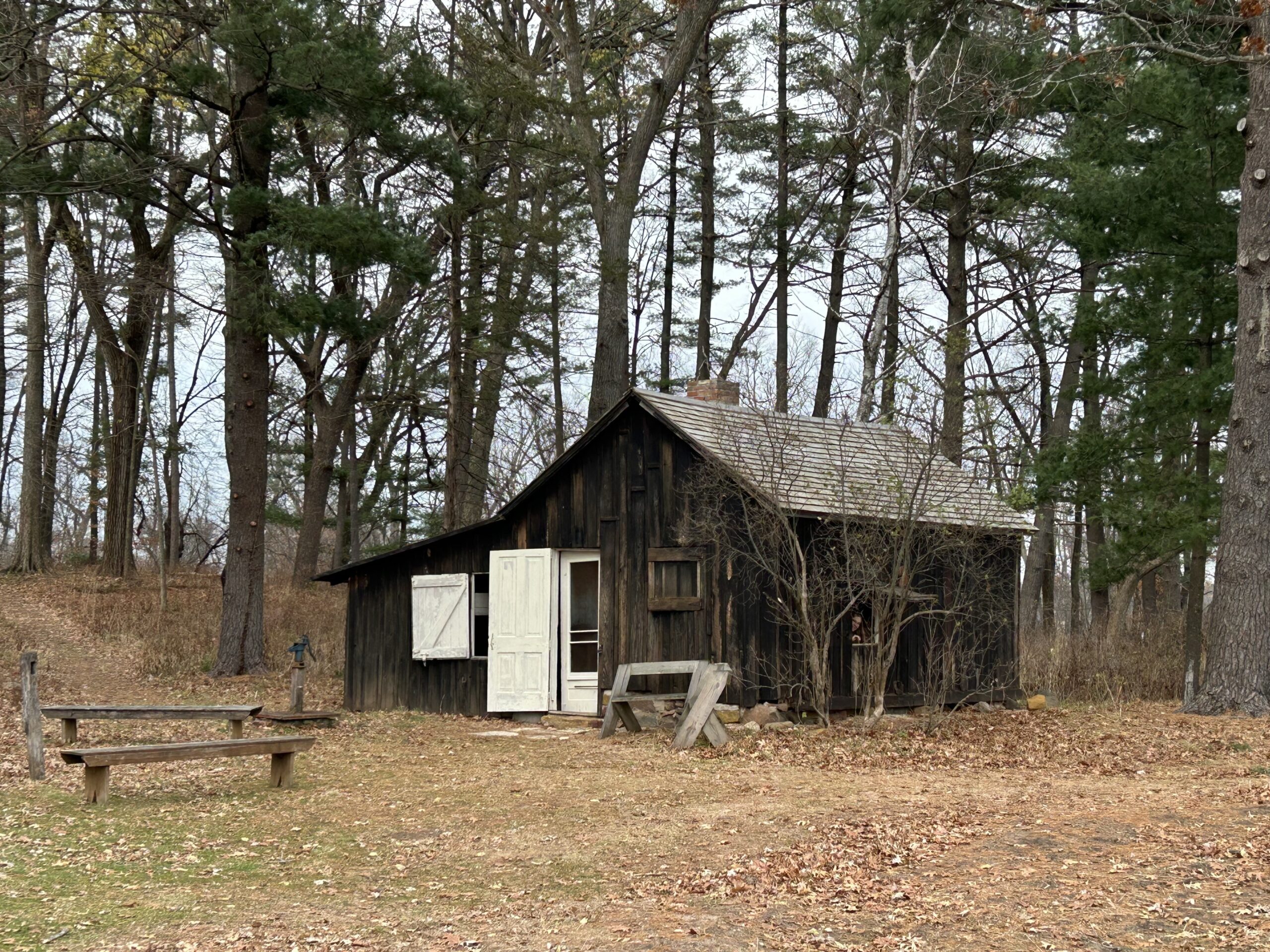
So, after converting a dilapidated chicken coop into a cabin — lovingly referred to as “the Shack” — the Leopold family got to work on the land. Utilizing the same techniques he was exploring at the Arboretum, they began transforming the property. “When you look around,” Huffaker said, gesturing to the woods surrounding us, “all the pine trees you see were planted by the family. They would plant 3,000 trees a year: 1,000 white pine, 1,000 red pine, 1,000 jack pine.”
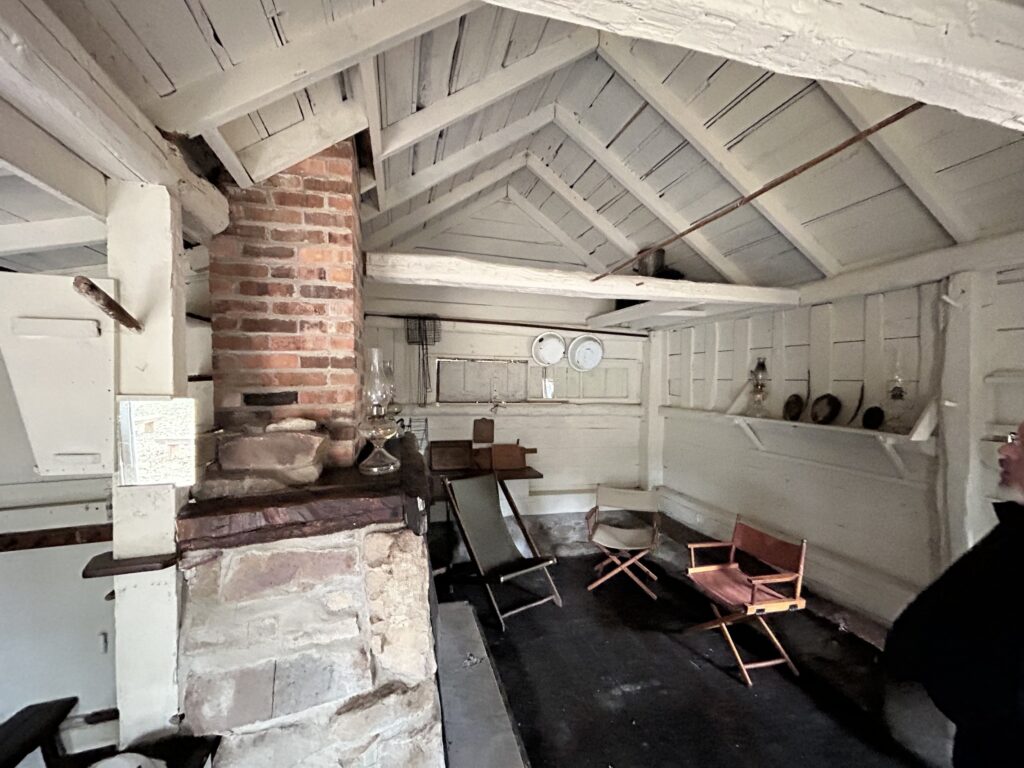

Their labor began paying off. Once pines stabilized the soil, other species of plants began taking root beneath their cover. Animals that had long deserted the area started finding their way back. All the while, Leopold took furious notes in his trusty journal, documenting life at the Shack.
These notes became the foundation of A Sand County Almanac, which celebrated its 75th anniversary this past year. Largely ignored by the general public at first, the extraordinary collection of lyrical essays and profound contemplations exploded in popularity in the early 1970s with the introduction of Earth Day. In the time since, it has taken its rightful place alongside masterpieces like Rachel Carson’s Silent Spring and Thoreau’s Walden as one of the most influential environmental pieces of writing ever composed.
Simply put, a land ethic asks us to expand the boundaries of “community” to include the earth itself. If we have a set of ethics to guide how we cooperate with other humans, shouldn’t we also have one for the more-than-human community?
The book is divided into three sections, first taking the reader through a month-by-month picture of his Wisconsin property, then moving on to Leopold’s observations from a lifetime of outdoors work across North America, and ending with his philosophical musings and ultimate manifesto: the land ethic.
This last part has had the greatest impact, shaping the field of conservation to this day. Simply put, Leopold’s land ethic asks us to expand the boundaries of “community” to include the earth itself. If we have a set of ethics to guide how we cooperate with other humans, shouldn’t we also have one for the more-than-human community? “When we see the land as a community to which we belong,” Leopold writes in the book’s introduction, “we may begin to use it with love and respect.” Huffaker compares this statement to the Copernican Revolution, when it was determined Earth revolved around the Sun: “When you say it, nothing has changed in the world … other than everything has changed.”
Leopold does not mean that we can’t utilize the land; rather, he wants us to stop thinking of nature purely in terms of economics. An action is “right,” he proposes, when “it tends to preserve the integrity, stability, and beauty of the biotic community,” and “wrong when it tends to go otherwise.” An example could be found in the very sandhill cranes I was there to see. Thanks to conservation efforts, there’s now a strong enough population that a monitored hunting season could be supported — with money from hunting licenses going to support further conservation efforts. As many states take up the hunting debate, I asked Huffaker what position Leopold might hold. “Aldo Leopold was a hunter. Would he hunt cranes? … I think Aldo would say, ‘Well, what’s the net conservation return?’”
Walking around the property, I couldn’t help but think back on the election that had occurred a few weeks prior, in which our country elected someone with promises to roll back environmental protections and “drill, baby, drill.” Could a land ethic help us overcome the political gridlock that has arisen over plans to protect the environment?
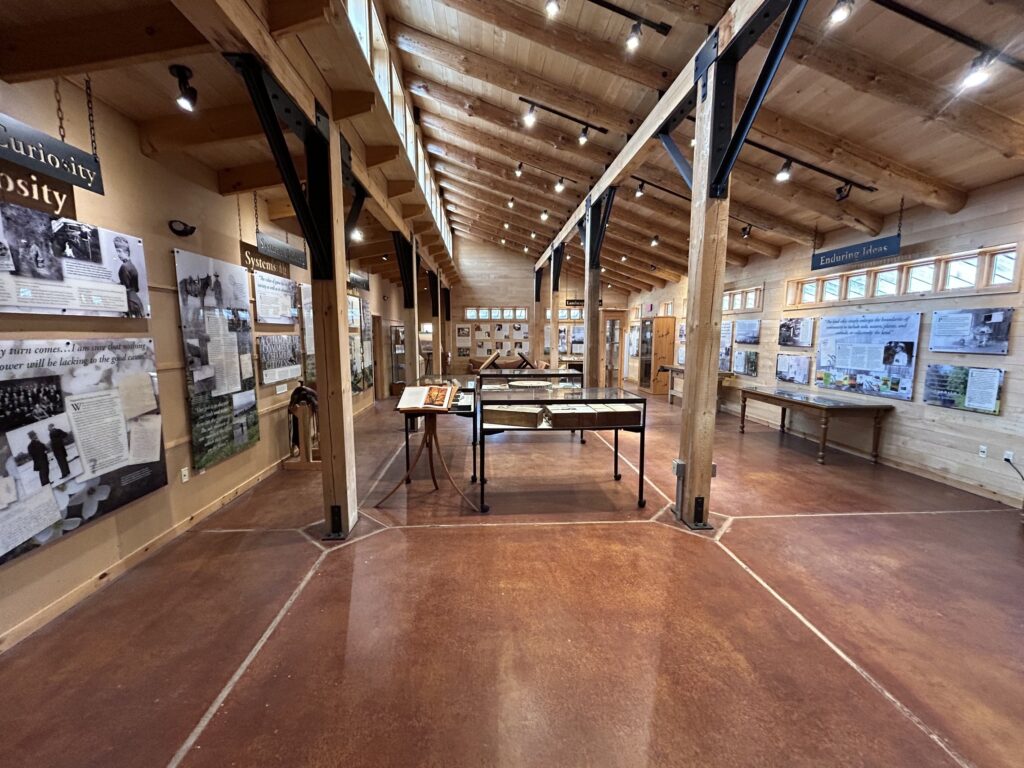
The Foundation seems to think so. “One thing Leopold does is let everybody come to the table that has some interest or connection in conservation,” Huffaker said. “Any time you pick an advocacy position … you’re going to be aligned with some people and not with others.” Investing in a land ethic might allow people to focus less on the division of certain solutions, and instead unite in common desire for a healthier planet.
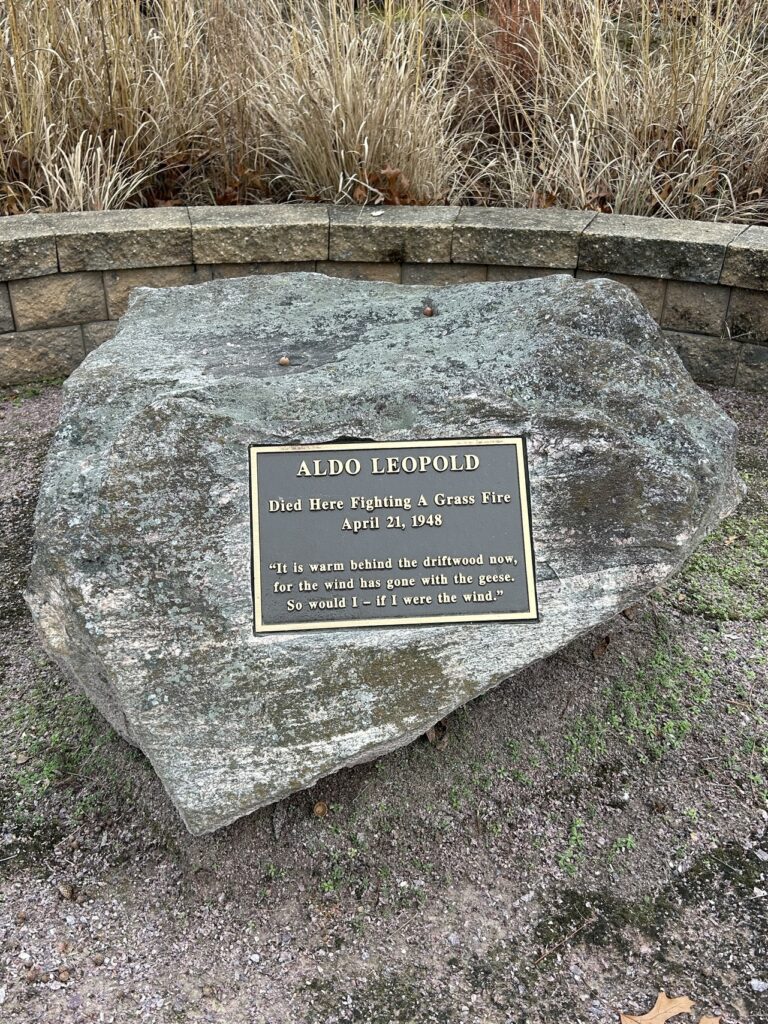
This is why, in addition to a large PR campaign in support of Almanac’s 75th anniversary to introduce more people to Leopold’s writings, the Foundation is working to develop resources for students in environmental science and studies programs, to give them an ethical framework for reaching and conveying decisions, once they’re trying to balance interests from different stakeholders in their careers. The land ethic could have an extraordinary, worldwide impact if we let it — one Leopold may have imagined while writing A Sand County Almanac, but would never get to see. Aldo Leopold died in the Spring of 1948, from a heart attack he sustained while fighting a grass fire on a neighbor’s farm, just weeks after learning the book would be published.
The sun is rapidly setting, yet the cranes don’t seem to be appearing. Buddy Huffaker, who has participated in countless viewings, looks perplexed. Perhaps, he tells us, the slight breeze is causing the birds to land a little ways down the river, instead of in front of the blind where they usually rest.
And then … they begin to arrive. In a matter of minutes, hundreds of sandhill cranes appear overhead, making their signature call — the “tinkling of little bells,” as Aldo Leopold describes it. I look at the faces of the people around me, and everyone is grinning ear to ear. As I watch, I grow emotional, reflecting on the recent history of these remarkable birds. The environmental challenges we face as a global community feel insurmountable; but perhaps, if a land ethic can help bring the sandhill cranes back, it can make real change in the fight for a liveable future.
When the birds finally settle down for the night, Huffaker tells me it was one of the greatest displays of cranes in flight he’s ever seen.
The Leopold Center in Baraboo, Wisconsin, is open for visitors from May-October, and during crane viewing tours each November. For more information on visiting, and the work of The Aldo Leopold Foundation, please visit the website.