Note that if you purchase something via one of our links, including Amazon, we may earn a small commission.
Through the Vineyard’s farm-to-school program, students ‘can put their hands in the soil, taste a carrot, and find a bug that fascinates them.’
Kids on Martha’s Vineyard from preschool all the way through high school are taking part in a variety of farm- and garden-based educational programs that connect them with the natural world and the local food system.
Island Grown Schools (IGS) was created by Island Grown Initiative (IGI) shortly after the organization was founded in 2006, with the goal of embedding a broad farm-to-school curriculum in the public and private education system. The program teaches students about growing and harvesting food in a sustainable way, and ensuring that the entire community has access to healthy, locally sourced food. “At this point, an entire generation of students have gone through the food education program on the Vineyard, which is really exciting,” IGI Education Director Emily Armstrong told Bluedot Living. “If we want to make these really big changes in the food system, we are going to start with kids.”
IGS works with all seven public schools on the Island and with nine preschools, and reaches more than 2,300 students from ages 2 to 18. The program leads over 1,000 lessons each year through in-classroom learning, local farm field trips, and through the 15 school gardens IGS maintains throughout the year. “Our goal is to educate kids about food, where it comes from, and how to enjoy it,” Armstrong said.
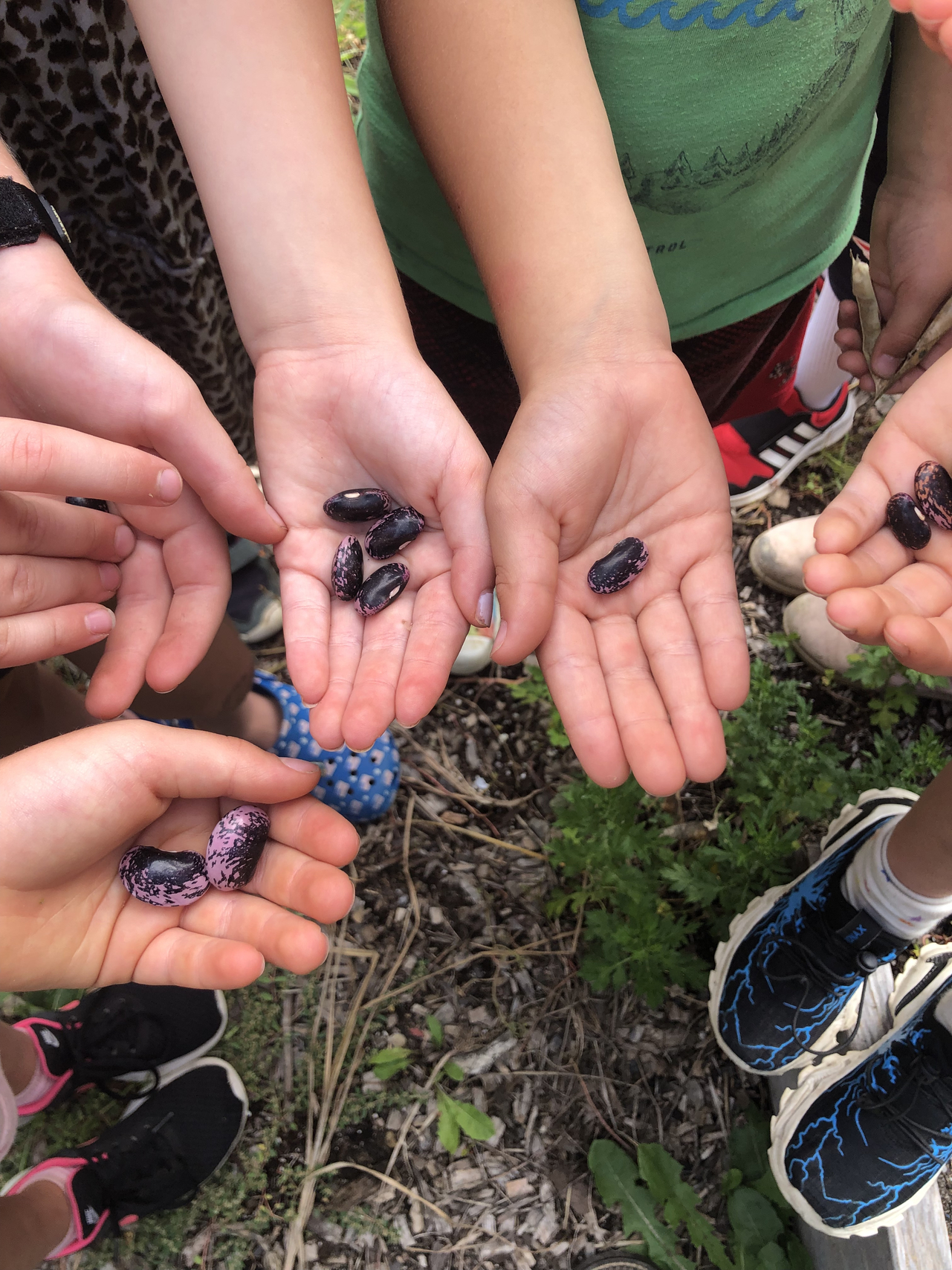
IGS starts by introducing preschoolers to foundational aspects of gardening and farming. IGS educators in each preschool and kindergarten teach kids about seeds, plant life cycles, and different tools used to grow and harvest. Because young kids are naturally curious and “are natural caretakers,” Armstrong said it’s easy to set them up with appropriately-sized tools, and show them how to plant seeds and water them. At the end of kindergarten, students plant sunflower seedlings in their school gardens, and when they return to the gardens when they enter first grade, they harvest their fully-grown sunflowers.
In second grade, most Island schools hold a spring plant sale. Starting in January, kids begin researching what plants they want to grow, the different histories behind each plant, and then they start growing and spreading the word about the sale. Armstrong said the plant sale allows kids to learn about the business of farming and lets them work with addition and subtraction when calculating how much change to give each shopper. All the money from the plant sale goes right back into the school garden, and students choose what plants and tools they will buy with the money earned.
In the fall, kids in grades K through 12, and even some preschoolers, go to the IGI farm hub and help glean. Last year, the IGI farm planted 15,000 pounds of carrots, and students helped harvest a large portion of them. “Those carrots will go to the food pantry for our meals program, and to the school cafeterias,” Armstrong said. “So this is giving kids the chance to engage in really meaningful work, and see how their efforts can help the wider community.”
Toward the end of the season, kids get ready to harvest their crops and taste the foods they grew. Kids at the West Tisbury School recently tried three different kinds of melons from their garden, and voted on which one was their favorite. Kids also get to taste their own tomatoes and peaches. For Armstrong, encouraging young students to experience new tastes and getting them excited about growing their own food sets them on the course to be involved in the local food system.
High school students on the Island can join the garden club facilitated by IGS, where they learn about every step in the food system, and how food on Martha’s Vineyard is grown by local farmers and distributed to organizations such as the Island Food Pantry and various faith-based food donation programs. Additionally, through a partnership with Slough Farm, IGS brings on six summer interns each year who work in the school gardens, the food pantry, and the IGI community kitchen. “A few of those students have gone to college to study food systems and agriculture, so it’s clear that these programs are inspiring young people to focus on feeding communities,” Armstrong said.
At this point, an entire generation of students have gone through the food education program on the Vineyard, which is really exciting. If we want to make these really big changes in the food system, we are going to start with kids.
– Emily Armstrong, Education Director at IGI
Astrid Tilton, Gleaning Manager at IGI, grew up on the Island and attended the MV Public Charter School. For Tilton, the student programs offered by IGI were a formative experience, and led her to pursue a career in agriculture and food system management. While attending the Charter School, she started out by helping out in the school’s garden, and eventually began a mentorship program working on farm-to-school policy, which aims to use government grants to help schools and child care programs purchase local ingredients, prepare meals from scratch, and educate students about local food systems. “We would talk about what language we thought should be in the bill, and would call legislators to inform them — it made me think about food in this really expansive way, and turned me into a major advocate for healthy, locally-grown food in schools,” Tilton said. “I am really proud that Vineyard students played a role in helping draft the Massachusetts farm-to-school bill.”

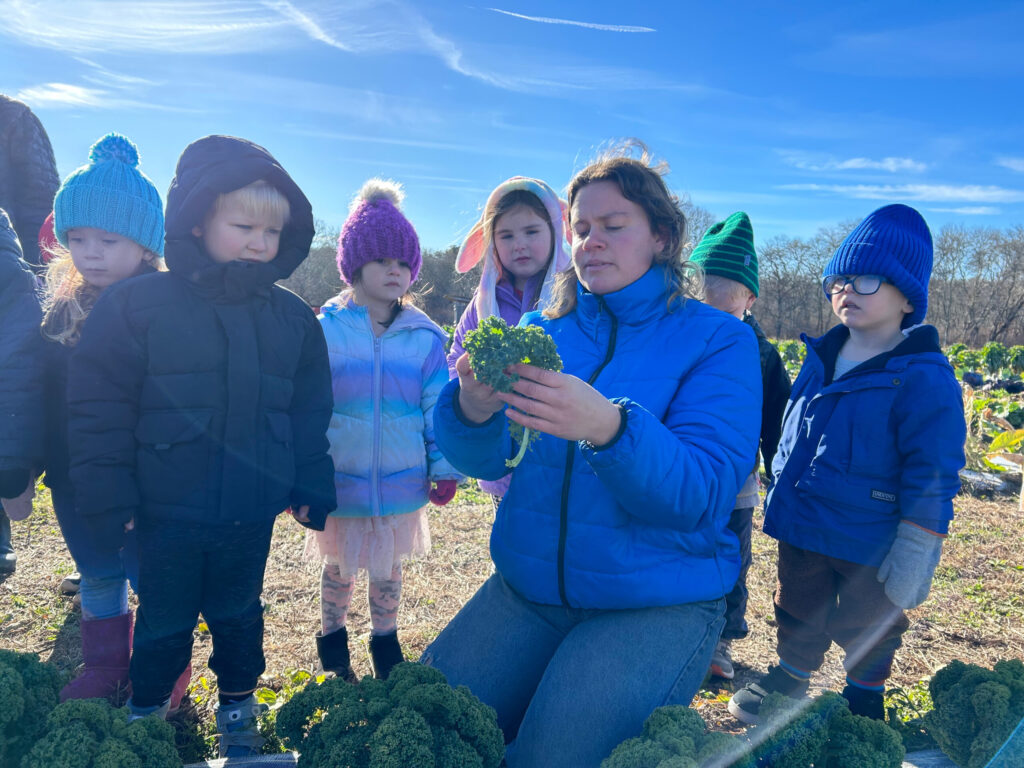
When students head to the IGI farm on field trips, before Tilton starts lessons or instructions, the staff lets kids explore. Tilton said that it’s essential, especially in early childhood, to let kids experience all the tastes, smells, and sensations of being on a farm. “They can put their hands in the soil, taste a carrot, and find a bug that fascinates them,” Tilton said. “It’s so important for them to develop a foundational relationship with the natural world; it’s a lens that you can approach pretty much any kind of learning.”
Visit islandgrownschools.org for more information on how the program is working with classrooms, school cafeterias, gardens, and farms across the Island.