

Note that if you purchase something via one of our links, including Amazon, we may earn a small commission.
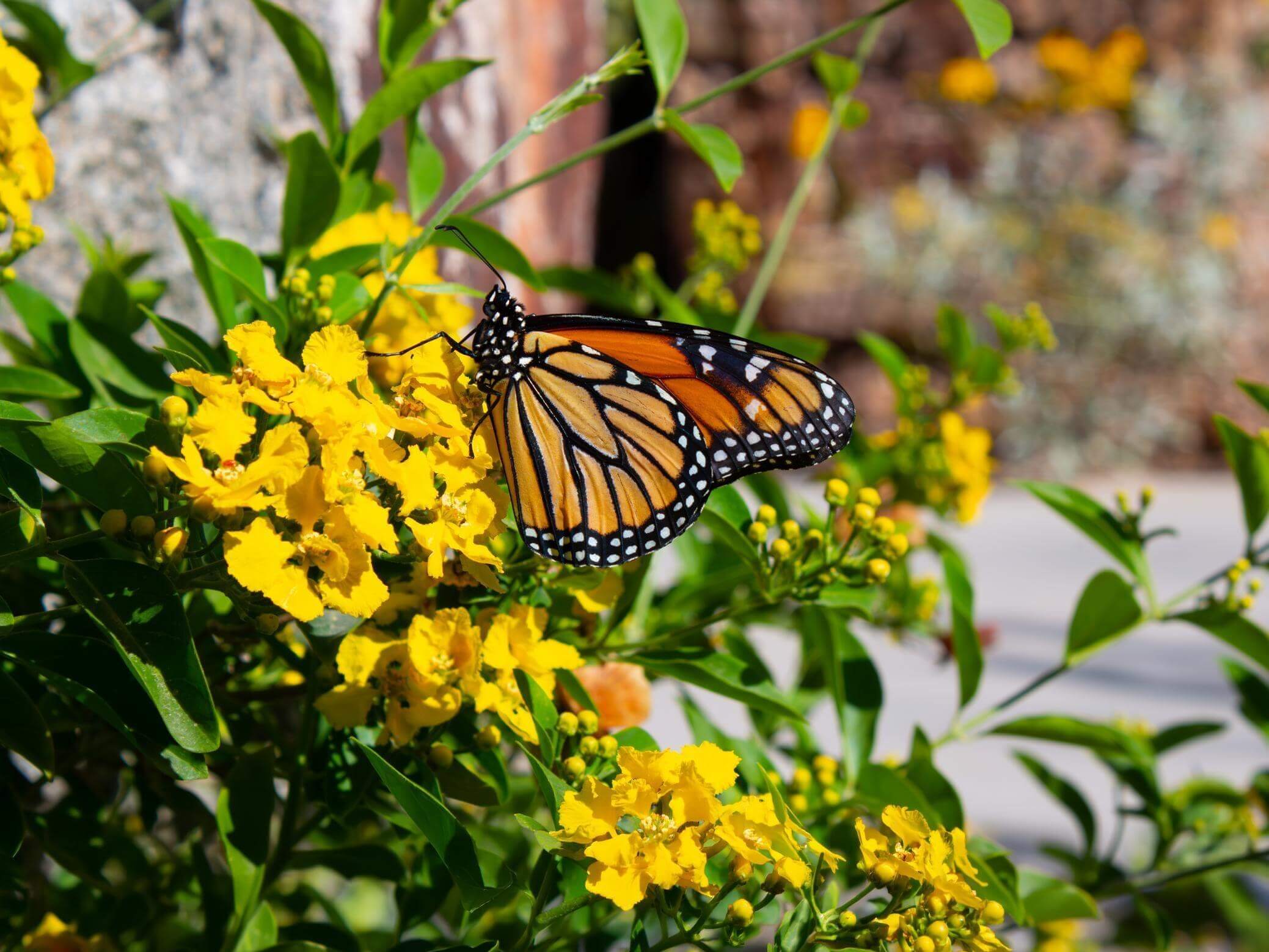
In the Sonoran Desert, even a small patch of wildflowers and native plants can provide food and shelter for an extraordinary diversity of bees, butterflies, birds, and other pollinators.
Every spring, Camilla Richardson drags a camping chair out to the front yard of her home in Phoenix, Arizona. She plants it underneath a tree where she can sit among the wildflowers that bloom for a few short weeks in late February or early March.
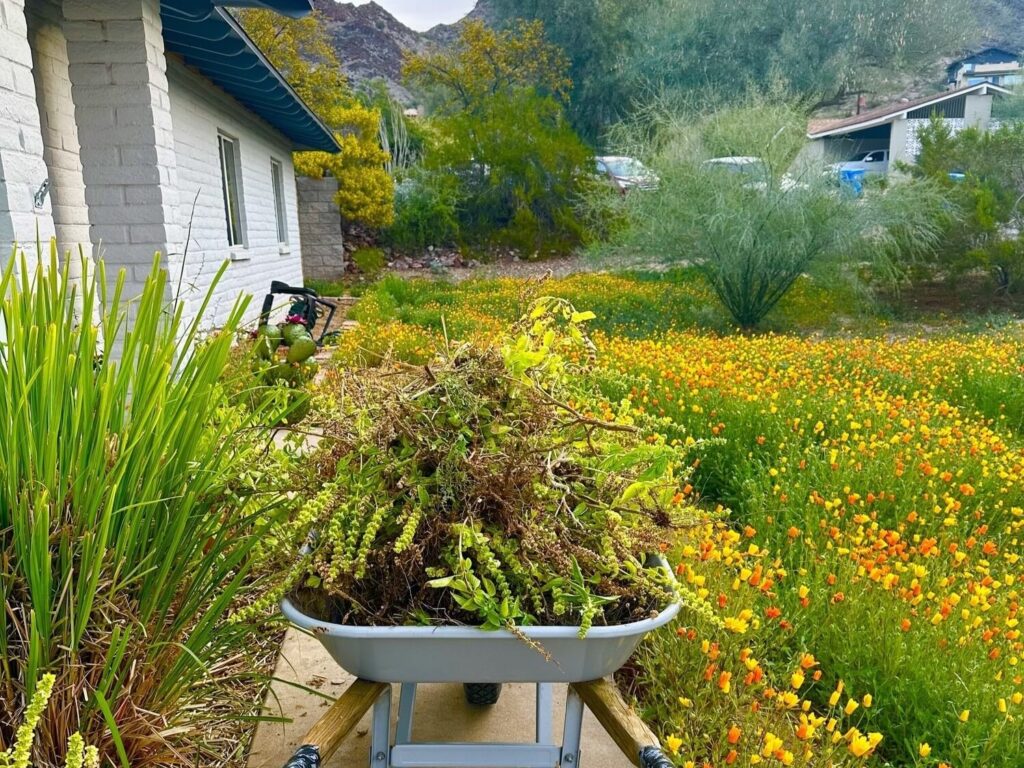
The flowers, which she believes are Cape marigolds, cover her gravel yard in a thick blanket of electric orange and sunny yellow. They are not native flowers, as Camilla would have preferred; she and her husband inherited them from the previous homeowner, though it’s impossible to know for certain who first scattered the seeds.
No matter how they got there, they create a pleasing landscape to the human eye. Perhaps even more so to the insects and birds that congregate there.
“Any time of day, I could go out there and find butterflies, a ton of bees, and many hummingbirds,” Camilla says. Not as surprising for the Sonoran Desert — the most biologically diverse desert in the United States — as you might think. But wildlife habitat in the region is increasingly rare, especially in residential areas.
Camilla’s neighborhood backs up to a portion of the Phoenix Mountain Preserve, a 26,500-acre protected desert and rugged mountains. The community is teeming with wildlife, from javelinas and finches to pollinators such as bats, bees, and hummingbirds.
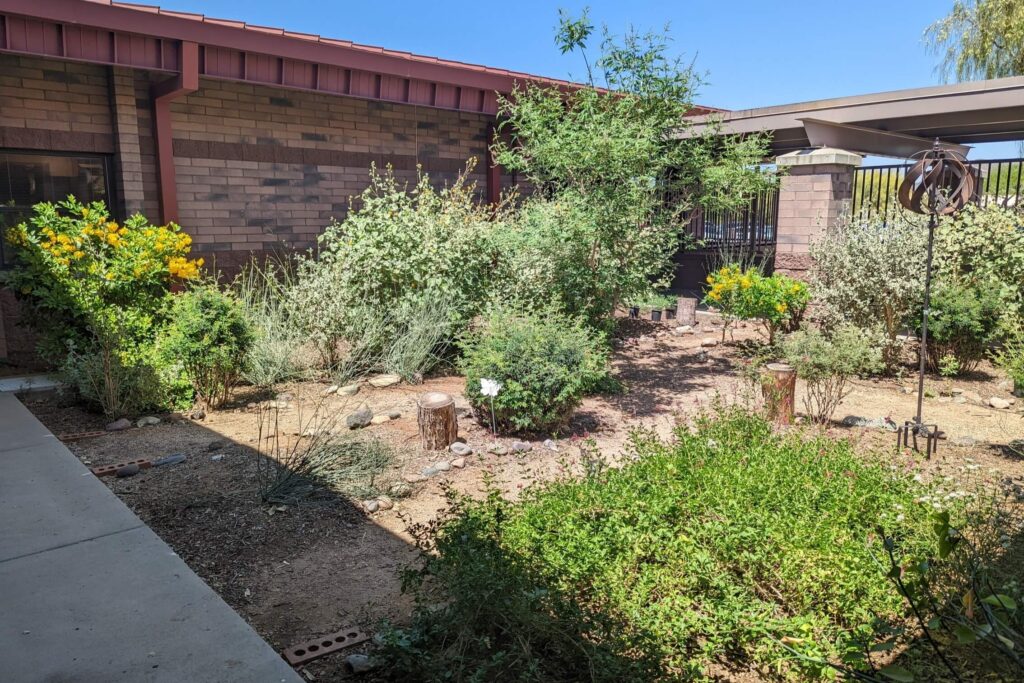
Many homeowners have abandoned lush green lawns in favor of xeriscaped yards featuring drought-tolerant plants and rocks to conserve water. A growing number of Arizona homeowners are going a step further to support the natural habitat by incorporating pollinator-friendly plants.
A Pollinator’s Paradise
The Sonoran Desert is home to immense insect diversity, including more than 1,300 native bee species, with the Tucson region supporting one of the world’s most diverse bee populations.
Many of these bee species are “extremely specialized in what plants they visit,” preferring a single genus or even species of plant, says Tanner Bland, bee program coordinator at the Arizona-Sonora Desert Museum and a graduate student in entomology at the University of Arizona. Some bees pollinate only a narrow range of desert plants, creating specialized relationships between plants and their pollinators.
Bees aren’t doing all the work, either. Birds, bats, and other insects also play important roles in pollination.
And Bland says it’s important for more landscapes to include local plants that attract the native pollinators. A small section of yard might not seem significant in the grand scheme of the Sonoran Desert, but every bit can help sustain its ecosystem.
“Your yard is like a piece of habitat,” Bland says. “The best things you want to plant are going to be things that support the most diversity.”
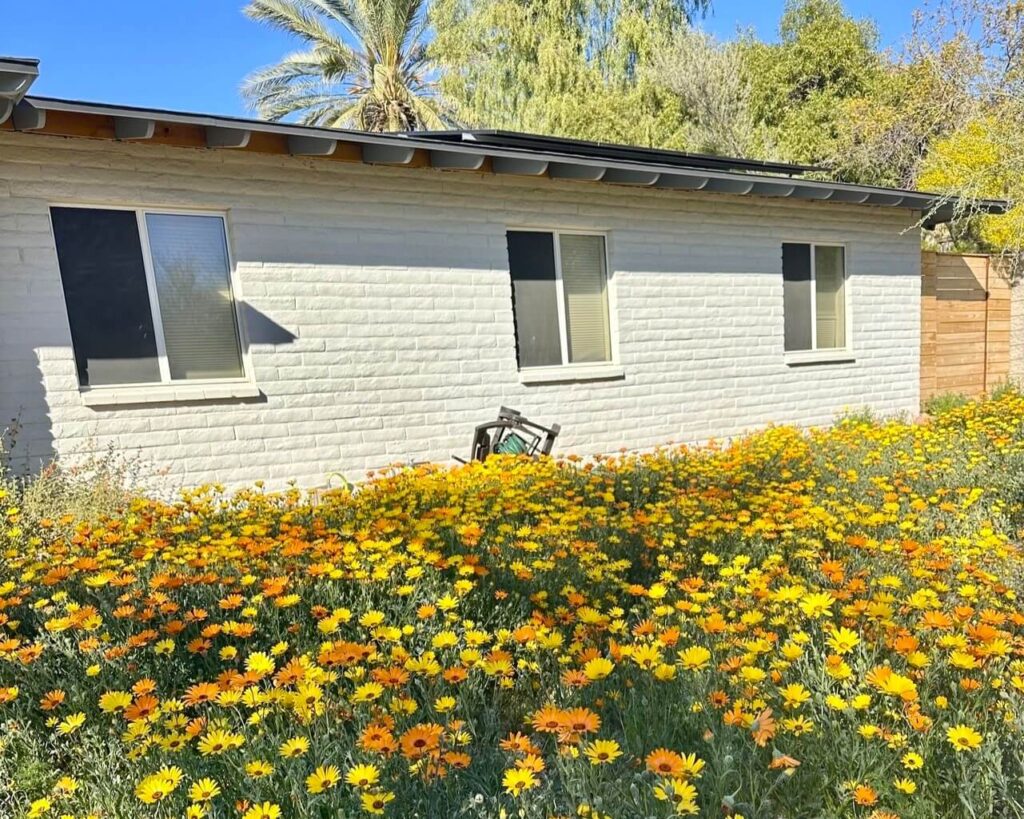
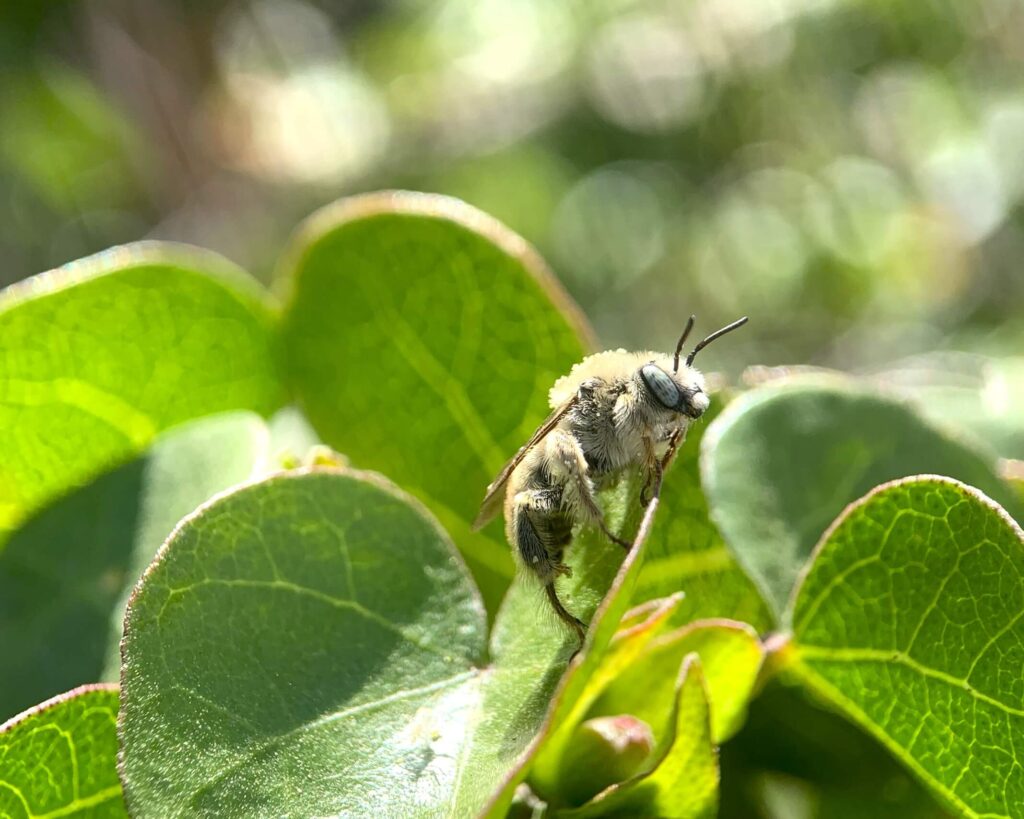
Although the flowers in Camilla’s yard are non-native, they do support a few neighborhood pollinators. So instead of tearing them up, she does her part each season by sprinkling her yard with native wildflower seeds that she collects at her local library.
Anyone Can Create Habitat
The good news about creating a pollinator-friendly garden is that nearly anyone can do it, even in the desert.
“This is not a giant panda that nobody can save unless you donate to a zoo or wild organization,” says Kim Pegram, the program director of pollinator conservation and research at Desert Botanical Garden.
Every year, Pegram’s team grows thousands of plants, focusing on species native to the Sonoran Desert that benefit pollinators, including monarch butterflies. The plants are then distributed to homeowners, schools, community centers, and local parks.
“The community projects we do are successful not only because they are planting habitat, but also because they’re bringing together the community,” she says.
Pegram especially loves working with schools as the gardens turn conservation into a hands-on lesson for students.
Another outreach program Pegram heads is called Butterfly Garden in a Box. The program started in 2015 as a convenient way to help people get started with pollinator gardening. Its first offering sold out in a day.
“Here we are, 11 years later, and they still sell out,” Pegram says.
Approach your garden like a scientist: Observe which pollinators show up, notice what’s working and what isn’t, and adjust your plantings the following season.
Desert Botanical Garden’s pollinator initiative is also about preserving local plants for future generations.
“We have close to 30 different species of native milkweed here,” Pegram says, “but most of them are not in cultivation. So that’s one of the things our program has done is try to start more from wild seed. We’ve been able to grow it out in larger quantities.”
For those interested in getting started with a pollinator garden, Pegram recommends native milkweed. No matter where you live, Pegram recommends heading to a local nursery. Ask about native host plants that provide food for caterpillars, nectar plants that flower for butterflies and other pollinators, and plants that can provide shade and shelter.
Bland suggests approaching your garden like a scientist: Observe which pollinators show up, notice what’s working and what isn’t, and adjust your plantings the following season.
Both Bland and Pegram strongly caution against using pesticides.
“I would say in almost every case, it’s a bad idea,” Bland says. “Not just for the bees, but a lot of those chemicals … are persisting in the soil for a very long time.”
Camilla has noticed a similar pattern in her neighborhood: Wildflowers tend to return in yards where homeowners aren’t spraying for weeds.
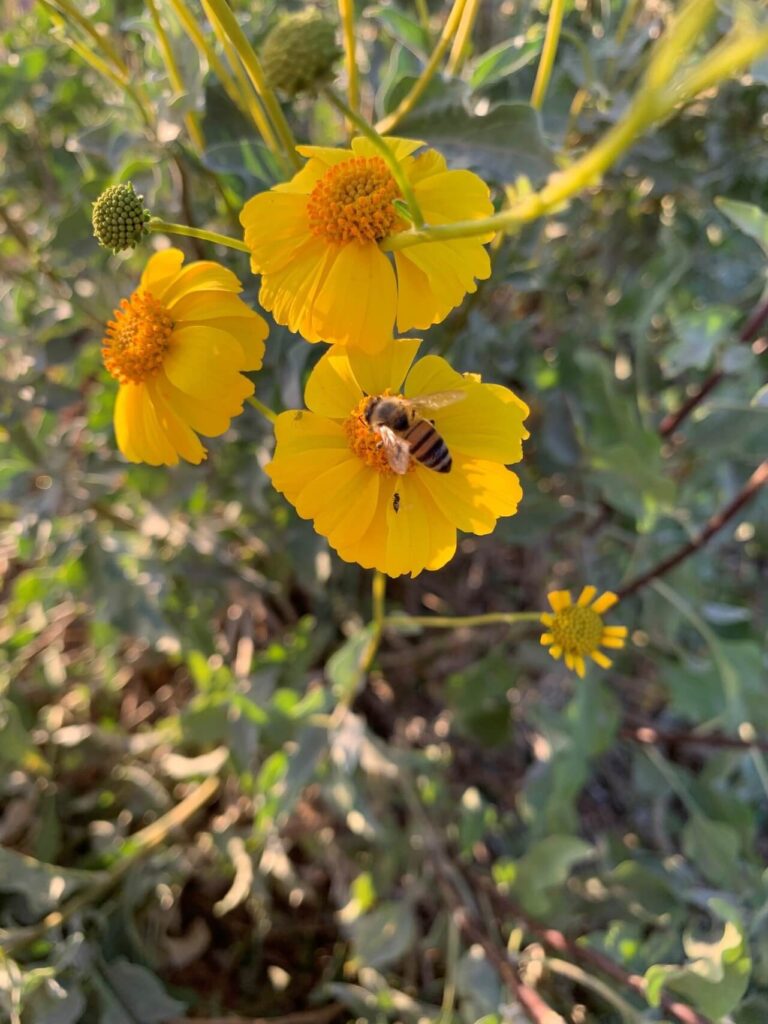
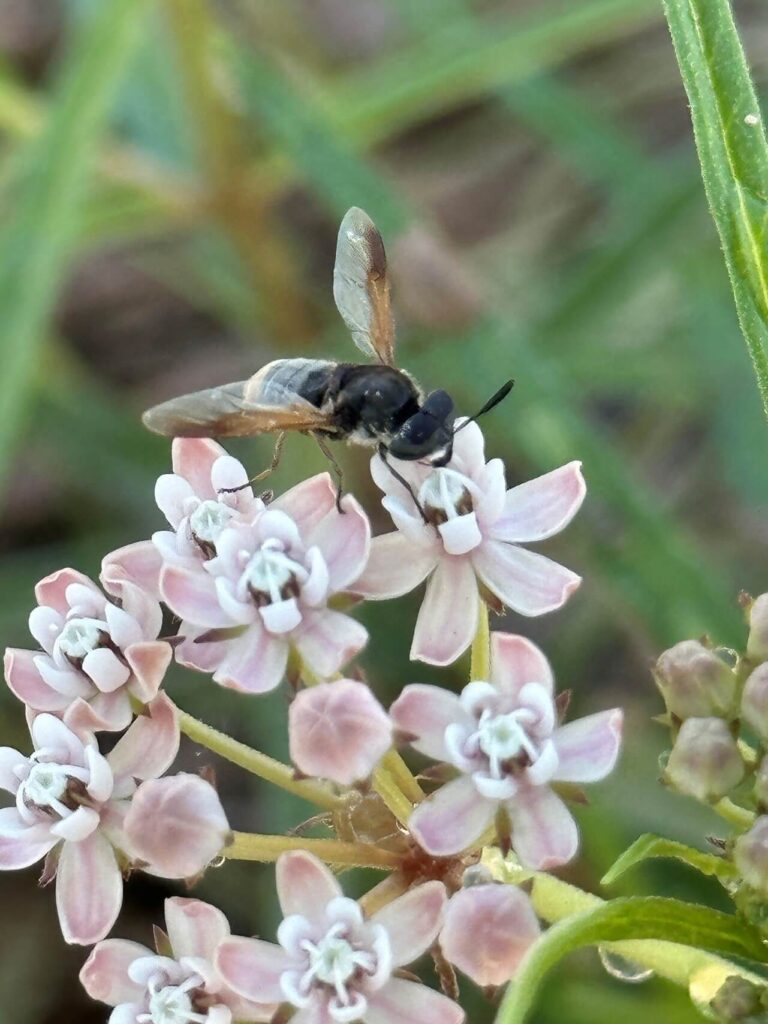
Instead of spraying, Bland recommends using native species that can compete with unwanted plants.
“If we can alter our habitat to better suit the needs of pollinators, then we won’t be as reliant on chemicals,” he says.
Finally, Bland recommends looking to nature itself for gardening inspiration. Go beyond noticing which plants grow naturally in your area, and pay attention to how and where they grow.
“It’s one thing to see a plant shoved into someone’s yard,” Bland says. “But it doesn’t give you an idea of what shade level and water level a plant needs, what nurse plants it prefers to grow under, how tall it grows in nature, what insects are feeding on it, what bees and butterflies are pollinating it.”
How to Keep Self-Seeding Wildflowers Coming Back
Want a yard that bursts with wildflowers each spring? Camilla Richardson shares a few tricks that keep the flowers in her Phoenix yard happily returning.
Skip the pesticides. Camilla has noticed that wildflowers flourish in yards where homeowners don’t spray for weeds. Her own yard isn’t treated with pesticides, allowing flowers to return and spread each spring naturally.
Let spent flowers stick around. Resist the temptation to clean up as soon as the blooms fade. Camilla allows the flowers to dry out naturally for a month or two so they have time to drop their seeds. Areas cleared earlier don’t return as vigorously the following spring, she’s observed.
Embrace the brown season. A self-seeding wildflower yard isn’t picturesque year-round. Camilla’s yard turns brown as the flowers dry and drop their seeds, but she knows that the payoff will come in spring, when brilliant orange and yellow flowers blanket her yard for a few weeks.
Give the seeds a shake. Once the plants are completely dry, Camilla uses a hoop hoe to remove them at the base. As she works, the dried plants shake and scatter seeds onto the ground. She gathers the spent plants into piles, giving them another shake as she carries them across the yard to help any remaining seeds fall where they can sprout the following season.
Let the rain do the work. Camilla doesn’t irrigate her wildflowers, and she doesn’t need to. They emerge following seasonal rains.
What to Plant (and Avoid) in the Sonoran Desert
For Sonoran Desert homeowners looking for a native species that can compete with weeds, Bland recommends globemallow. It’s not particularly picky about soil and grows quickly. Creosote draws in numerous pollinators and has the added benefit of producing the distinctive smell associated with desert rain. Barrel cactus, prickly pears, and saguaros are other good options. Tucson-area gardeners can visit Spadefoot Nursery, which stocks many rare native plants, or consult the Tucson Bee Collaborative.
One plant to avoid is eucalyptus. “They are really aggressive plants,” Bland says. “A lot of people don’t realize that when they drop their leaves, there are nasty chemicals in the leaves that permeate into the soil and basically kill any other plant that isn’t a eucalyptus from growing in its immediate vicinity.”
South American mesquites are also commonly used in landscaping, but are not native to the Sonoran Desert. Instead, Bland recommends native velvet or honey mesquite, which are preferred by native bees.
To give cavity-nesting insects like native carpenter bees a place to live in his own yard, Bland incorporates dried agave and sotol stalks into his landscape.
“I like to go out into nature and find a bunch of old, dry agave stalks or sotol stalks and load them into my car, bring them home, and stick them in the ground,” he says. “I make a little fence line out of them.”
Each agave stalk can reach 10 to 15 feet tall and, Bland says, can support five or six carpenter bee nests. He’s watched multiple generations of carpenter bees nest in the stalks, with some even reusing old nests.
