
Note that if you purchase something via one of our links, including Amazon, we may earn a small commission.
Whether driven by high gas prices or a desire to cut your carbon footprint, going car-free might be easier than you think.
Norman Cristofoli has no regrets about going car-free the past 15 years. In both Toronto and now Montreal, where he’s been residing since 2019, the retiree and novelist cycles and uses transit to get around the city.
“I always felt guilty about driving when I did,” Cristofoli says, “After all, I used to work at Greenpeace.”
Cristofoli is one of many Canadians who are increasingly ditching cars, even EVs, to find eco-friendly transportation. In 2024, the City of Ottawa found that the number of residents travelling by bike had more than doubled in over a decade.
And though a 2026 federal survey found that driving still dominates Canadian life — just one in ten primarily uses public transportation, while an additional one in ten relies on walking or cycling — close to half of us want viable alternatives to driving.
And no wonder! As gas prices soar, driving a car isn’t just carbon intensive, it’s expensive.
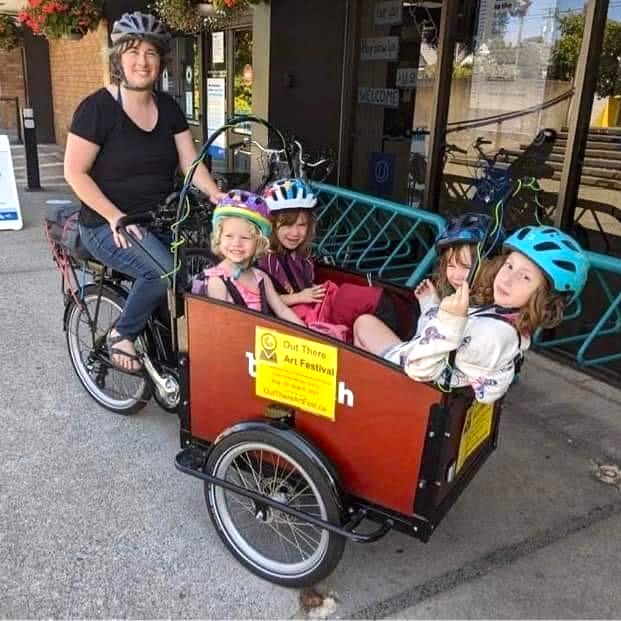
Jenn Neilson, a mother of triplets in Victoria, B.C., has opted for cycling with a dash of car-sharing since she went car-free five years ago. She rides a cargo trike. ‘I can take the triplets anywhere with that trike, I use it all the time.'
When Cristofoli was living in Toronto, he did the math: Living without a car would save him $650 a month.
“I figured it out and I knew I could live without a car,” he says, and planned how he could make it work: Living downtown helps, he says, noting that it’s not so easy for those who don’t live within fairly easy access to where they need to go. Those in rural areas, he adds, might not be able to go car-free as easily as those living in urban centres. (Although, a group in rural England addressed this by creating a community bus.)
Cristofoli could bike to work, weather permitting, in about 20 minutes, parking his bike in the “bike station” outside the back doors of the building.
In the winter, he made arrangements with co-workers who were happy to add him to their carpool. He discovered other benefits, he says. “Best of all, when I was biking, the ride was practically a meditation onto itself.”
Now walking with a cane, Cristofoli relies on Montreal’s transit to visit his grandkids or go to a poetry reading. “Like in Toronto, I can practically get anywhere via transit.” He urges people to plan ahead for trips via transit to reduce stress. Viewing bus schedules to determine the fastest route is essential, Cristofoli says, and it can be more cost effective and simpler to buy a month-long bus pass instead of paying individual tickets for each ride.
But what if you’re not a solo traveler and need to bring along your family? Jenn Neilson, a mother of triplets in Victoria, B.C., has opted for cycling with a dash of car-sharing since she went car-free five years ago. She rides a cargo trike — which can seat up to four children (and a dog). “I can take the triplets anywhere with that trike, I use it all the time,” she says.
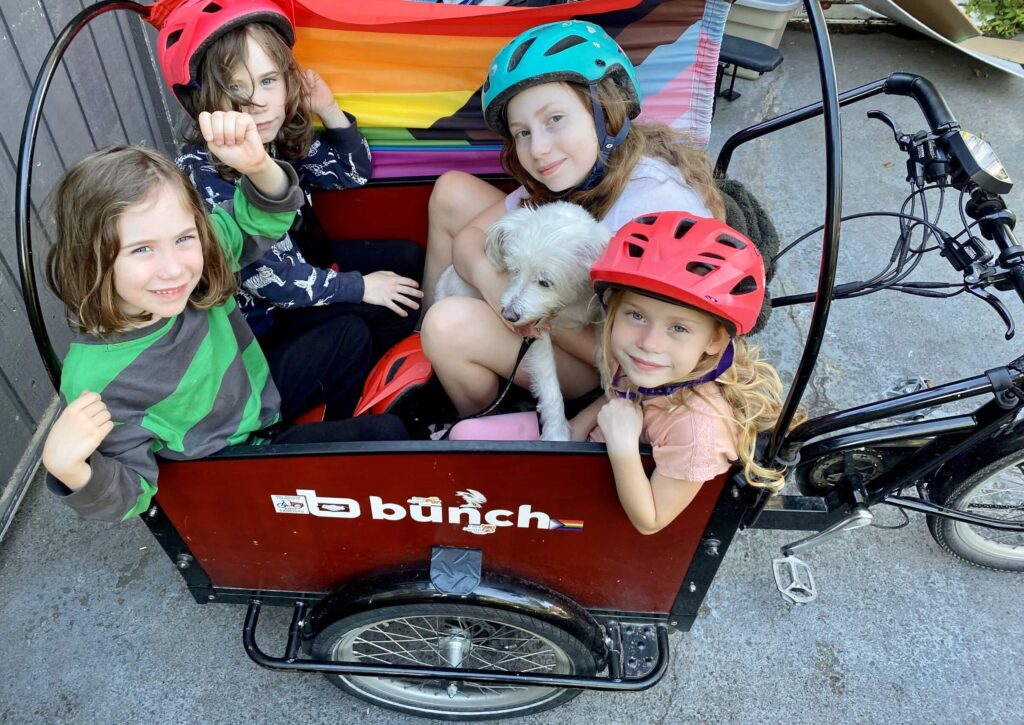
She’s clear about the value of infrastructure to get people out of their cars. “People on bikes should ride wherever is safest,” she says. “Where there’s a bike lane, especially if it’s separated, that’s usually the best option. I wouldn’t want to recommend taking the sidewalk as a general rule, but it’s certainly a legitimate choice if the road isn’t safe.”
Riding on streets without bike lanes requires more caution and it’s worth seeing if your community offers safe riding courses. Chief among recommendations is to ensure that you’re visible — mounted head- and taillights, a reflective vest or a fluorescent cycling jacket. Stay to the right, obey traffic signals, and be alert to parked cars to ensure no one is about to open a door.
The family also relies on transit for some trips, such as to their local public swimming pool. “That’s something I want them to learn, to know the city through things like taking the bus, and seeing our community,” Neilson says. She chose the move to Victoria from Toronto because of how easy it was to get around. “The commute in Toronto took too long,” she says, “but in Victoria, everything is accessible, close by.”
In some regions, such as Yellowknife, non-profits are helping folks ditch their cars. SHIFT NWT seeks to educate Canadians about the value of walking and cycling to sites, while Green Communities Canada leads programs like the National Active School Streets Initiative, which turns streets in front of schools into car-free zones.
Ride-sharing is another option for car-free Canadians. This approach allows you to join a car ride that is already on a trip from one destination to another, using networks such as Facebook or WhatsApp Groups to find a “match.” Proponents contend it’s safe as long as you do your due diligence.
Vanessa Lee travels from Port Hardy, the northeastern tip of Vancouver Island, to Edmonton four times a year. When the time comes to make the trip, she turns to a Facebook Group to find those offering rides. So far, it’s worked out well, she says, “but I have to be cautious, too.” This caution includes, she says, making sure the person’s Facebook profile isn’t new and only paying half up front. She also shares her location with her friends and texts them when she reaches her destination.
And ride-sharing offers another benefit for Lee. “I can’t fly with my dog because the airlines don’t allow me to be with my dog in my seat, and I have to be with my dog,” she says. Besides, “think of how much worse for the environment it would be if I took these short plane rides instead of riding with someone who’s going to my destination already.”
Tips for Going Car-Free
- Dress for success. Invest in a good pair of walking shoes/boots and foul-weather gear. Wear layers so you can adjust as necessary.
- Plan ahead: Lump errands together and take along a wagon (if walking/biking) that can cart home groceries.
- Build in extra time. Allow for late buses or slower trips.
- Take courses for winter biking, such as those offered by nonprofits like Shift in Yellowstone.
- Measure the benefits: Feeling more fit? Saving more money? Enjoying your commute? All of those remind you that you’re not just doing the Earth a favour.
- Car-sharing services can be helpful for taking long road trips or major grocery visits. Shop around to determine the best pricing and availability.
- To map out walking routes, plan your trip with Google or Apple Maps, which offer explicit directions and several options.
- When you decide to walk to your destination, determine if you’ll be passing through less safe areas by researching those communities and what pedestrians have said about them.
- Safety is critical. When cycling, always wear a helmet, don’t listen to music, use bike-mounted head- and taillights. Use bike lanes when possible, and follow all traffic signals. Get involved in local groups pushing for car-free infrastructure. Your local bike shop or environmental group is a good place to look. If you’re ride-sharing, stick to a reputable ride-sharing group, do your due diligence, and ensure friends or family know your whereabouts.

