Note that if you purchase something via one of our links, including Amazon, we may earn a small commission.
When a group of friends outgrew New York City, they hatched a plan to decamp to nearby Salem, with the goal of farming the land, returning to their roots, and using traditional knowledge and practices to sustain their Queer, Trans, Black, and Indigenous community.
Ceiba Arbor is a collective of multidisciplinary Queer, Trans, Black, and Indigenous People of Color (QTBIPOC) artists and farmers from New York City who founded a farm cooperative in Salem, Connecticut. The group’s principal goal is to find personal healing through a closer connection to the land. As Black and Indigenous People of Color, members all have family histories of being displaced from their lands, and personal histories of battling with the ever-rising rent prices in New York. For them, reconnecting to the land — undoing what happened to their ancestors — is healing, offering them the chance to feel leisurely and abundant, to look to the Earth for medicine, to feed the soil and nurture it while gaining sustenance from it. Being present, grateful, and reliant on mother nature feels like coming home.
Ceiba is both a type of wood, and a word in the Taino language for “boat.” Spiritually, the Ceiba or Kapok tree represents a turning point in the trajectory of life. For the members of Ceiba Arbor, living with friends on a farm is far more than simple escapism; beyond farming the land, the group aims to strengthen their sense of interconnectedness with the ecosystem itself, returning to their roots and using indigenous knowledge and practises of land stewardship to sustain their community, enrich the land, and pass down their knowledge to future generations.
Chloe Nunez, a 28 year-old with dark curls and gentle, curious eyes, has a background in education and food justice work. For more than 10 years, she and a group of friends in the city dreamed of creating Ceiba Arbor. She believes that this group may have known each other in a past life and reconvened to support each other’s dreams in the present day.
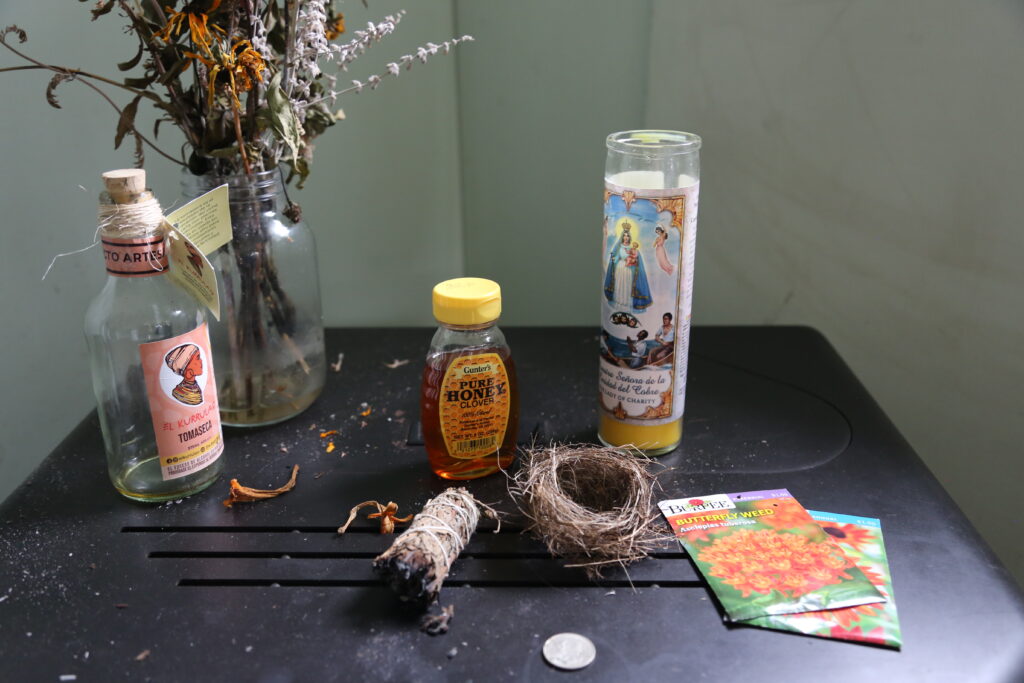
“For the core group, the whispers of living a life off the land together started emerging over prayer candles, in ceremonies, over spliffs on rooftops and fire escapes,” Chloe says. “What I always remark on at Ceiba when we’re there is how quiet it is, and how undisturbed one feels to just be on this land.”
Reconnecting with the natural environment is a deeply spiritual practice for many Black and Indigenous people around the world. Cherry Stefanie Ayala, the lead arts and education practitioner at Ceiba Arbor, remarks on the deep ancestral connection she has always felt to the ecosystem. Even when she lived in New York City, she visited local parks, noticing organisms, animals and insects. When she found fungi, she grew curious and learned that while mushrooms appear to be random and scattered on the ground, beneath the surface, the mycelium from which they grow is a complex network connecting individual plants together to transfer water, nitrogen, carbon and other minerals. Members of Ceiba Arbor liken this invisible interconnection of mushrooms to their interconnection with each other.
“The story of how we all found each other is perhaps for another time,” Chloe says. “We essentially chose to marry each other in this life, to commit to supporting one another’s endeavors, with the ultimate goal of reclaiming land to create a home base where we could come to rest. This was 10 years of dreaming and growing together before the pandemic hit us, and in that time, we dedicated ourselves to our crafts and the Earth.” They convened on rooftops in the Bronx, sharing meals and prayers, and they began the process of farming together in community gardens, igniting conversations about food sustainability and dreams of feeding their communities. The Bronx was a food dessert: fresh and healthy produce was costly and largely unavailable, and lower income families had little choice but to eat unhealthy fast foods. Faced with this reality, the group began to contemplate a long-term solution and realized that they needed a bigger farm space than what they could find within the confines of the city.
“The city was something I had outgrown,” Chloe says. “I couldn’t afford it anymore, I was unhappy at my job, and I wanted to try non-traditional teaching, and honestly, to have a backyard.”
She was the first member of the collective to take a leap of faith and move to Connecticut to deepen her work in food justice and education. “It was because of that leap of faith that I got connected to the land trust that we are now working with to secure this property, so I am very proud of the bravery and heartbreak that it took to leave my forever hood, the Bronx.” Connecting to a land trust allowed Ceiba Arbor the opportunity to collectively foster a relationship with land conservancy in the long-term. They now have a 99-year lease on a property comprising 16 acres.
Maya Nunez, Chloe’s sister, is a member of Ceiba Arbor whose love for New York never died. “I never really wanted to leave NYC, but circumstances changed. Prices went up, communities were forced out, my family included, and we had to adapt,” Maya says.
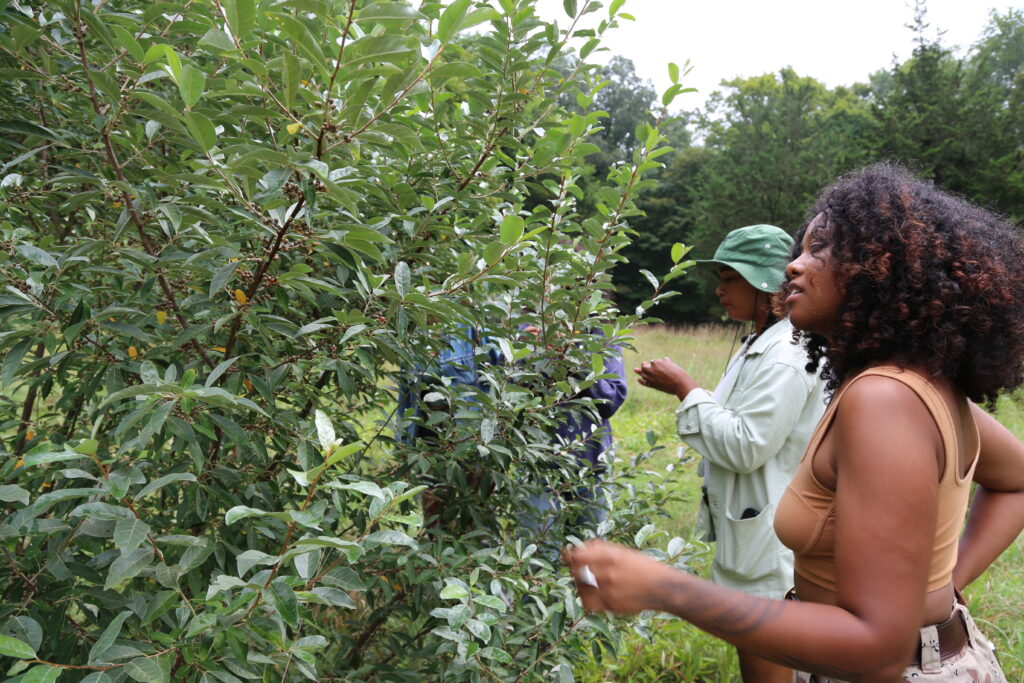
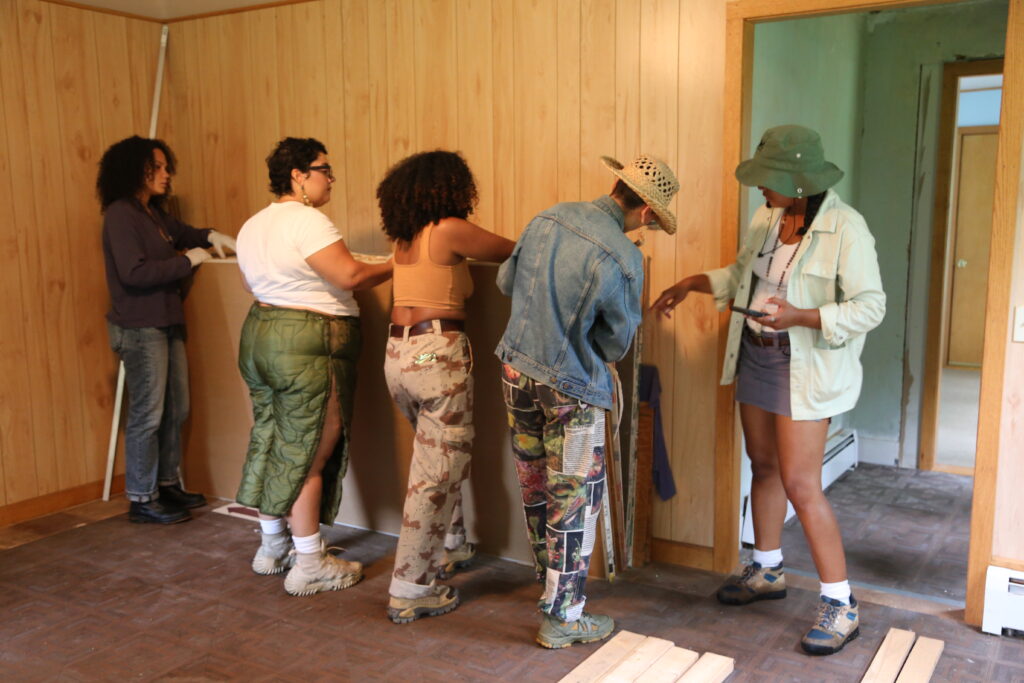
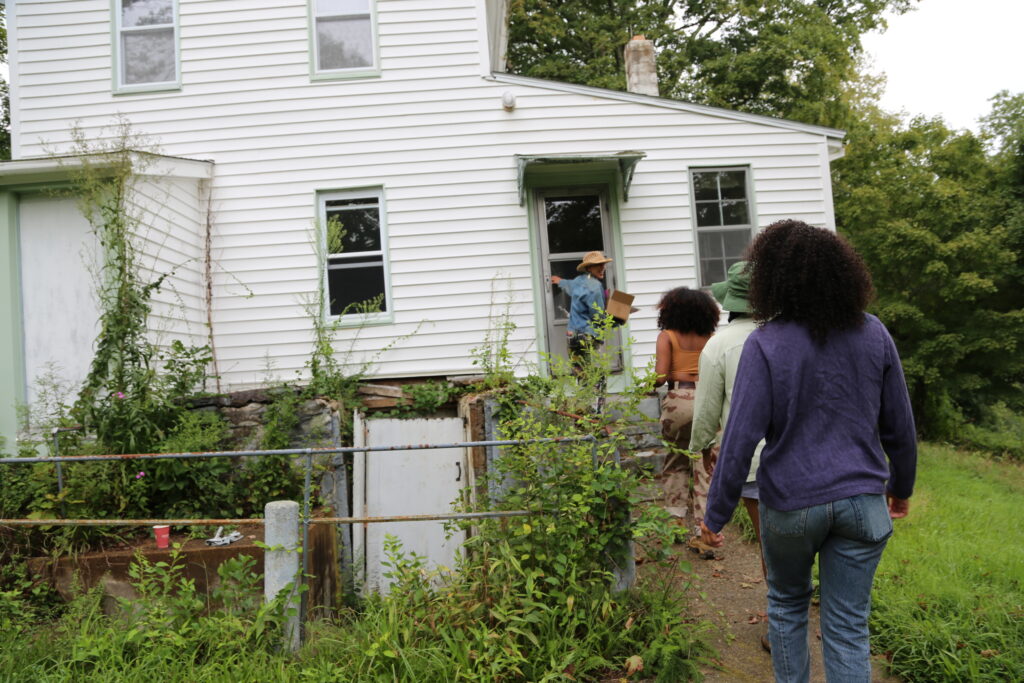
“If I’m being honest, I never imagined myself becoming a farmer, let alone doing it alongside my friends and living with them. Saying it aloud sometimes feels like I’m in a movie. It’s not something that happens to many people, so I often reflect on how we got here and where we’re headed.” Ceiba Arbor is now a collective of eight members who refer to Salem, Conn., by its indigenous name, Paugwonk, which translates to “Pond at the cleared space.” Nobody has moved onto the farm yet, but the group is renovating the old white wooden house on their farmland, insulating the walls, laying floors, and furnishing the space, slowly but surely coloring the space with their presence. As grueling as the tasks ahead of them might seem, they feel that there’s nothing black queer women are incapable of when armed with a shovel and a power drill.
As Black and Indigenous People of Color, members all have family histories of being displaced from their lands. For them, reconnecting — undoing what happened to their ancestors — is healing. Being present, grateful, and reliant on mother nature feels like coming home.
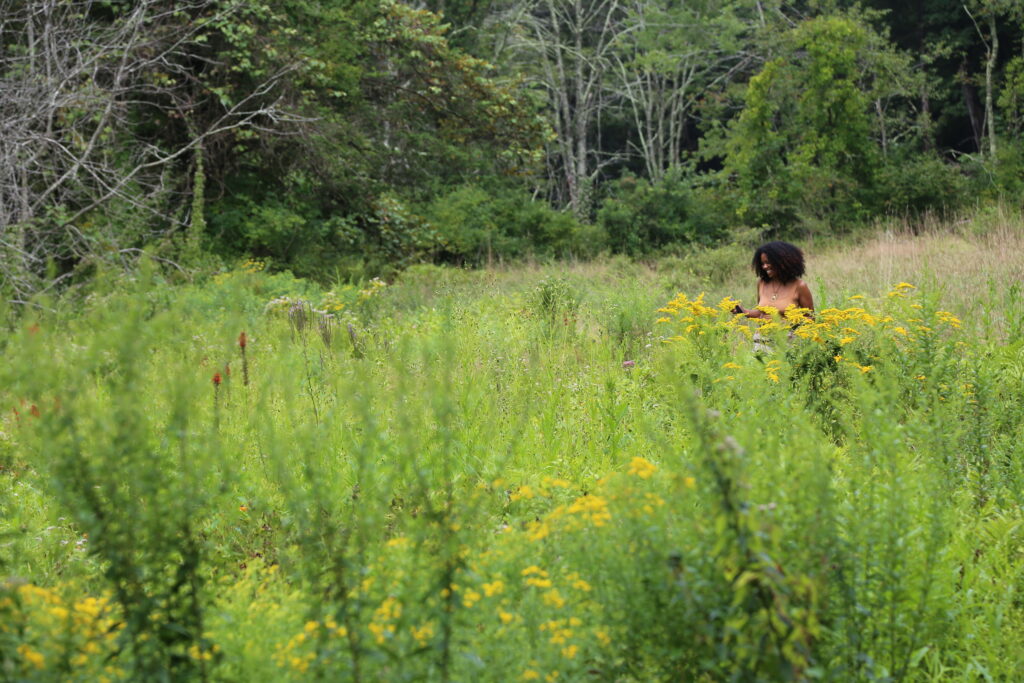
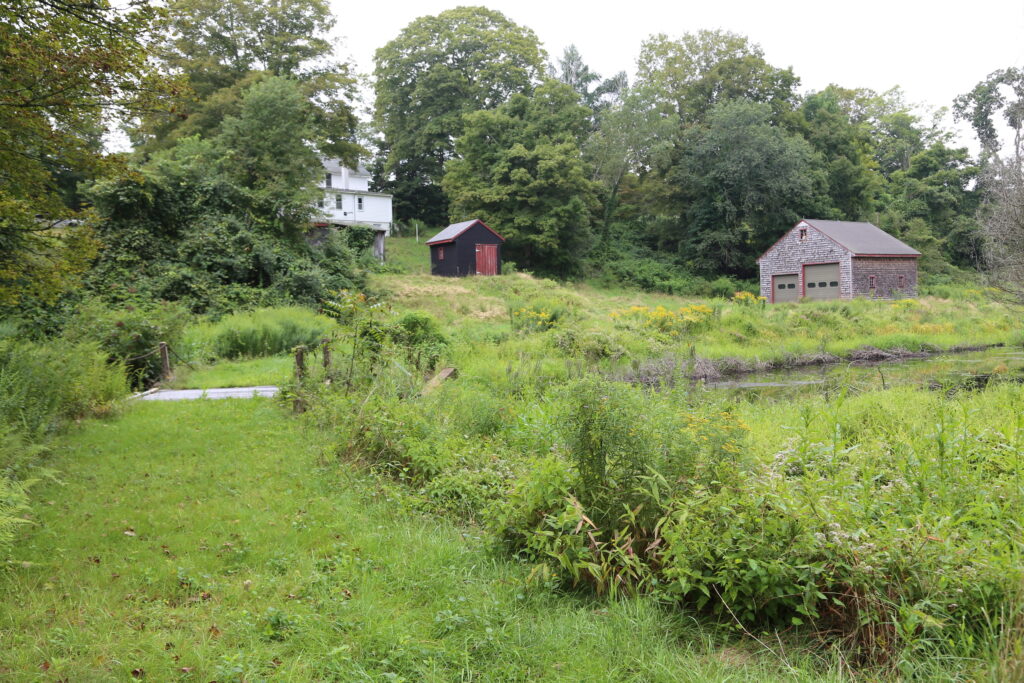
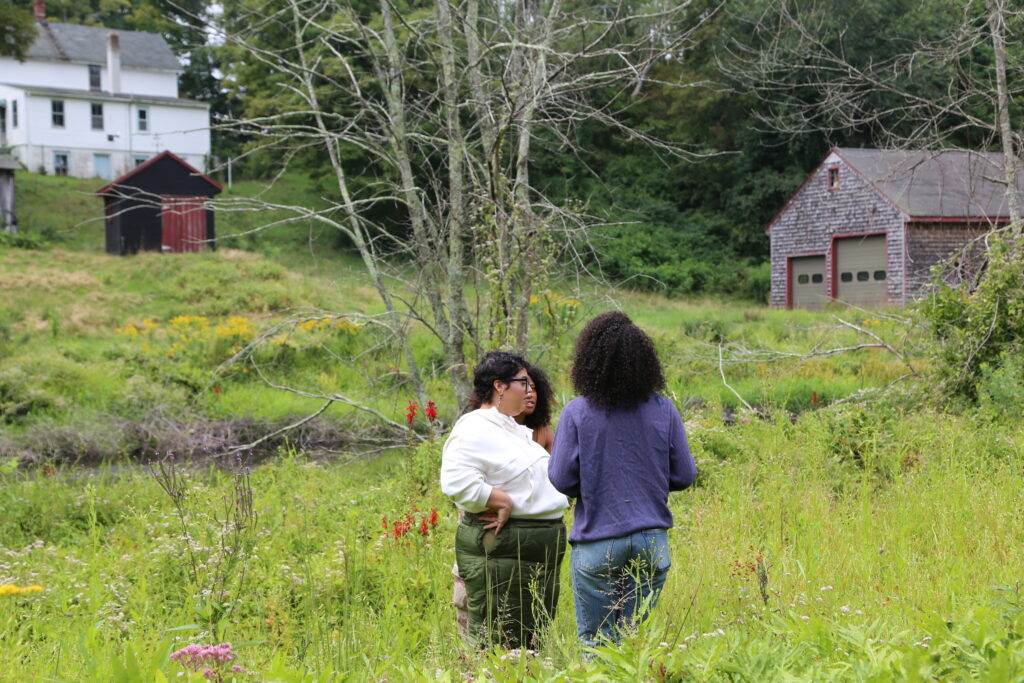
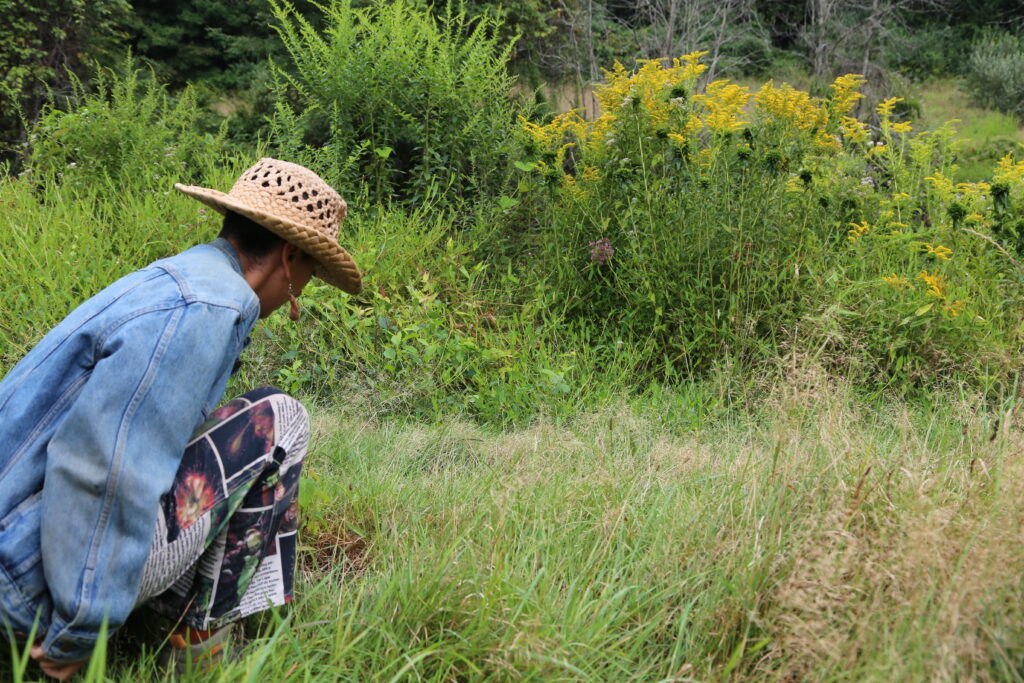
Another member of the collective, Zen Astrud, owns a botanical design studio called Studio Mariposa. When she isn’t arranging bouquets, she’s researching how to chop down trees and getting hands-on with renovations at the farm. “We visited Ceiba Arbor on Labor Day to start some renovations in the house. It’s pretty surreal to be doing DIY projects to be able to move in next month with my partner, Sunny. The weather was nice enough that when we’d taken a lunch break we sat on the wooden bridge over our brook that runs through the property. It’s a beautiful sight that I can’t wait to become more familiar with. Our large rustic garage is in the distance below a clear blue sky, and the water is flowing slowly due to a dam a beaver built under the bridge. There are some dead trees along the banks that I’ve been YouTubing how to cut down at some point. But for now, summer flowers are blooming; blood red Cardinal flowers, bright yellow Goldenrods, and Spotted Touch-Me-Nots. The birds and the bees are very much at home here,” she says. The group’s cat, named Eartha Kitt, is a new resident at the house and can usually be found somewhere between somebody’s lap and a patch of grass, where she hides when hunting for birds or insects.
Most members of the collective are still based in New York and are gearing up to move into the farm in the upcoming months — it’s all hands on deck in any pocket of time they find before they all settle into their new home. One of their goals with the farm is to not only grow crops for themselves, but to feed their surrounding communities through food drives and teach people about sustainability and food sovereignty through education programs on the farm. “I want to show Black queer and trans folx that this life is attainable,” Zen says. “It’s a different kind of hustle, a reciprocal relationship to the land and the people in your community. To the aspiring Black flower farmers, I’d say that it doesn’t need to be a choice between growing food for your community or growing cut flowers for much needed beauty. You can grow both. We deserve both, don’t we?”