

Note that if you purchase something via one of our links, including Amazon, we may earn a small commission.
Home gardeners are getting involved in citizen science projects across the U.S., helping researchers vastly expand their data collection and deepening their own connection with nature.
Citizen science, often called community science or participatory science, relies on members of the public to collect data and even conduct experiments. Their involvement can supercharge data collection, extend and sustain the reach of science funding, and build people’s connections with the natural world.
Across the U.S., home gardeners are contributing to a growing number of projects. We took a look at a plant variety trial, a native species project, and a program tracking the timing of plant and animal life-cycle events to learn more about how citizen science works.
Variety Trials for Gardeners
Variety trials — field tests of vegetable, fruit, grain, and flower varieties — are traditionally conducted at research institutions or commercial farms. These trials help scientists and growers learn how different varieties perform in diverse environments and provide information that can help growers improve their yields and reduce the need for pesticides.
Today, home gardeners have more opportunities to participate than ever, explained Jacob Turner and Dani Carroll, both home horticulture extension agents of the Alabama Cooperative Extension System. Joining a variety trial can allow gardeners to “see a side of things they don’t [often] get to see,” Turner says.
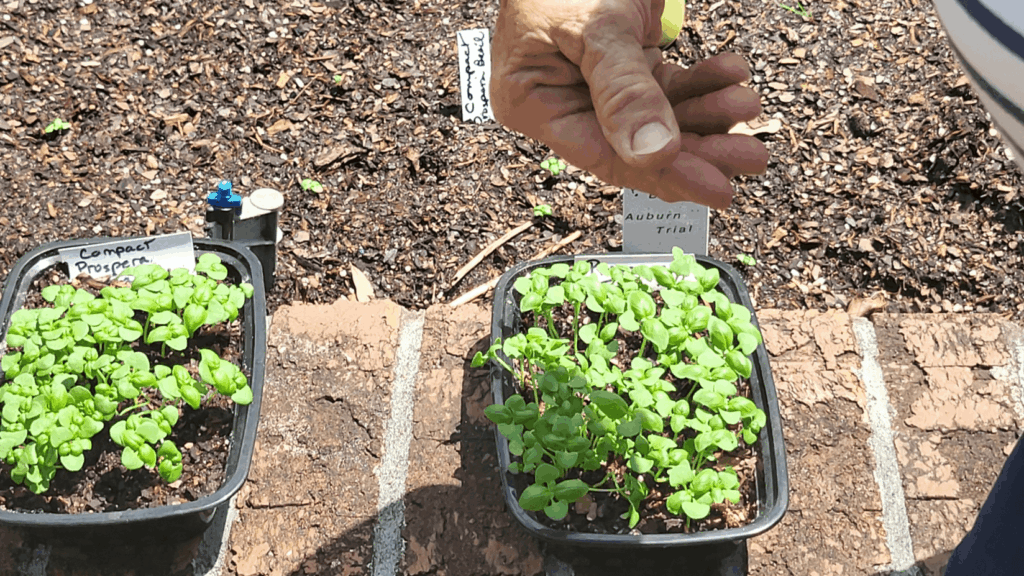
Carroll and Turner spearheaded the Grow More, Give More Home Garden Variety Trials in 2025. When home gardeners, community gardeners, and schools sign up for the trials, they commit to raising two different varieties of a garden plant, such as bush beans, okra, or cosmos flowers, under identical conditions. During the growing season, participants record each variety’s performance in areas like germination, yield, flavor, and overall plant health.
The trials were instantly popular and have only grown since their inception. In 2026, the spring variety trials attracted 95 participants from across Alabama, and the fall trials attracted 200 participants.
Carroll explained that state- or region-specific variety trials are important because of variations in growing conditions, diseases, and pests. In Alabama, for instance, “we’re looking for resistance to some of our major diseases, as well as heat tolerance, while in other parts of the United States, that variety just may not do well.”
Land grant universities and extension services in Virginia, North Dakota, Ohio, and several other states also run home garden variety trials. Gardeners in other parts of the U.S. can participate in the Seed Savers Exchange ADAPT variety trials, search for garden trials through the SeedLinked platform, or contribute to Cornell University’s Vegetable Varieties for Gardeners project.
Tracking Seasonal Events in the Garden
Phenology, the science of cyclical patterns in the living world, is critical for understanding the impacts of climate change on plants and animals and for planning the management of less-desirable species like the emerald ash borer.
“What we can really tell the richest stories with is observations from many locations on many different seasonal events in many different species. And the only way we can achieve that is crowdsourcing it,” says Theresa Crimmins, director of the USA National Phenology Network and an associate professor at the University of Arizona.
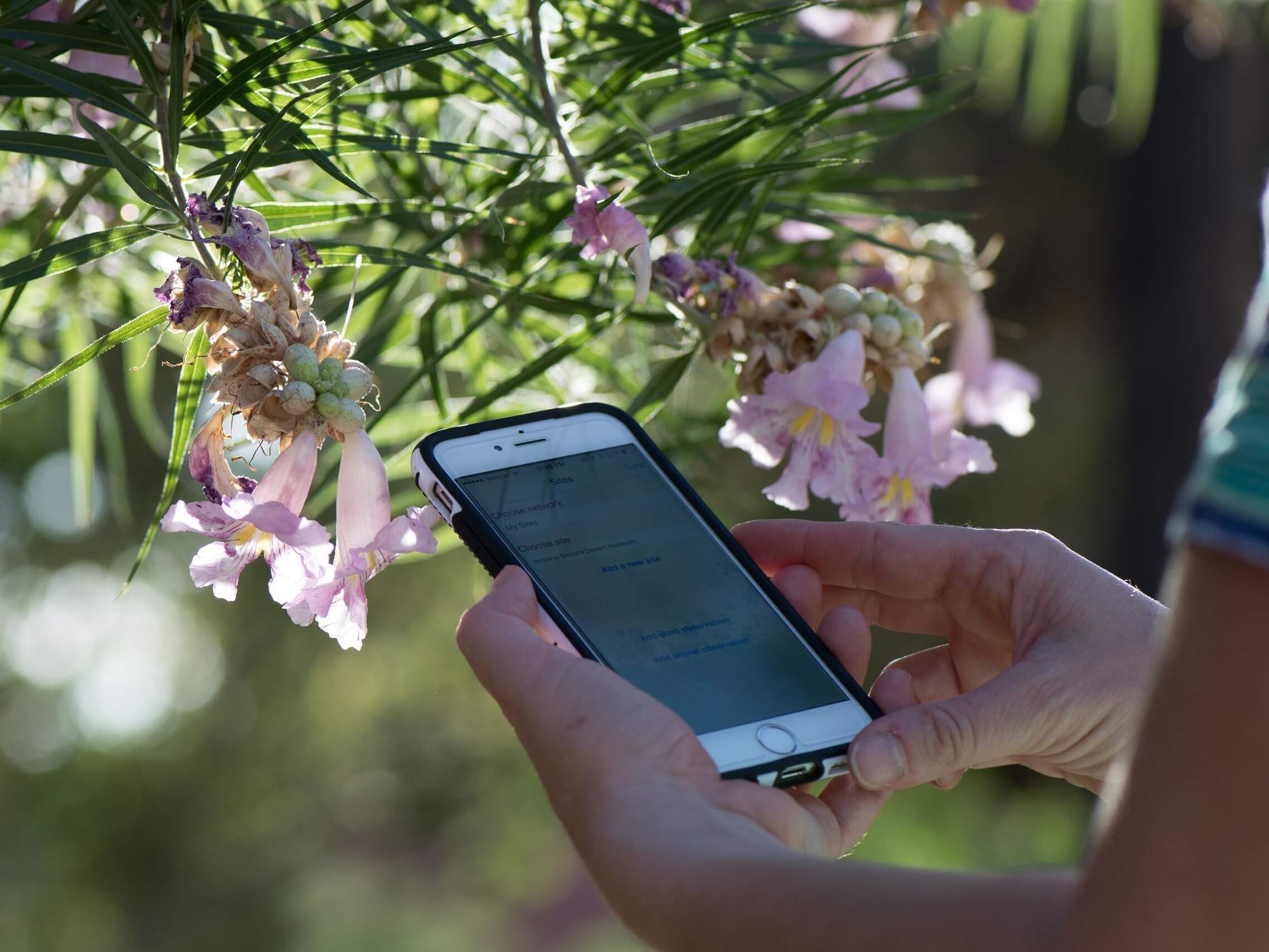
Through the group’s Nature’s Notebook app and website, gardeners and others can submit observations on plant leafing, flowering, insect emergence, bird fledging, and more. The phenology field depends on sustained data collection over time, which is difficult to align with typical science funding models based on short-duration projects. Community involvement has helped scientists overcome that limitation.
One important example is lilacs. The flowers have been used in the past as an indicator species, helping farmers predict the best times to plant or harvest. Today, trends in the timing of lilac leafing and flowering have become invaluable for understanding the impacts of climate change.
“The only long-term phenology monitoring we’ve had in this country is a historical project that was focused on lilacs, and that was initiated back in the late 1950s, early 1960s,” Crimmins says. “As the climate has warmed … we see a trend toward things generally coming earlier in the year than they did in the 1950s or ’60s. But that trend is stronger in certain parts of the country. We tend to see greater rates of advancement in springtime activity in [northerly latitudes] than in the Southeast.”
With the help of citizen scientists, the USA National Phenology Network is continuing to monitor lilacs, along with nearly 2,000 other species, including redbuds, dogwoods, and nectar-producing flowers favored by monarchs.
“It is not an exaggeration to say that a growing number of discoveries that scientists are making using these data wouldn’t be possible [without citizen scientists],” Crimmins says.
Observing Native Flora and Fauna
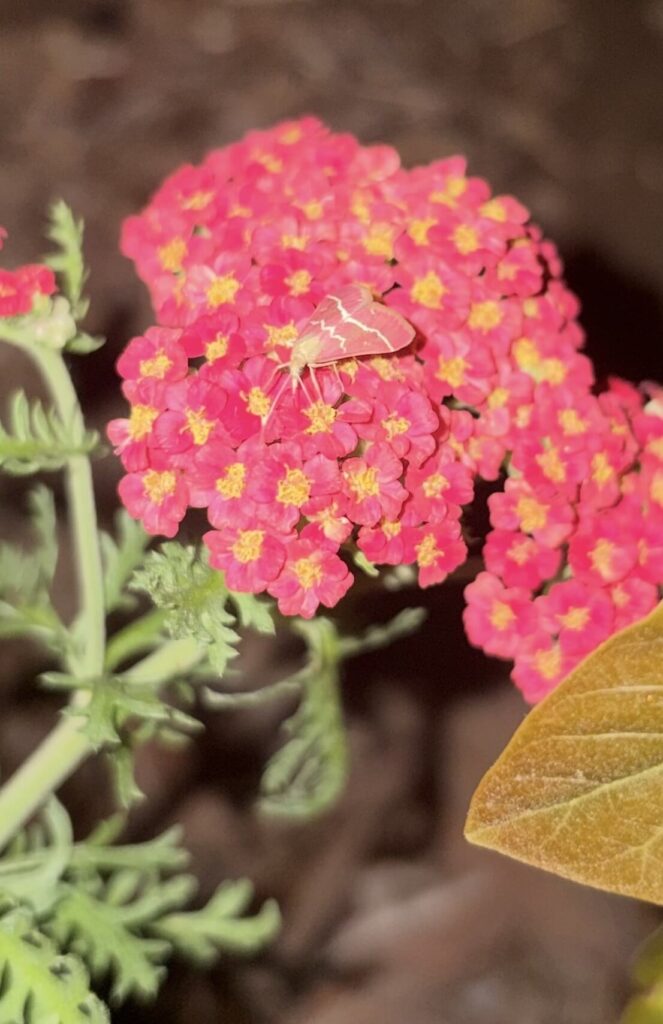
Among many opportunities on the iNaturalist app, the Biodiversity in Urban Gardens Initiative is recruiting gardeners and others throughout California to take photographs of native animals on native plants and upload them through the app.
Lila Higgins, director of education and horticulture for the California Native Plant Society and leader of the program, otherwise known as the BUG Initiative, explained that the data will “increase our understanding of how native plants support animal biodiversity in our cities.”
Hundreds of people have participated in the BUG Initiative since it launched in May 2026. As of Aug. 5, Higgins notes, “we have over 12,000 observations, we have 1,104 species that have been observed, and we have 614 people taking part.” Among the commonly observed animal species so far have been insects (such as the monarch butterfly, spotless ladybug, and grey buckeye butterfly), reptiles (Western fence lizard), and birds (lesser goldfinch and Anna’s hummingbird).
“This sort of research literally wouldn’t be possible without a community science or crowdsourced model,” Higgins said. “We need a really, really big data set … from across the state of California. And with professional scientists alone, we would not be able to cover that much ground. Secondly, we need data from private land, from people’s backyards, from schoolyards and other sites where it’s difficult and time-consuming to get access.”
An added benefit, Higgins explained, is that public participation helps limited funding go further.
Benefits Beyond the Data
Participating in science is “not just about the data,” Crimmins says. “There’s so much personal value that folks report. When you do start to regularly start to carve out just a few minutes of time out of your schedule to go visit a plant … you start to see things. Folks tell me all the time they see things they never would have seen otherwise. They often report really cool insights about the organism itself.”
“There’s learning that happens,” Higgins says. “We know that people who are taking part in community science projects are helping to build a stronger connection for themselves with nature and with the environment around them.”
