Note that if you purchase something via one of our links, including Amazon, we may earn a small commission.
The pursuit of waste-free fine dining in the Mile High City.
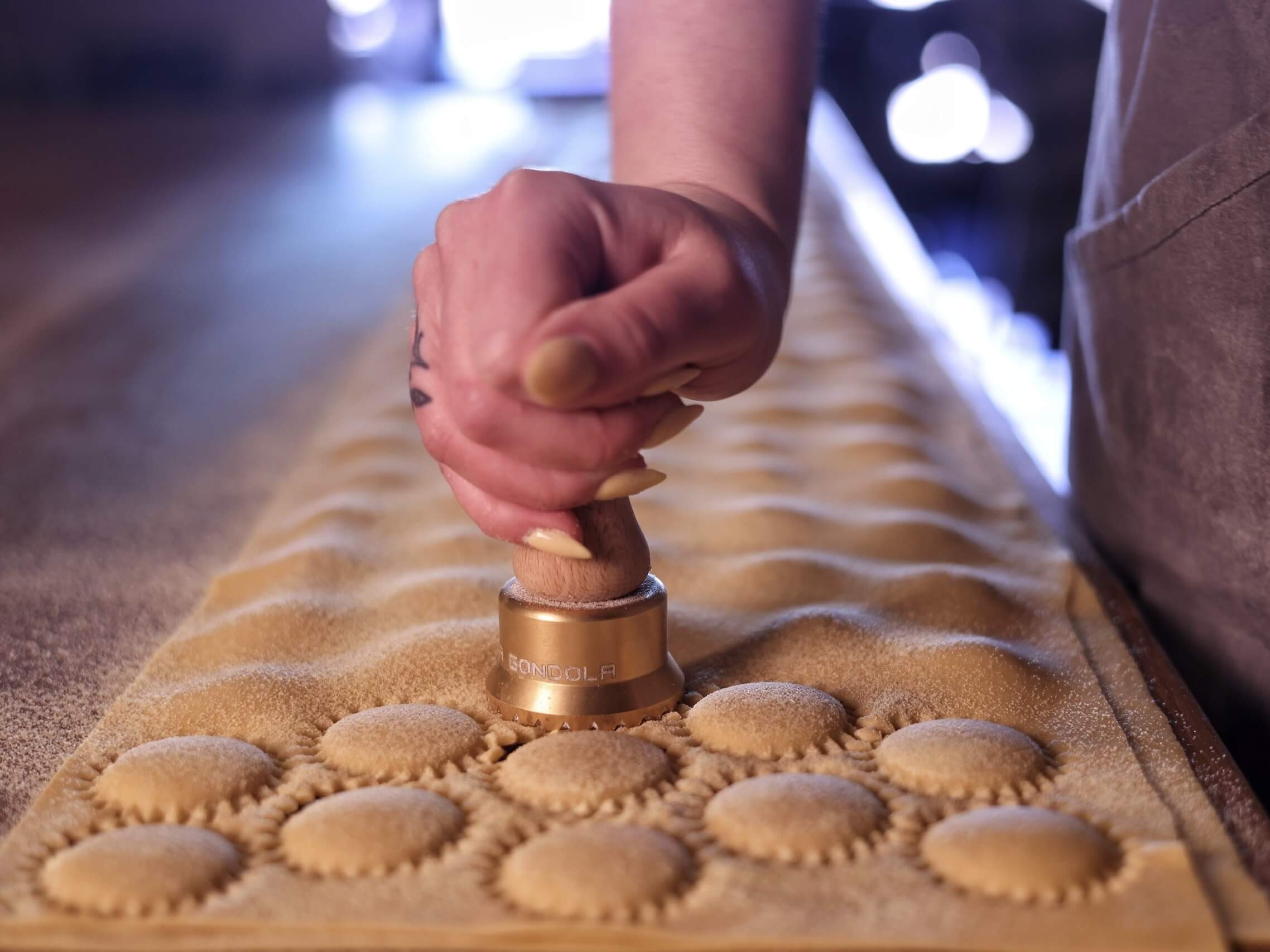
One bite into the mushroom ravioli (dressed with caramelized leeks and balsamic-like saba syrup) in the dimly lit dining room, and I moved my shoulders back and forth in a little dance I reserve for only the most mind-blowing meals. Over the years, as I’ve traveled extensively and gotten into food writing, it’s become harder and harder for a meal to earn that dance.
It wasn’t just that the restaurant had managed to make these half-moon ravioli gluten-free and cook them al dente, but — even more strikingly — that the flavors of the produce were so full. Leeks tasted like leeks, mushrooms like mushrooms, in a way that I had only ever experienced outside of the U.S., where vegetables are often unadulterated by chemicals. A traditional Bolognese dish and simple salad topped with ruffles of Parmesan cheese were the same — it was as if I were tasting them all in 3D.

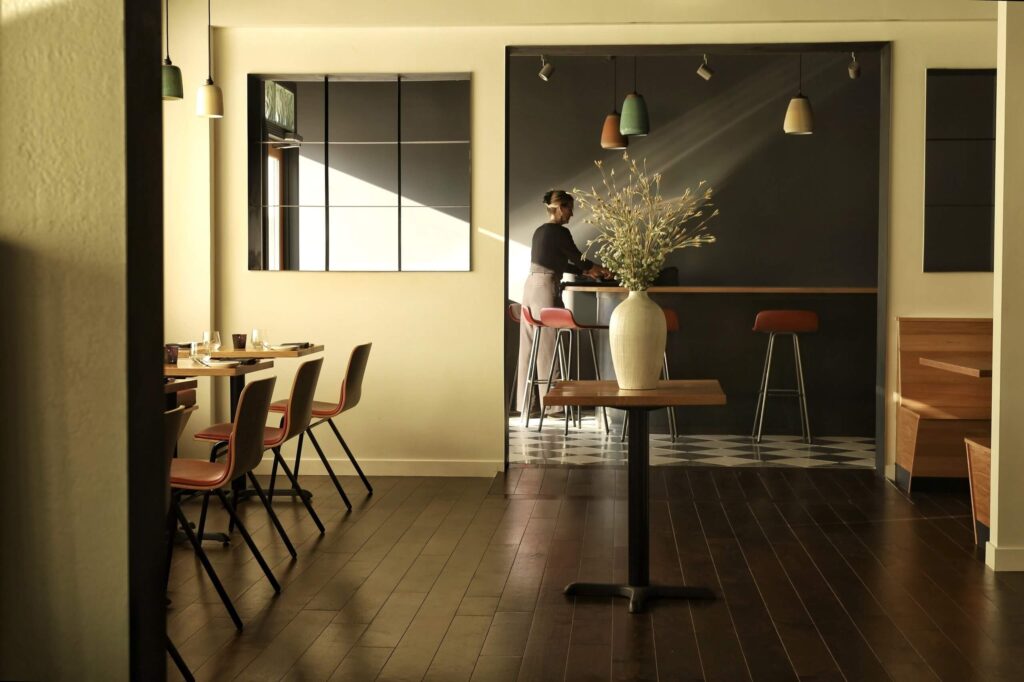
But this time, I wasn’t outside of the U.S. I was dining at pasta-focused Restaurant Olivia in the quiet Wash Park area of Denver, just 10 minutes away from downtown. What makes the eatery stand out, besides its cozy neighborhood feel, is its commitment to sustainability.
The co-owners of Restaurant Olivia (and its sister restaurant, Dear Emilia), have earned a Slow Food Snail of Approval for their efforts to sustainably source local, organic produce and meat. “Sustainability was always important to us,” Ty Leon, co-owner and head chef, shared with me later, “but the deeper we got into restaurant operations, the more we realized that doing it well is truly a full-time job.” Paula Thomas, the director of sustainability, helps the restaurants address some of their biggest challenges — chief among them are building and maintaining relationships with local farmers and producers.
Paula previously worked as a pastry chef and volunteered with Cooking Matters Colorado, an initiative that shows low-income families how to prepare healthy, affordable meals. “That experience showed me the many issues facing communities and their food,” Paula says, and eventually, it led her to pursue a master’s degree in global food systems at the University of Gastronomic Sciences in Italy.
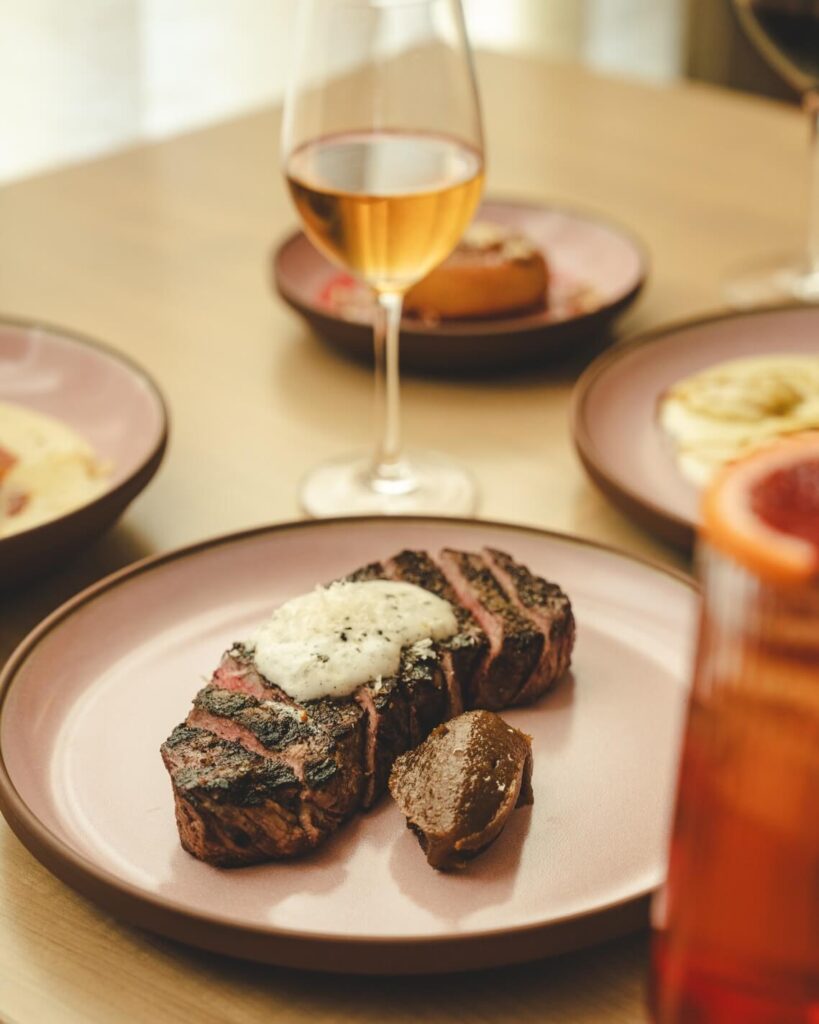
Now, Paula is involved at every stage of menu development for both restaurants. “She’s sitting at the table with us during brainstorming sessions, tasting dishes with us, and helping us think through sourcing, packaging, preservation, and ingredient usage from every angle,” Ty says. For example, when talking about ordering strawberries, “The conversation becomes: How do we use the entire ingredient? Can the leaves be used in another dish? If not, could they become part of a ferment, vinegar, or another preserved ingredient that can be used later?” According to Ty, many ingredients that would otherwise be wasted now serve as “foundational pieces of the menus at both restaurants.” Like old focaccia transformed into miso, which is then served alongside steak or mixed into the sauce for a gnocchi dish.
Studies have attributed up to 10% of the world’s greenhouse gas emissions to food loss and waste, much of which comes from food service businesses. Not to mention the amount of plastic used throughout the supply chain. One of Paula’s greatest concerns, though, is lack of awareness. “If we don’t know there is a problem, we cannot even begin to think about change,” she says, “so education has been key.” She trains both the front-of-house and back-of-house staff, “finding ways to translate complicated concepts related to environmental impact into initiatives that the staff can feel connected to and excited about without feeling overburdened by technicalities.”
By the time I was sipping an amaro and tucking into a delicate pecorino cheesecake paired with a locally grown–rhubarb compote, I felt like I’d had one of those rare dining experiences that was fully enjoyable and also guilt-free. In Denver, at least, these experiences are becoming less rare.
Digging Into Denver
Restaurant Olivia and Dear Emilia aren’t the only restaurants in Denver working to make food that is better for the planet. Here are some other restaurants going the extra mile in the name of sustainability.
- Brutø has won Michelin stars and Michelin green stars for its preservation and fermentation techniques that extend the life of produce.
- Employee-owned Edible Beats, which runs vegetable-forward restaurants in Denver like Root Down and Vital Root, uses produce from its own hydroponic farm and runs on wind energy.
- Jax Fish House & Oyster Bar, with four locations in Colorado’s Front Range area (including one in the LoDo neighborhood of Denver), is certified by the Monterey Bay Aquarium Seafood Watch for its sustainable seafood sourcing practices. Culinary director Sheila Lucero is actively involved in a number of organizations fighting for more sustainable fishing practices.
Reducing Waste at Home
Paula inspired me to make a difference in my kitchen. “Begin with an audit. Take a notepad and write the food that ended up in the bin each day during a week.” She assured me: “No act is too small. Every change we make adds to the collective work we are all trying to do to be more responsible earthlings, and that’s wonderful!”