Note that if you purchase something via one of our links, including Amazon, we may earn a small commission.
A hearty, colorful hash has everything you need to power your day — and you likely have everything you need to make it.
If you’ve never tried veggies and beans for breakfast, you’re missing out! Traditionally, hash is made with a base of chopped meat and potatoes, but by using plant-based proteins and whatever medley of ingredients you have on hand, it can be lighter on the planet and still satisfying enough to start your day right. The dish is infinitely adaptable to changes in season and availability, making it a perfect go-to breakfast option to wake up you and your taste buds. Breakfast hash is also a great way to use up any random bits of veggies in your produce drawer so they don’t go to waste!
Building Your Breakfast Hash: The Basics
Ready to start experimenting? Follow this playbook to build your personalized hash from foundation to finishers.
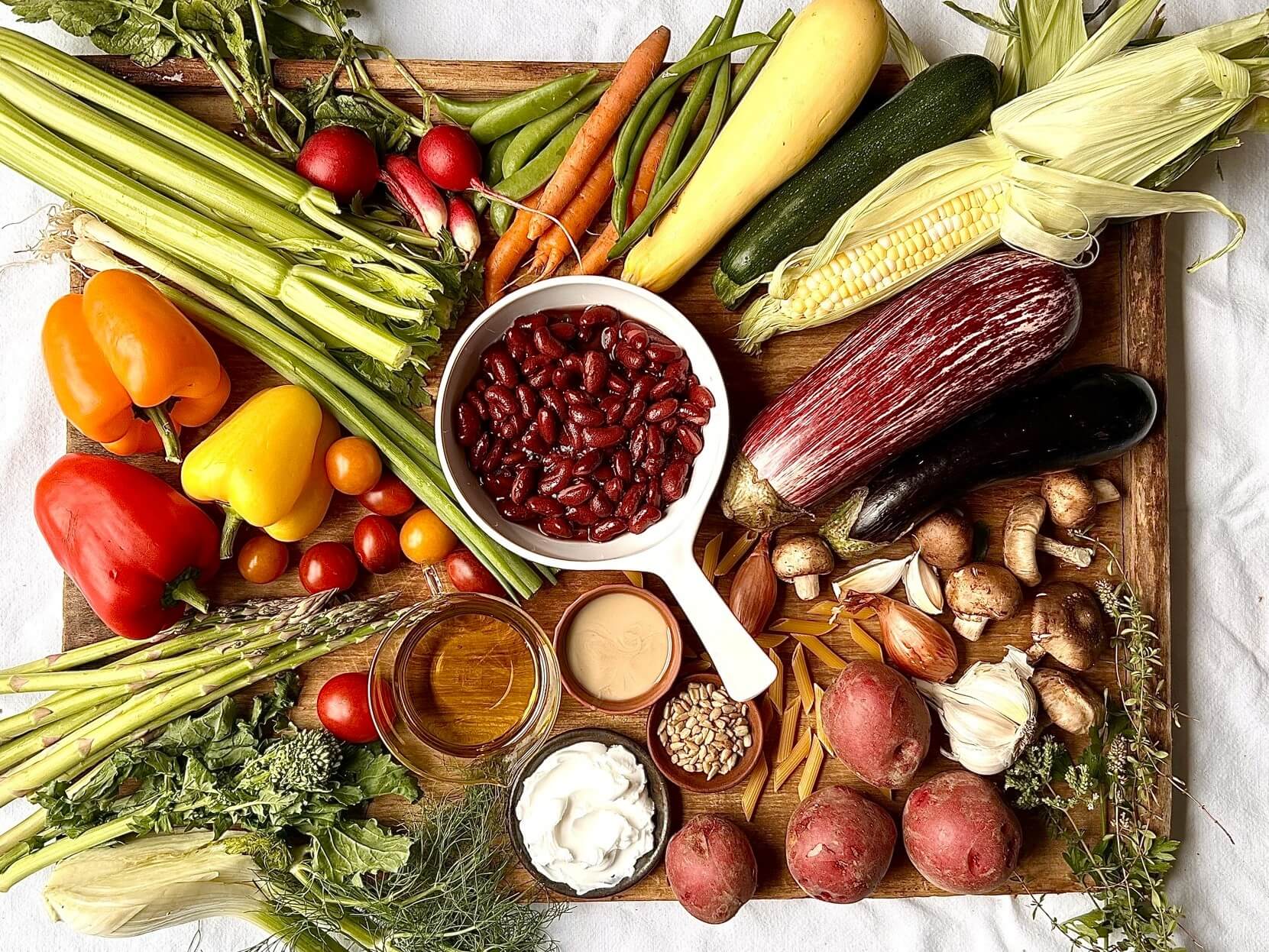
The Starters: Every good breakfast hash starts with a solid foundation. A base of onions, garlic, bell peppers, and mushrooms sets the stage with savory and sweet tones. Mix it up by adding celery or using shallots or leeks in place of onions.
Veggies: Round out your hash with a rainbow of brightly colored vegetables! Eating with the seasons maximizes flavor, delivers optimal nutrition, and lets you focus on buying local. Mix up your hash all year with these seasonal delights (and whatever else you find at your local farmers market!).
- Fall and winter veggies: sweet potatoes, Brussels sprouts, winter squashes, turnips, parsnips, kohlrabi, daikon radishes, cabbage, potatoes, rutabaga, celeriac, and scallions
- Spring and summer veggies: zucchini, yellow summer squash, radishes, new potatoes, asparagus, peas, broccoli, carrots, corn, eggplant, green beans, tomatoes, cauliflower, beets, fennel, and spaghetti squash
Greens: Add vibrance and nutrients to your hash with leafy greens like chard, spinach, kale, collards, broccoli raab, dandelion greens, bok choy, mustard greens, turnip greens, and cabbages. Start with mild flavors then try branching out into more bold options.
Proteins: Beans and legumes are excellent sources of plant-based protein, and they support healthy soil by naturally increasing nitrogen to promote plant growth with less fertilizer. You can stick to one source of protein or mix-and-match with lentils (any variety), split peas, kidney beans, pinto beans, black beans, chickpeas, great northern beans, cannellini beans, edamame, tofu, tempeh, and bean-based pasta.
Healthy Fats: Fats enhance the flavor of your hash and help you absorb fat-soluble vitamins. Start with a high-quality cooking oil like extra-virgin olive oil or pure avocado oil, then choose one or more of these healthy fats to give the dish a tasty finishing touch.
- Nuts: walnuts, almonds, cashews, peanuts, hazelnuts, pecans, and nut butters (thinned with warm water)
- Seeds: sunflower, pumpkin, hemp, chia, sesame, tahini, and seed butters (thinned to a drizzle)
- Other fun fats: sliced avocado, dairy-free cream cheese (thinned into a sauce), and nondairy yogurt
Herbs, Spices, and Flavor Boosters: Adding dried herbs and spices during cooking or sprinkling fresh herbs on at the end can add depth, warmth, spice, or brightness, depending on what you choose. (Don’t forget to save the stems from fresh herbs — they’re great in smoothies!) Here are a few fun flavor profiles to get you started:
- Grated ginger root, curry powder, and red pepper flakes
- Balsamic vinegar, basil, oregano, parsley, black pepper, and nutritional yeast
- Paprika, black pepper, oregano, thyme, and cayenne pepper
- Thyme, cumin, coriander, turmeric, and paprika