Note that if you purchase something via one of our links, including Amazon, we may earn a small commission.
Sourdough Starter
Description
To make a sourdough starter, mix flour and water, stir it several times a day until it bubbles to life, then feed it fresh flour and water. Once it reaches maturity, you can use it to bake bread. This recipe calls for a smaller ratio of flour and water to avoid the starter growing so big it takes over your kitchen. That’s also why you remove most of the starter before each feeding.
Ingredients
- 2 2/3 Tbsps rye flour (25 g), plus an equal amount for each feeding (see note)
- 2 Tbsps white flour (15 g), plus an equal amount for each feeding (see note)
- Scant 3 Tbsps room temperature water (40 g), plus an equal amount for each feeding
Instructions
- Combine the flour and water in a glass jar and mix until it has the consistency of thick pancake batter. Cover the jar with a cloth, a plate, or lid. Set it in a warm, not hot, spot.
- Stir the starter several times daily until it begins to bubble and develops an aroma, about a few days to one week.
- When you observe both bubbles and an aroma, begin to feed your starter daily. To feed it, transfer about 80% of your starter to a clean glass jar and set it aside. This is the discard. Store it in the refrigerator and make something with it later. Put it out of your mind. Do not feed it. Let it go …
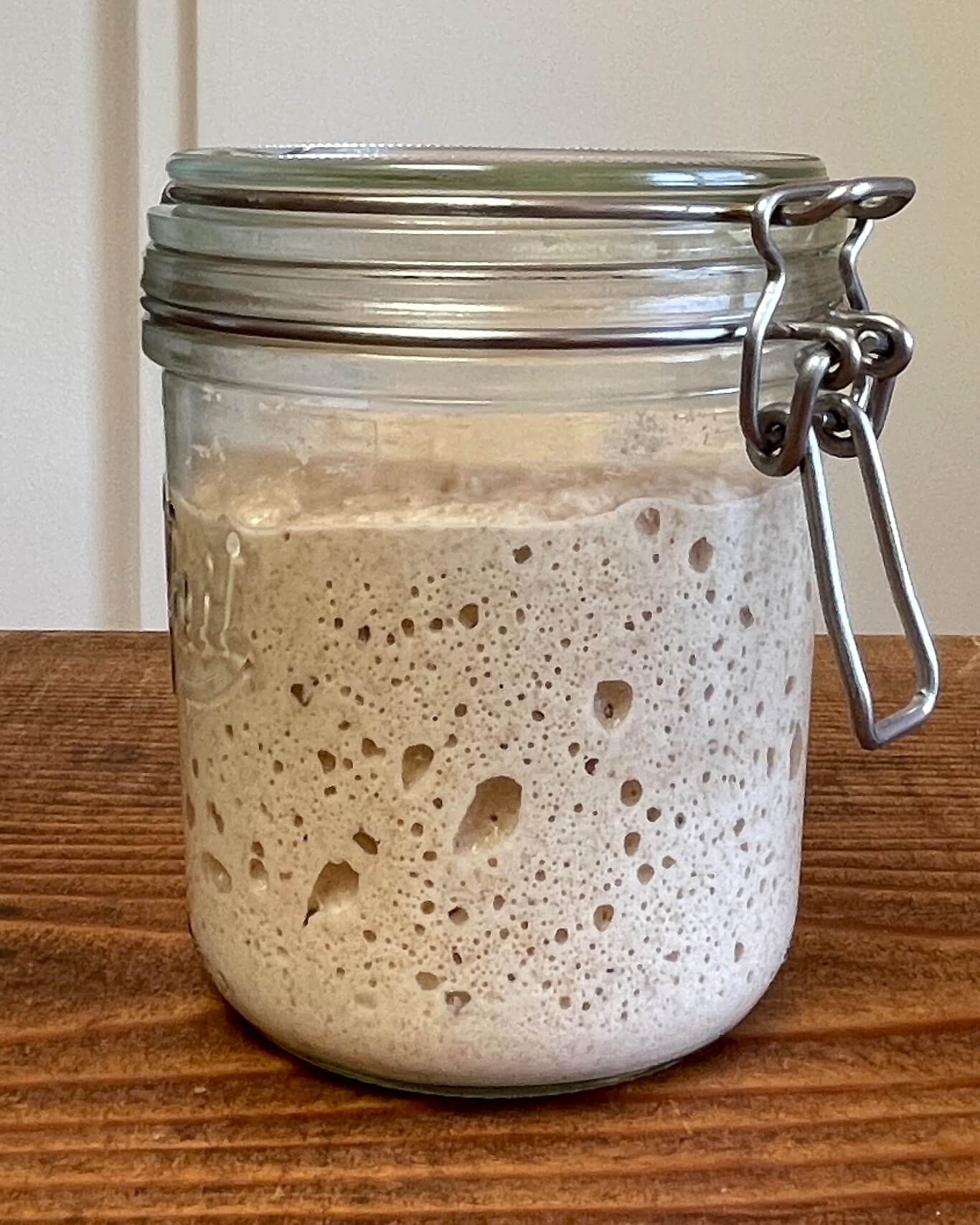
- In the jar you started with, you should have about 1 tablespoon of starter remaining. Add to it 40 grams of fresh flour and water each. Stir, cover the jar, and place it back in its spot. Continue to feed it daily (or even twice a day), as directed above. After about five days to a week of regular feedings, your starter should double in size within about 4 hours of feeding before slowly falling back down.
- Congratulations, your virile starter can now bake bread! Think of a cute name for it.
Notes
I used to feed Eleanor equal parts whole-wheat flour and white flour. She prefers rye over whole wheat, so I feed her about 25 grams of rye and 15 grams of white. I don’t get too hung up on the rye-to-white ratio of my 40 grams of flour; I just add more rye than white.
Once your starter is established, you can store it in the refrigerator and remove it about once a week to feed it. Let it sit for a couple of hours after feeding before returning it to the refrigerator.
Don’t Discard Your Discard!
The starter you don’t feed is called discard, but that’s a bad name for the stuff. I never throw out discard. Instead, I use it to make pancakes, crackers, tortillas, and other things that don’t need yeast (since the yeast in the discard has waned). Use up discard with Easy 5-Ingredient Biscuits and Ultimate Pumpkin Sourdough Discard Muffins.