Note that if you purchase something via one of our links, including Amazon, we may earn a small commission.
Photographer Randi Baird reports in.
Photographer Randi Baird has photographed for Bluedot Living from the very beginning, when we launched our print magazine on Martha’s Vineyard in 2021 (here’s an early story about seaweed saving the world). She made several trips to San Diego and we used her drone shots for stories such as this one about a Greener San Diego.
Randi has a thriving photography business on Martha’s Vineyard, where she has photographed cookbooks, stories for the New York Times, and covers stories all over the world for various publications.
Jamie Kageleiry: So, I’m thinking back a few years when we had you photograph some stories and provide some stock in San Diego. We always love your drone shots, and you brought it along. What were you shooting with the drone?
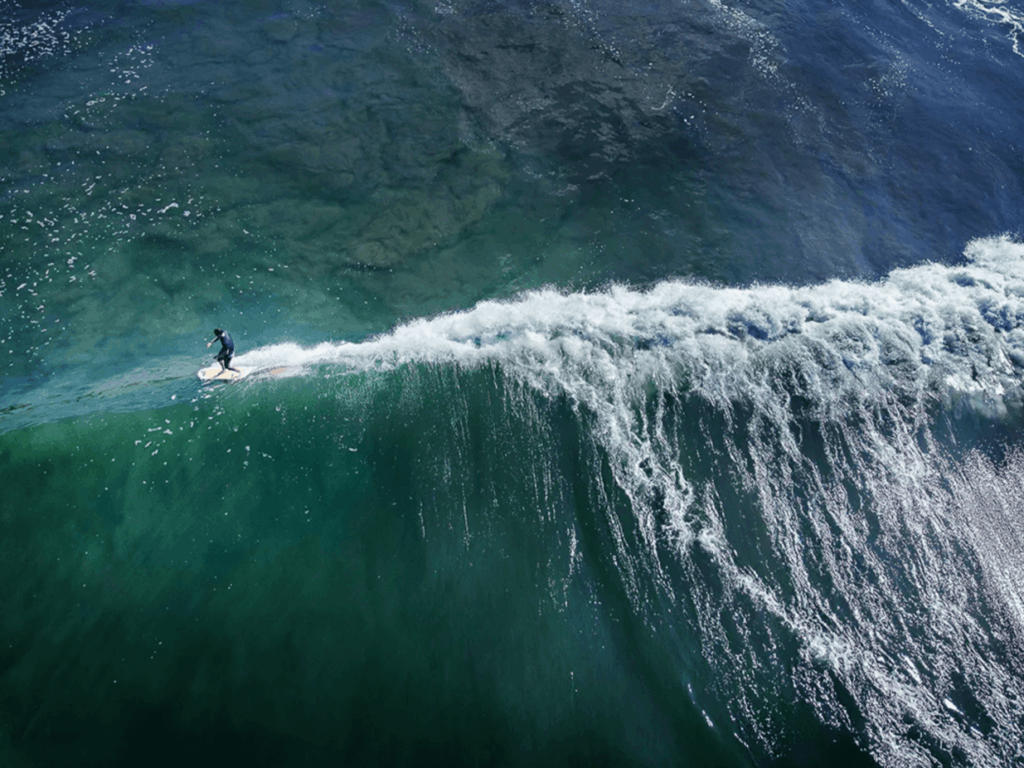
Randi Baird: Nicki Miller [Bluedot San Diego editor] and I were in Chula Vista photographing the South Bay Salt Works. I was flying over South San Diego Bay to capture the different areas where salt is extracted from the bay. From above, the landscape was very cool — strips of water divided by sand berms, with all these different colors and patterns that you really couldn’t see from the shoreline.
JK: You told me back then you lost the drone somehow. How did that happen?
RB: I was flying the drone offshore over the salt flats when I got a low-battery warning. Instead of letting it automatically “return to home,” I overrode that function because I wanted to stay up and photograph a little longer. Within the next minute or so, the drone essentially took over the controls. I lost track of where it was going, and it never returned to the exact location where we had launched it. Normally, when a drone automatically returns home, it gains elevation and flies back to its recorded home point. My guess is that the battery was just too low, and it landed somewhere nearby before it could make it all the way back to its home point.
JK: Don’t drones have GPS systems that allow you to find them easily?
RB: Sort of. The GPS showed me an approximate location of where it landed, which was actually only about a block away from where we had launched. Nicki and I went to the GPS location and searched everywhere — bushes, sidewalks, the street, even looking to see whether it might have been run over by a car. We also went into the two businesses on the block, a towing company and a food pantry, and I left my name and phone number, just in case someone found it. We searched for well over an hour and eventually had to give up. The frustrating part wasn’t only losing the drone. I had several days of photographs and footage on the SD card inside it that I hadn’t yet downloaded.
JK: Wait — didn’t you end up finding it? How did that happen?
RB: Yes — and it was pretty unbelievable. I was so upset that I went back to Chula Vista the next day and searched again. I also called and notified the Chula Vista Police Department about what happened and to see if anyone turned in a drone. They said no but to check back. Upset with myself for not downloading after each day’s capture, I moved on. I traveled to Palm Springs for the next week with a friend, and the plan was to travel back to San Diego, then head north to LA then Santa Barbara to photograph for Bluedot. I called the police department every other day that week, but nothing turned up.
A week later, I returned to San Diego. On the way back, I stopped by the Chula Vista Police Department one more time, both to check again and to get an official police report for my insurance company. Afterward, I stopped for gas. Instead of getting on the highway, I decided to turn south and drive back to the street where I had lost the drone, just two exits away. It was going to be my absolute last chance to look before leaving for Los Angeles the next morning. While I was searching, a man in a tow truck came over and asked what I was looking for. I told him I had lost a drone there about a week earlier. He walked over to his truck, came back with my drone, and handed it to me. He had found it the week before and kept it safe. And somehow, he just happened to be getting off work at exactly the moment I showed up. I was completely amazed, floored, and relieved. I told him he had absolutely made my day, and thanked him again and again. It still feels pretty miraculous that I went back at exactly the right moment.

JK: What do you love about drone photography? Do you get a lot of things you weren’t aiming for, or envisioning? Does it happen more with drones than with other candid photos?
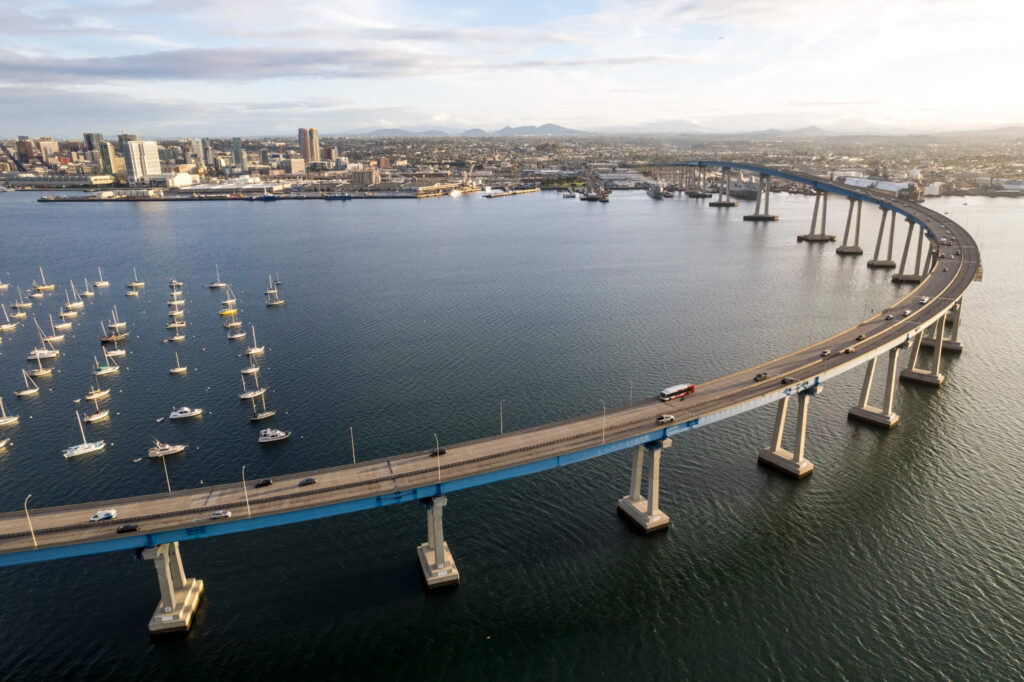
RB: What I love most about drone photography is that it completely changes your perspective. I’ve always loved the view when a plane takes off — how the landscape suddenly becomes painterly, contained, and beautifully small, even while you’re seeing such a vast area. You can photograph a place you think you know well and suddenly discover patterns, shapes, relationships, and a sense of scale that is not visible from the ground.
Sometimes I launch the drone with a very specific photograph in mind, but often the most interesting image is something I never envisioned. It’s not an everyday perspective, so the images can feel fresh, unexpected, and unique. That element of discovery is a big part of what I love about photography in general, but I think it happens even more with a drone because you’re literally seeing the landscape from a point of view you normally don’t have access to.