Note that if you purchase something via one of our links, including Amazon, we may earn a small commission.
Exploring the island by bicycle offered a closer look at the farmers, food producers, and community connections shaping Nantucket’s food system.
I don’t live on Nantucket, but as an editor and writer for Bluedot’s Nantucket magazines and newsletters, I try to make a few reporting trips to the island each year. I’ll often arrive with a handful of assignments and leave with far more story ideas than I came with.
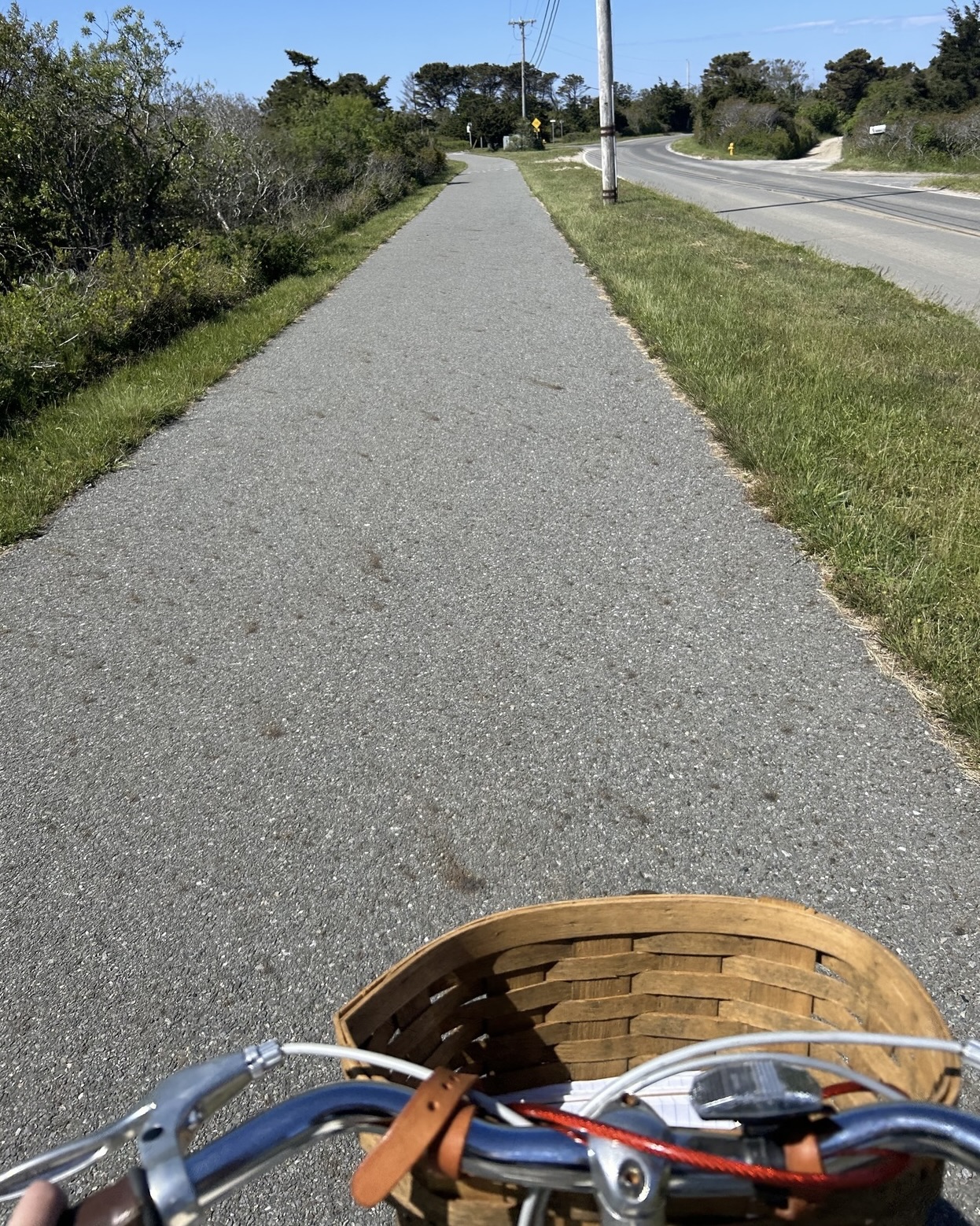
Two summers ago, I boarded the ferry with two in mind: report on a community farm on the southwestern side of the island, and find out what was going on with the giant pigs one of our photographers had recently captured on camera. First things first: I rented a bike. I’d only visited Nantucket a few times as a kid on day trips from Cape Cod, and bicycling felt like the best way to get a feel for the island. It’s also a good way to report. You move slowly enough to notice things and take detours when something catches your eye.
My first stop was ACK Smart Solar, where I met Tobias Glidden, a fifth-generation islander and co-owner of the local solar company. He was also the owner of those pigs in question — or, American Guinea Hogs. I learned these weren’t your average pigs. They’re one of the oldest heritage breeds in the United States, dating back to the 1800s. They’re excellent foragers and happy to eat what would otherwise be considered food waste. Tobias and Dylan Wallace, another farmer on the island, were breeding them and working to bring locally raised meat back to Nantucket stores for the first time in a long time.
On the way between stops, Tobias suggested I grab lunch at Pip & Anchor, a cafe and retail shop run by Chris Sleeper and Mayumi Hattori. At the time, it was simply a midday break to get lunch, but it ended up having a much longer thread. Chris and Mayumi source ingredients from local farms across the island, including many of the same farms I would soon visit. Chris and Mayumi also run a food security program that provides weekly food boxes to roughly 300 people, many of which include produce grown by those same farms. What felt like a casual lunch stop ended up revealing another layer of how interconnected the island’s food system really is, and later became the basis for a separate story.
The next day, I biked out to the Sustainable Nantucket community farm. There, I learned about a farming cooperative where community members can rent small plots of land for the season and receive guidance from experienced growers while learning to farm themselves.
What surprised me most was how quickly the stories began to overlap. Dylan Wallace, who I met the day before, owns Eat Fire Farm, one of the farms on the community plots. And a few of the island’s other biggest producers also work on the community farm, including Fog Town Farm and Washashore Farm. Many of these same farms supply Pip & Anchor, which I had visited just the day before, adding another layer to how interconnected the island’s food system really is.
By the end of the trip, I realized I hadn’t just reported two separate stories. I’d gotten a glimpse into a much larger network of farmers, food producers, and community members working together to strengthen Nantucket’s local food system. And that’s one of my favorite parts of reporting. You start with a simple assignment, follow a few threads, and you find yourself with a deeper understanding of a place than you had when you arrived.