

Note that if you purchase something via one of our links, including Amazon, we may earn a small commission.
One Colorado woman’s passion for thrifting grew beyond clothing and home decor and into her backyard. An admiring friend took a tour through her home and garden to learn more about her approach and style.
Christina Conner is one of those people with great personal style. Every time I see her, she’s in standout vintage items like an embroidered jean jacket or R.E.M. T-shirt, paired with newer, trendier pieces. Today, it’s a denim shirt that was once her mother’s and a pair of white jeans with frayed bottoms that she picked up at a clothing swap, accessorized with a silver bracelet and rings.
Even the interior of the bungalow Christina shares with a roommate in Fort Collins, Colorado, looks well-curated. As I walk inside, I see that she’s topped a new wooden console in the living room with framed posters, candles, and fleur-de-lis bookends that have been in her family for years. She’s arranged a vintage IKEA lamp to cast a warm glow over her orange couch and filled a set of shelves above the stove with an eclectic mix of thrifted objects, candlesticks, and flowers. The key to her sense of style is repurposing old things, and that is reflected everywhere from her outfits to her home and even her backyard garden, one of her greatest joys.
“When I grew up, my grandma and my mom both had a ton of houseplants,” she says as we sit on the couch, sipping iced sun tea (tea brewed outside in direct sunlight) from thrifted glasses. As a teen in Atlanta, Georgia, Christina was part of a gardening club. When she got to college, her hobby took on a whole new meaning.
“I was dealing with some depression and found a lot of solace in gardening,” she tells me. So she got a job at a local plant nursery, where she says she “fell in love” with plants — so much so that she transferred to the University of Georgia to pursue a minor in horticulture.
In the years since (Christina is now 31), gardening has been a constant in her life, whether she was writing about gardening for freelance clients, working in a flower shop, keeping up with a personal garden, posting on her garden-themed Instagram account, or working in her current role as the multimedia communications coordinator for the College of Agricultural Sciences at Colorado State University.
“I’ve been able to find my way back to horticulture through my winding path,” Christina says, mentioning that she’s about to pursue a graduate-level horticulture certificate at Colorado State.
Christina takes a studious approach to home gardening, keeping a notebook where she jots down what she’s planted and strategies she’s tried, along with the results. “When something fails, I just chalk it up to experience,” she shares while lamenting her recently wilted lavender, “and try to discern why it failed and give it different conditions next time.” When stumped with a stubborn weed or finicky plant, she consults local plant nurseries or Colorado State University Extension, adding that extension programs are a helpful, and often untapped, resource for hobby gardeners.
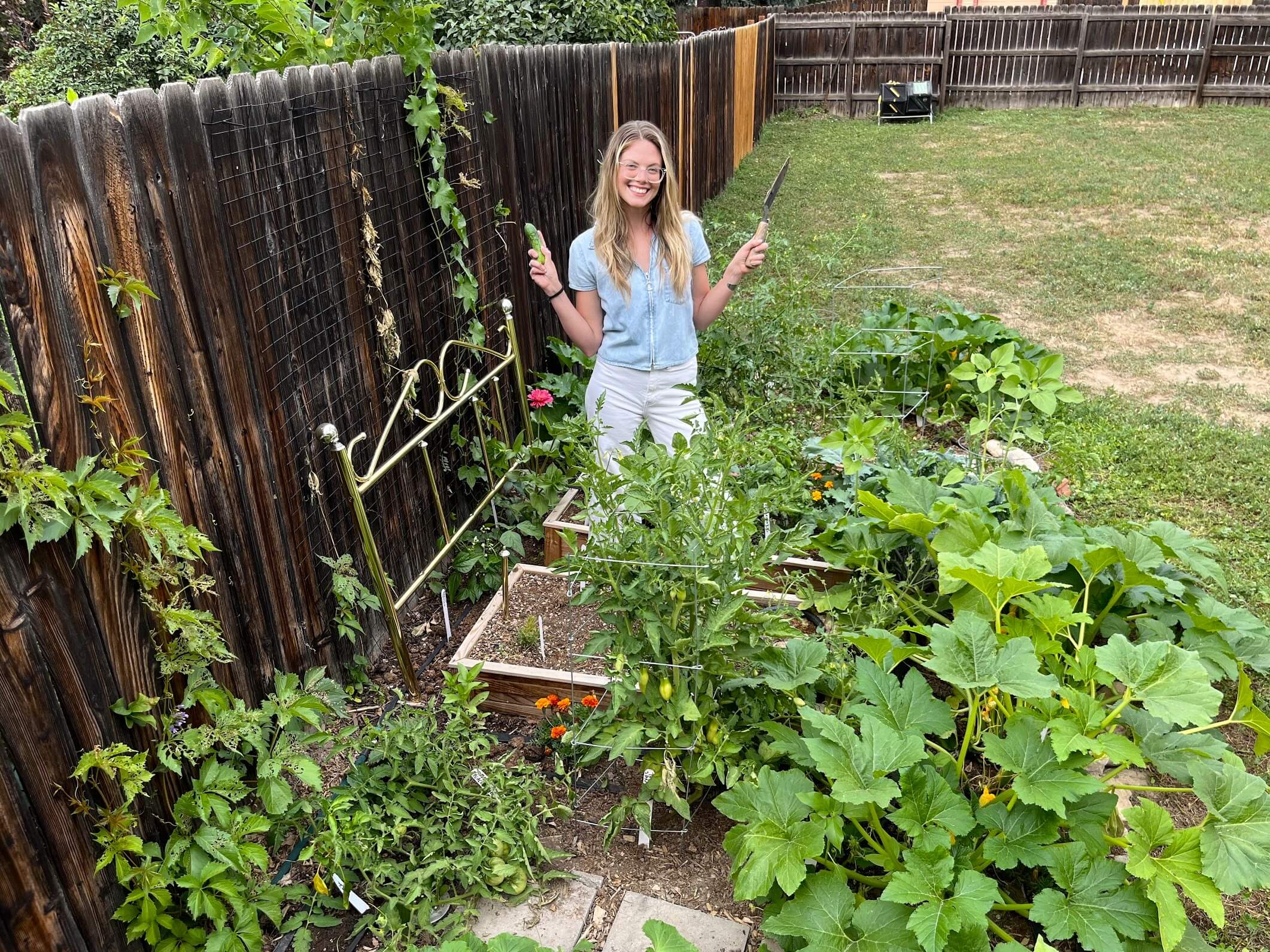
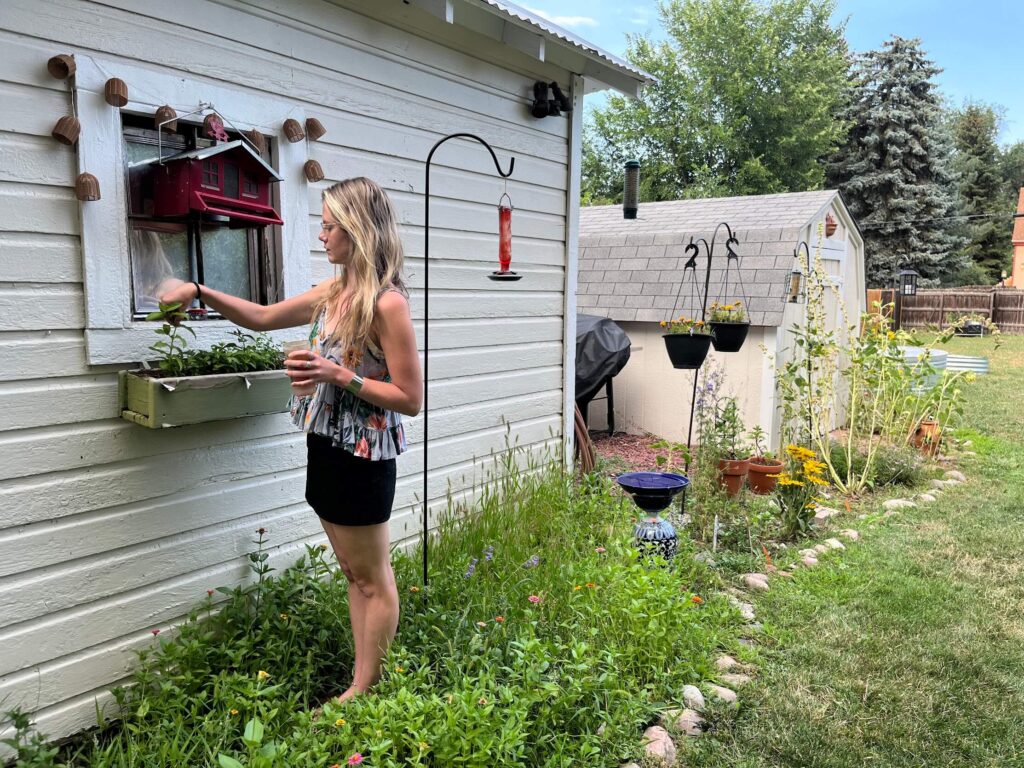
We head out into the backyard to see Christina’s work. She walks barefoot on the lawn to the garden, tenderly moving aside leaves to check on summer squash and bushy green and purple basil. I see she’s filled an old saucer with rocks and water as a bee bar.
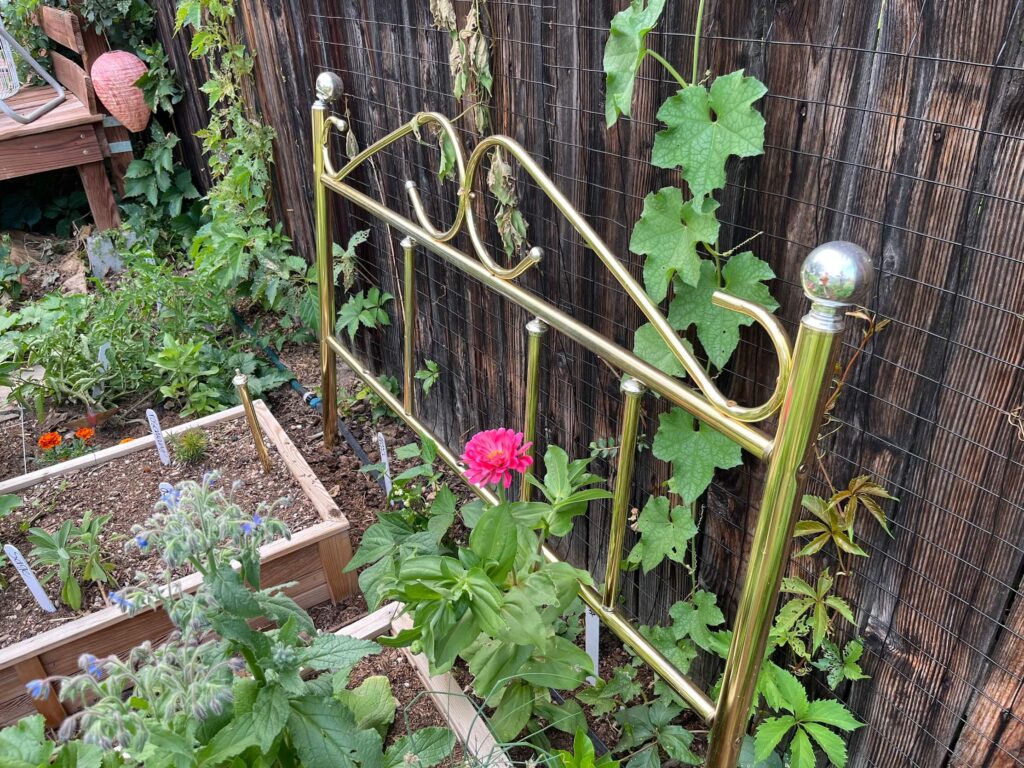
The garden’s centerpiece is a golden headboard Christina purchased at a yard sale a couple of years ago for a few dollars. When she was ready for an upgrade, she looked at the headboard and asked herself what she could do with it before giving it away. Coincidentally, she’d just bought a couple of raised garden beds on sale from the local plant nursery. “I thought I could do a little play on words…‘garden bed,’” she says with a laugh as she shows me how she’s encouraging her pole beans to climb up the headboard.
Like gardening, thrifting has been a part of Christina’s life for as long as she can remember. “Growing up, my mom was pretty much a single parent, and we didn’t have a lot of money,” she explains, “so we would go to the thrift store, and that’s where most of our stuff came from.”
Meanwhile, Christina's paternal grandmother grew up picking cotton during the Great Depression and was the first member of the family to leave the farm, go to college, and travel internationally. Christina says she would go to the thrift store with her grandmother, who would teach her “what to look for and how to spot high-quality items, which helps discern them from the junk.” The family philosophy was: “Save money where you can so you can have money to spend on the things that are really important to you.”
This resourcefulness Christina inherited is also helpful for avoiding waste. “Thrifting and sustainability go hand-in-hand,” Christina explains, “because when you thrift, you’re saving those items from going to a landfill.”
Which is why she makes do with what she has, even when it comes to her garden. She points out a box full of old prescription bottles that she’s hoping to use to store seeds and shows me her set of thrifted garden tools and compost bin. “I don’t think I’ve ever bought a new watering can,” she says, explaining that she has thrifted ones or makes use of old milk jugs.
For mulch, Christina uses fallen leaves in autumn or turns to local tree companies and recycling centers, and she gets some of her compost from a local landscaping company that sells what they don’t use. She repurposes takeout containers for mixing fertilizer and uses cardboard from delivery boxes to smother weeds. The result is a lush mix of vegetables and pollinator plants.
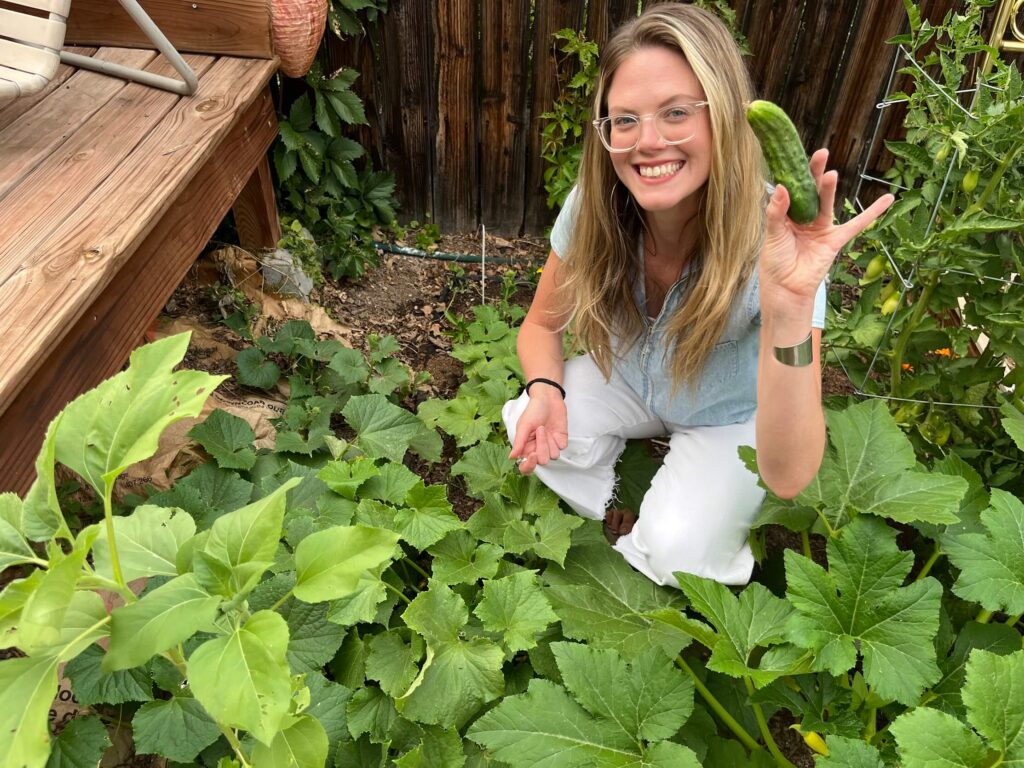
“There’s just something healing about seeing things grow,” she says as she surveys the fruits of her labor proudly. Later, she gives me a couple of squashes — including one the length of my forearm — to take home.
Christina is passionate about spreading the word that home gardening can be accessible, affordable, and deeply satisfying. She says that home gardeners don’t have to spend a lot of money to grow their own food and create something beautiful. “See what you can do with things already in your closet or even in your trash before you throw them away,” she recommends.
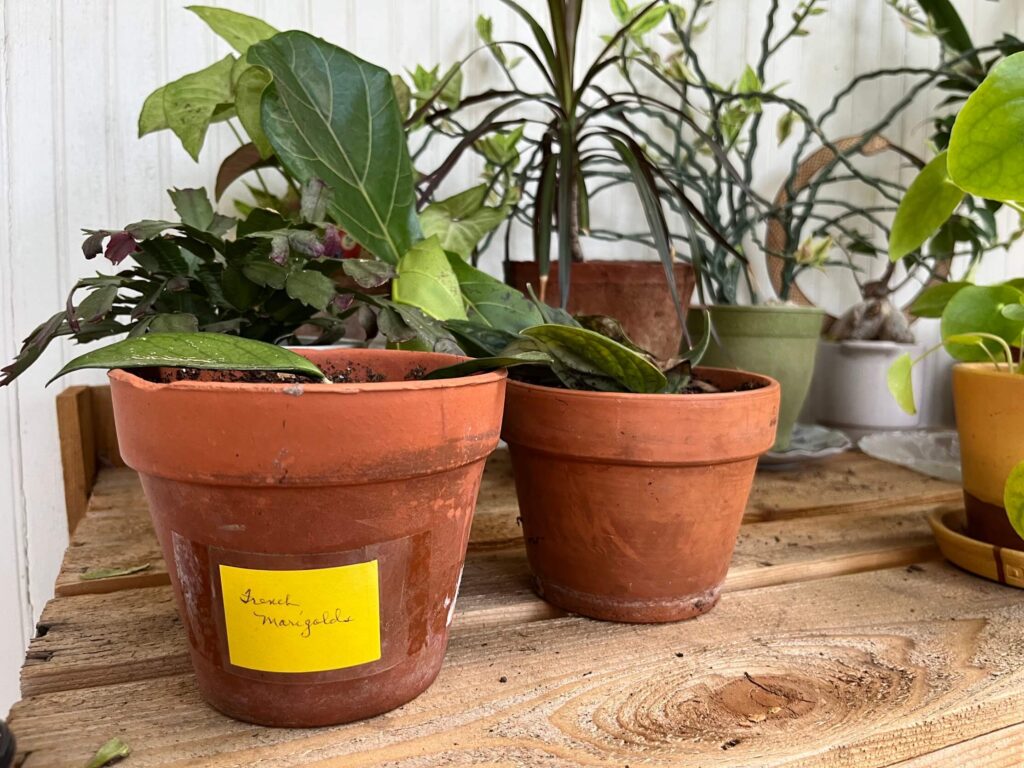
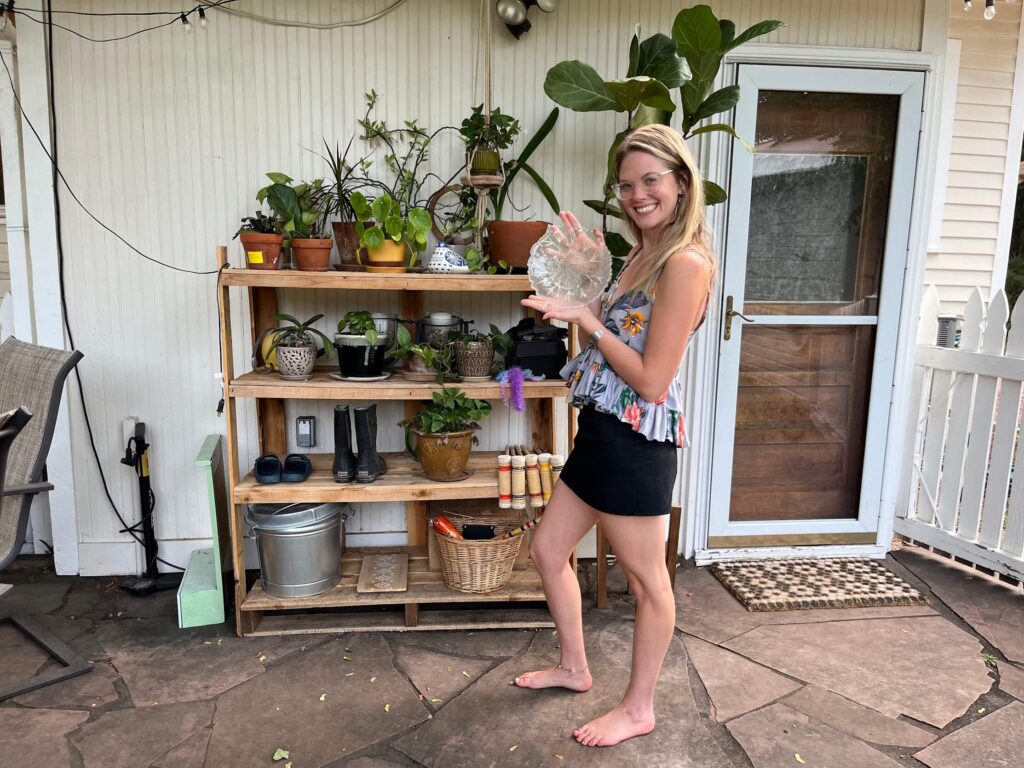
On the way back inside, Christina points out a large set of wooden shelves where she keeps outdoor shoes, potted plants, and gardening tools. “This pot? Yard sale,” she points to one, “That one thrifted.” The shelves themselves were a “side-of-the-road find,” she tells me.
Upon closer inspection, I notice one pot has a yellow sticky note taped to it with dainty script that reads French Marigolds. Christina tells me she found the pot at a thrift store. “I kept the sticky note on there,” she says. “That’s someone’s grandma who wrote that!”
Somehow, she manages to turn unwanted items into something magical and functional. “I just love junk,” she says, laughing. “There’s a vision — sometimes it just takes time for the vision to come to fruition.”

I love how this shows that a beautiful, productive garden doesn’t have to depend on buying everything new.
Repurposing milk jugs, cardboard, old containers, thrifted pots, and even a headboard makes the garden feel much more personal while also cutting down on waste.
The idea of treating gardening as an ongoing experiment—learning from what fails and trying different conditions next time—was a great takeaway too.
Sustainability feels much more achievable when it’s approached with this kind of creativity and resourcefulness.