

Note that if you purchase something via one of our links, including Amazon, we may earn a small commission.
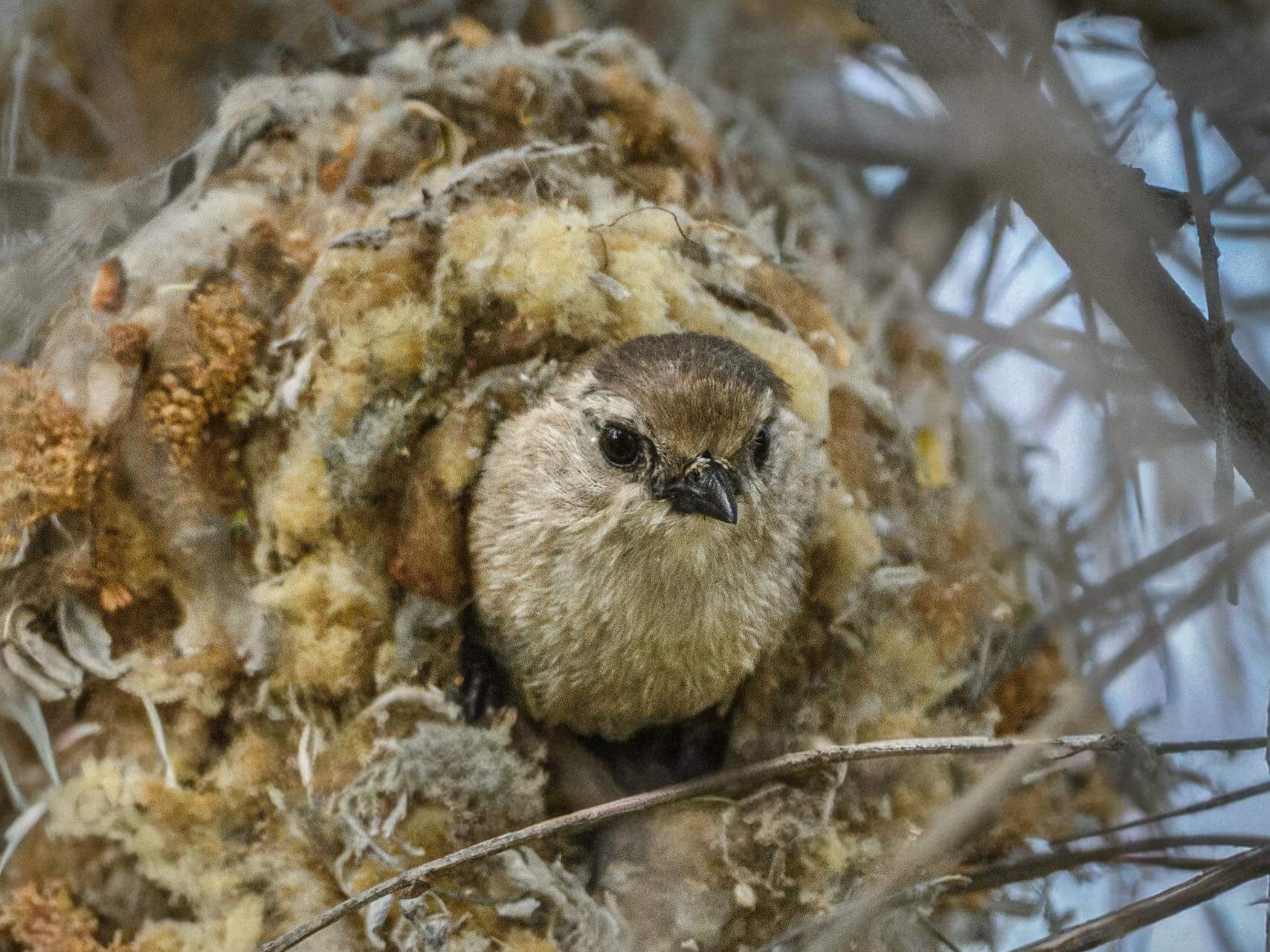
A glimpse into the complex social world of Bushtits.
Among Bushtits, a fight over a nest can end in an unlikely truce.
Usually, the intruder is chased away, or the original pair loses their nest. But occasionally, neither side wins; the intruder stays, and the former rivals begin sharing the work of raising the young.
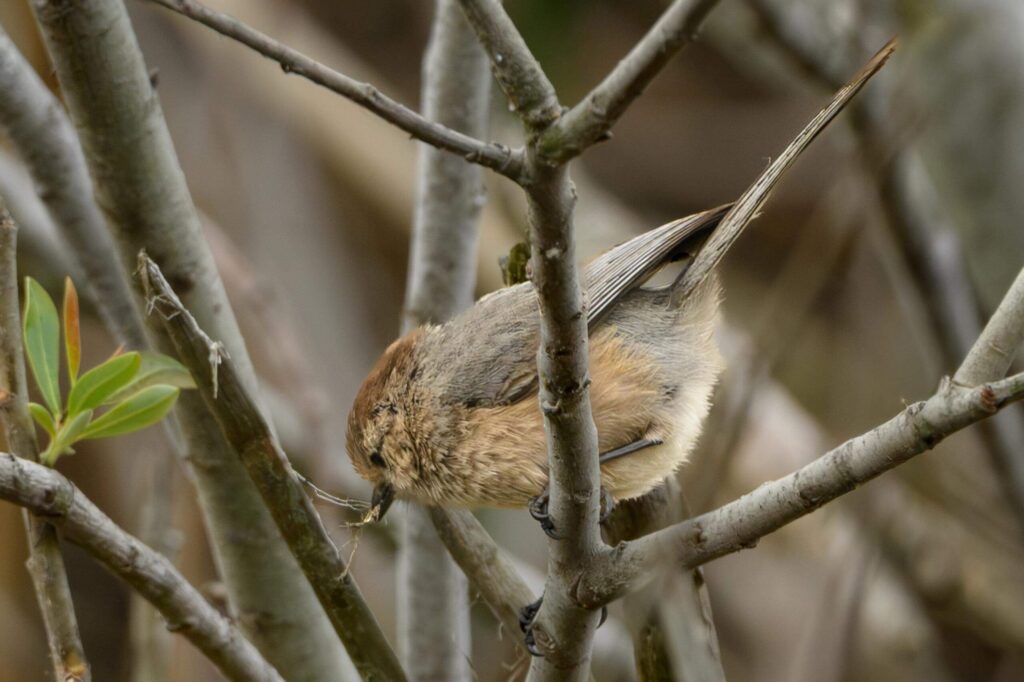
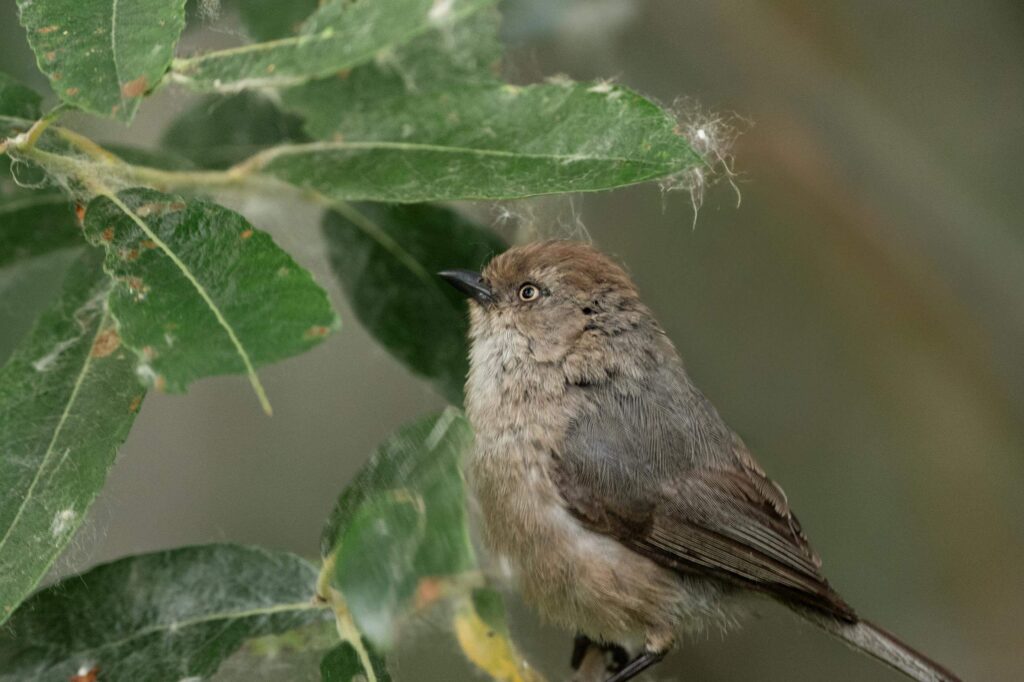
These contests can be surprisingly spirited. Ornithologist Dr. Sarah Sloane once spotted an intruding male entering a nest while the resident male was away. When the bird returned, he flew in after the intruder. Though the two were hidden from view, the nest began to shake, and its walls bulged as they scuffled inside. Then both burst through the opening, one chasing the other.
So why would these featherweights suddenly become nestmates? Sloane, who has studied Bushtits for 40 years, first in Arizona’s Chiricahua Mountains and now in Portland, Oregon, says they still surprise her every season.
Her research suggests there is no single answer; circumstances shape what brings Bushtits together at a nest. In rainy Portland, where nesting materials are plentiful, additional Bushtits may become part of the nesting group through family ties or simple persistence. But in the drier Chiricahua Mountains, where materials are harder to come by, a nest may be costlier to build, making a finished one valuable enough to turn rivals into nestmates.
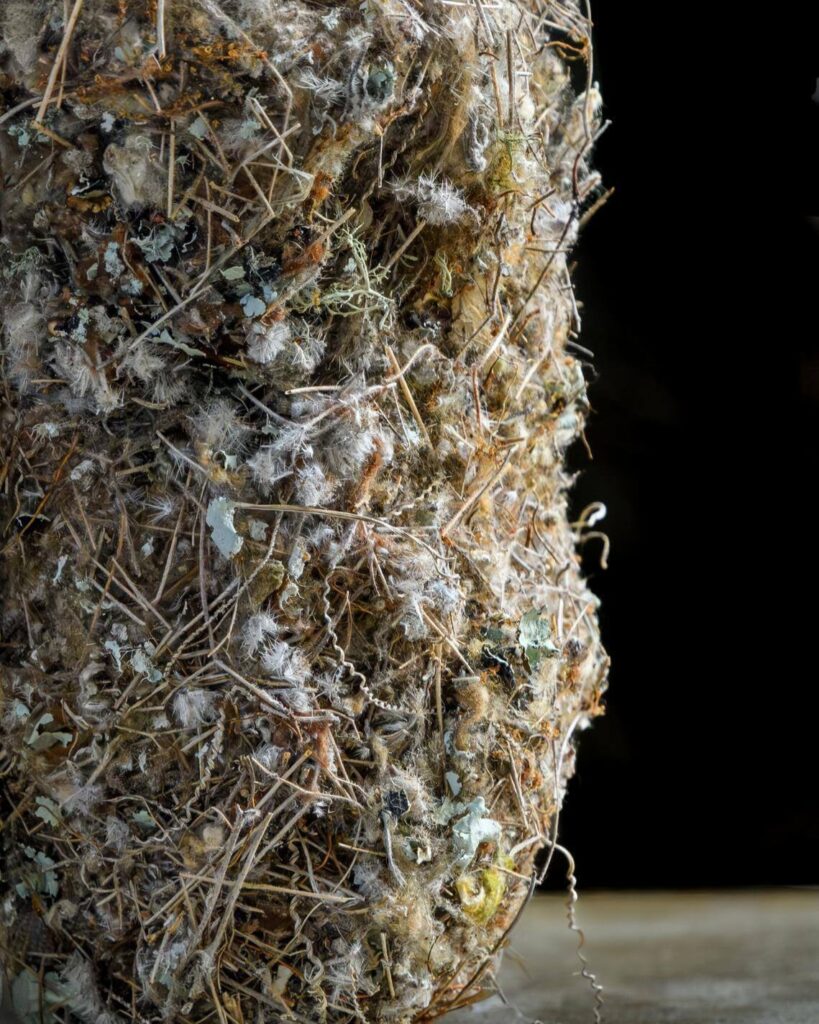

A Bushtit nest is nearly a foot long and looks like a knee-high sock. Across their range — from southwestern Canada through the western United States and Mexico to Guatemala — Bushtits nest in scrubland, open woodlands, parks, and gardens. They assemble their nests from thousands of bits of moss, lichen, plant fibers, and feathers, all bound together with strands of spider silk. Gathering these materials takes countless trips, and building a single nest can take weeks, sometimes more than a month.
The finished nest is a marvel of structural engineering, insulation, and design. Its spider-silk framework has enough give to stretch under the growing weight of the birds inside, yet also enough strength to hold the nest together. Plant down and feathers lining the walls and cup insulate the eggs and nestlings against heat and cold, while moss and lichen on the outside help conceal the nest from predators.
All that effort may help explain why some nest takeovers end with Bushtits working together. Whichever side loses faces the daunting prospect of starting from scratch, with the breeding season already under way. When neither side prevails, sharing resolves the stalemate and may even give the newcomer a chance to reproduce.
Not every extra bird comes looking for a fight. In Portland, where nesting supplies are abundant but females are in short supply, Sloane has documented sons returning to help their fathers feed their younger siblings. At some nests, an unmated male may chase off the father and remain with the female, while the displaced dad keeps returning with food. Eventually, all three may begin feeding the nestlings together. And sometimes, a male simply appears with food, perhaps drawn by begging nestlings, and keeps returning until he, too, is feeding alongside the pair.
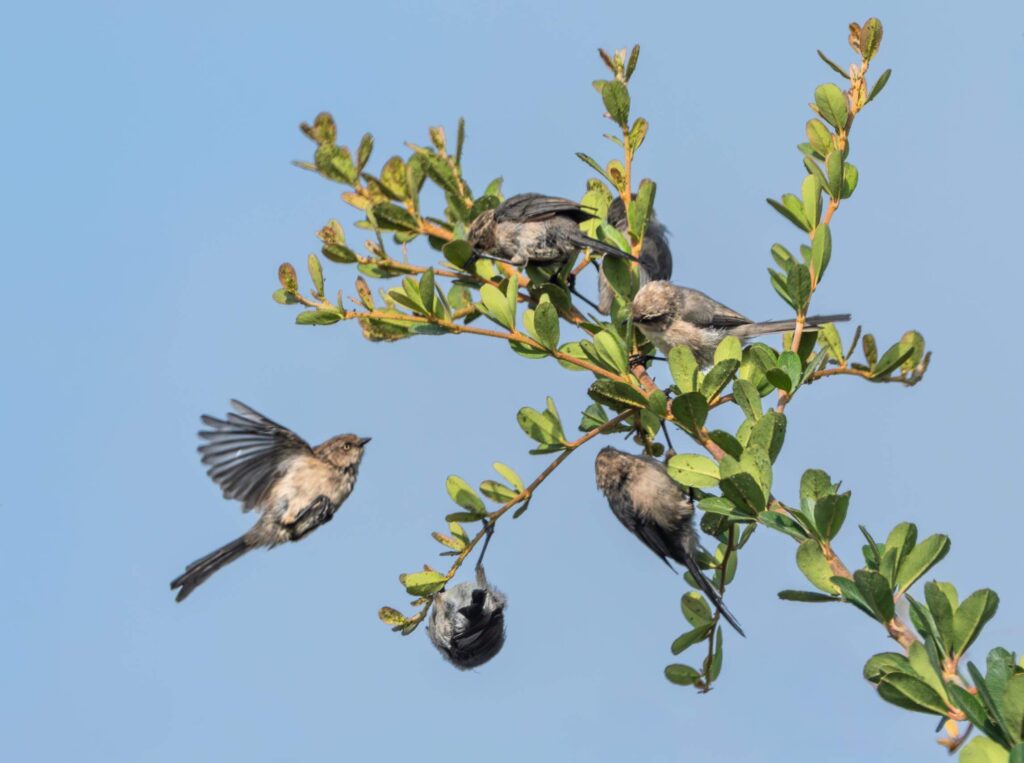
This behavioral flexibility may stem from the Bushtit’s social nature. They move in flocks, huddle together on cold nights, and nest near one another. For a species so accustomed to company, sharing a nest may not be as radical as it seems. Still, only about 6% of bird species breed cooperatively, and cases in which a takeover ends in teamwork are rarer still. At one such nest in Arizona, Sloane watched two males and a female perch on the same branch, each carrying food for the nestlings and waiting its turn to enter.
In time, these unusual arrangements settle into the rhythm of raising young. During the roughly two weeks between hatching and fledging, a Bushtit nest comes alive with hungry nestlings jostling and begging for food. As fledging nears, it rocks to the beat of strengthening wings. And if all goes well, a new generation of Bushtits will soon fly out of the nest and into the busy, chattering life of a Bushtit flock.
What You Can Do
Stock a Supply Store for Nest-Builders
Bushtits might be more welcome guests in your yard than spiders, but their amazing nests depend on something spiders make: silk. Many small birds, including hummingbirds, kinglets, gnatcatchers, and vireos, also use spider silk and webs to hold their nests together, attach them to branches, and keep them strong yet flexible.

This fall, you can turn a small part of your yard into a supply store for birds building nests next spring:
- Leave some leaves intact. Keep them under shrubs or in garden beds, where they provide winter shelter for spiders and insects that birds depend on. Rake leaves off your lawn into these spots, and if you mulch your leaves, leave some intact to break down naturally. The Xerces Society has more tips in its Leave the Leaves guide.
- Make space for the silk-makers. Don’t remove every web from shrubs and trees. Leave some sheltered spots undisturbed, and avoid using pesticides that harm the spiders and insects birds need.
- Clean up carefully in spring. Leave leaf litter and other natural materials in place, wait to do major pruning until after nesting season, and always check for active nests before trimming. If you find a nest with young birds, give it as much undisturbed space as possible until they fledge.
- Skip the nesting-material dispenser. Things like human hair, dryer lint, yarn, and string can entangle birds or create other hazards. Birds are good at finding what they need; the safest way to help is to preserve the natural materials already in your yard. Learn more from Cornell’s NestWatch guide to nesting materials.
Support the Long View
It can take years to observe and understand rare behaviors. We know more about how Bushtits interact because Sarah Sloane has studied them for decades. Long-term research like hers helps scientists spot patterns from isolated events and provides them a baseline for recognizing change. Sloane’s study of the Pacific Northwest’s 2021 heat wave documented the extraordinary toll on Bushtit nestlings — and showed what increasingly extreme heat could mean for breeding birds. (Read the abstract.) You can help by:
- Donating to field research. The Association of Field Ornithologists awards grants specifically supporting field studies of birds.
- Supporting a field station. The Organization of Biological Field Stations can help you find research stations conducting sustained, place-based work.
- Contributing observations. Volunteers can add to long-term records of breeding birds through Cornell’s NestWatch.

Spiderwebs are now a set decoration around here – thanks to you! Well, within reason…i’m wondering where the little gals and guys hide their nests, b/c we have lots of bushtits but never have seen their nests – high up in oaks? Love your posts and outstanding, riveting photos – keep ’em coming!