
Note that if you purchase something via one of our links, including Amazon, we may earn a small commission.
Fall puts black bears on the prowl to beef up — seeking out roughly 22,000 calories a day — before settling into a long winter sleep.
Black bears might spend the bulk of the chilly season sleeping, but by the time winter rolls around, these mammals have earned some rest. After all, they’ve spent late summer and early fall roaming up to 100 km (60 miles) outside of their usual territories, spending up to 20 hours every day foraging for food. That’s hard work! Here are five more factoids to know about ursus americanus: the iconic black bear.
It’s Chow Time
Black bears were vegan before it was cool to be vegan. Typically, about 90% of a bear’s diet consists of plants, fruits, nuts, and seeds. In early spring, they stick to salad — grasses, horsetails, sedges, and skunk cabbage. Everyone needs a little protein, though, so bears will rip apart rotting logs to get at the insects inside. In summer, black bears alter their diet to take advantage of wild berry crops. They’ll also eat fish, frogs, eggs, birds, small mammals, and sometimes carrion. By September, black bears are eating like it’s their job, feasting on high-fat, high-calorie meals of hazelnuts, acorns, and beechnuts. A telltale sign of a hungry, foraging bear? Claw marks on trees, especially beech trees. They might spend hours perched in a beech, pulling down the higher branches to get at the nuts. They leave behind a “bear’s nest,” a mass of broken branches that, to the untrained eye, could look like a nest built by a huge bird with no attention to detail.
Hit the Tay
Later in the fall, bears are ready to get down to the business of sleeping. They’re sufficiently hefty at this point; over the course of at least a month, they’ve gained about a kilogram (2.2 pounds) of weight per day on a diet of up to 20,000 calories per day — the equivalent of 35 Big Macs. (Who wouldn’t need a nap?) First, the bear digs a den, often under fallen logs, thick bunches of tree roots, or rock ledges. They’ll work for about 10 days, excavating as deep as 1.5 metres (about 5 feet) and lining the pit with leaves, lichen, grass, and rotten wood. Then, it’s time to snuggle up. During hibernation, a bear’s resting heart rate drops from about 45 beats per minute to as low as 10; its breathing slows to roughly one breath every 45 seconds. Deep in dreamland, a black bear burns about 4,000 calories per day, and loses at least 30% of its body mass, emerging in spring sleep-boggled and starving.
Mommy’s Tired
Hibernating bears don’t eat, defecate, or urinate for their entire slumber, but pregnant females do wake up to have their babies — usually in January or February — and then keep waking up periodically to (sleepily) nurse their offspring. Cubs are only about the size of a chipmunk when born, and are blind, deaf, and toothless. According to ancient folklore, bears were thought to give birth to shapeless blobs of flesh, so mothers had to literally lick their newborns until they became tiny, fully formed bears. This is not true – obviously — but, fun fact: it is where the expression “licked into shape” comes from. Another fun fact? All bears have the ability to internally reabsorb their own waste instead of excreting it, turning it into protein and water that their bodies can use. But mothers take this recycling one step further. They consume the waste of their offspring, which helps replenish the fluid they lose through nursing. It also keeps the den tidy. Well, tidier. Kids are messy.
Medical Marvels
Despite the fact that bears gain a massive amount of weight in a relatively short time, followed by a long period of inactivity — and a massive weight loss — they experience no ill health effects. Unlike humans, they don’t develop high cholesterol or diabetes because of the weight gain, and, during hibernation, they don’t suffer from heart failure, muscle wasting, or thrombosis. It’s also astounding that they safely go six months with no release of body waste; other hibernating mammals, such as groundhogs, get up to pee at least a few times during their slumber. All of this behaviour that flies in the face of basic science makes bears fascinating medical subjects. They seem to have solved almost all of the health problems that humans encounter, including heart disease, kidney disease, and osteoporosis. Lucky bears.
Smarter Than the Average Bears?
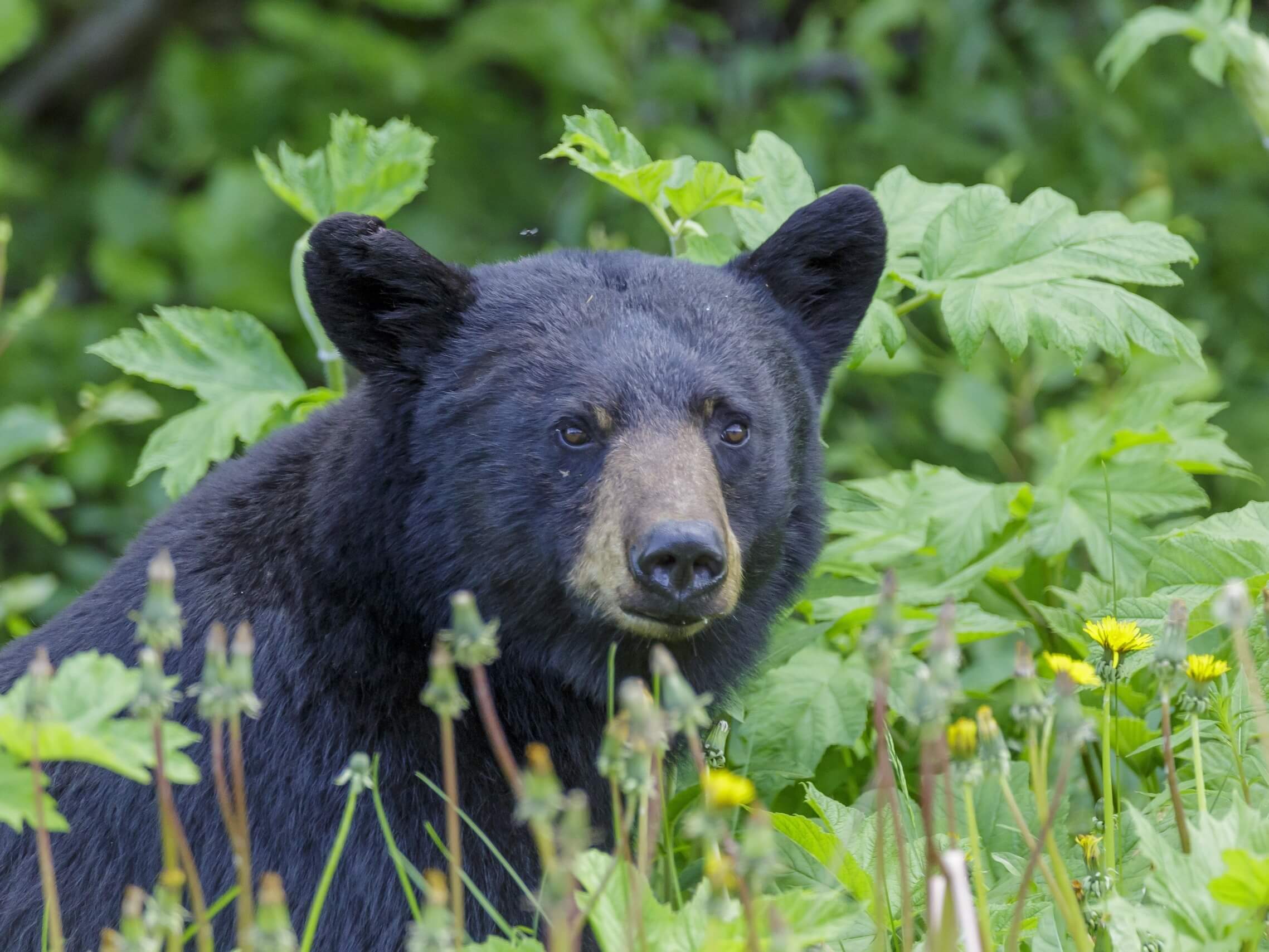
Despite their common name, not all black bears have black fur. Bears in heavily forested habitats are most likely to be black, while the bear populations in areas with open habitat — plains, for example — can include more individuals with brown, cinnamon, or even blonde fur. Experts believe this might be an adaptation to help the bears forage for longer periods of time without experiencing heat stress. Makes sense: we all know that wearing dark colours in the hot sun is a recipe for discomfort, at least in the summer. Blueberry picking is ruined!


Loved the story of facts about the bears, their diet, foraging, den building and hibernation.
Super great read!!