Note that if you purchase something via one of our links, including Amazon, we may earn a small commission.
Tautog is a beautiful white fish seasonally available on the East Coast starting in September and continuing through the fall. This recipe works nicely with other pan-seared fish varieties as well. In this recipe by Vanessa Seder, tautog is paired with roasted potatoes and a wonderful herb sauce.
Get out of your fish rut by trying a few new sustainable species!
Read Locals Are Fans of This Fall Fish to find out why tautog is a favorite among local fishermen and chefs on Martha's Vineyard.
SEO Title: Tautog Recipe: Complete Guide to Cooking This Delicious White Fish
Meta Description: Master this tautog recipe with expert tips for pan frying, baking, and seasoning. Learn to cook blackfish fillet like a Cape Cod chef.
Tautog Recipe: Mastering the Art of Cooking Blackfish
This versatile tautog recipe opens up a world of culinary possibilities for home cooks looking to expand their seafood repertoire. Known locally as blackfish, tautog offers a mild flavor that makes it an excellent choice for both novice and experienced fish cooks. The firm texture and subtle taste profile allow this East Coast favorite to shine in various preparations, from simple pan frying to more elaborate dishes featuring fresh herbs and complex sauces.
When selecting tautog for your recipe, look for fillets with clear, bright flesh and a fresh ocean scent. The fish begins to lose quality quickly after catch, so purchasing from reputable sources is paramount. Cape Cod fishermen often recommend cooking tautog within 24 hours of purchase for optimal flavor and texture. Store your blackfish fillet on ice and pat dry with paper towel before cooking to ensure the best results.
The beauty of working with tautog lies in its adaptability. Unlike more delicate white fish varieties, tautog holds up well to various cooking methods. Whether you choose to bake, fry, or stir into a hearty fish chowder, this robust fish maintains its structure and delivers consistent results. Many coastal restaurants feature tautog as a sustainable alternative to other fish, making it both an environmentally conscious and delicious choice.
The Role of Lemon Juice in Fish Cookery
Lemon juice serves multiple purposes when preparing tautog and other fish varieties. The natural acidity helps break down proteins, creating a more tender final dish while brightening the overall flavor profile. A small amount of fresh lemon juice added during cooking prevents the fish from becoming overly rich and provides a clean finish that complements the mild flavor of tautog.
Professional chefs often recommend adding lemon juice at different stages of cooking. A light sprinkle on raw fillets before seasoning with salt and pepper helps remove any residual fishy odors. During the cooking process, a few drops in the pan create steam that keeps the fish moist. Finally, a squeeze of fresh lemon juice just before serving adds brightness and acidity that balances richer accompaniments like butter sauces or herb-crusted preparations.
The timing of lemon juice application matters significantly. Adding too much too early can actually “cook” the fish through acid, similar to ceviche preparation. For optimal results, use lemon juice sparingly during cooking and reserve the majority for finishing touches. This approach preserves the delicate texture of tautog while maximizing the citrus's flavor-enhancing properties.
Enhancing Texture with Panko Bread Crumbs
Panko bread crumbs offer superior texture compared to traditional bread crumbs when preparing crusted fish dishes. These Japanese-style crumbs create an exceptionally crispy exterior that contrasts beautifully with the tender flesh of tautog. The larger, irregular pieces of panko allow for better air circulation during cooking, resulting in a lighter, more appealing crust.
Creating a panko-crusted tautog requires careful technique. Begin by patting the fish dry with paper towel, then season with salt and pepper to taste. Set up a three-stage breading station: flour, beaten egg, and seasoned panko bread crumbs. The flour helps the egg adhere, while the egg creates a binding layer for the panko. For added flavor, mix fresh herbs like parsley, dill, or chives into the panko before coating.
When pan frying panko-crusted tautog, use a cast iron skillet over medium heat with enough olive oil to coat the bottom. The key is maintaining consistent temperature – too hot and the crumbs burn before the fish cooks through, too cool and you'll end up with soggy coating. Cook the crusted side first, allowing the panko to develop a golden-brown color before gently flipping with a wide spatula.
Building Flavor with Fish Stock
Fish stock forms the foundation of many sophisticated seafood dishes and can transform a simple tautog recipe into restaurant-quality fare. Quality fish stock adds depth without overwhelming the delicate flavor of tautog, making it an ideal cooking medium for poaching or as a base for accompanying sauces. Unlike heavy cream sauces, fish stock maintains the clean, oceanic character that makes tautog so appealing.
Creating fish stock at home requires only basic ingredients: fish bones, aromatics like onions and celery, herbs such as thyme and parsley, and water. Simmer these components in a small saucepan for 30-45 minutes, then strain for a clear, flavorful liquid. When using store-bought stock, choose low-sodium varieties to maintain control over the final dish's salt content.
Fish stock works particularly well when baking tautog en papillote or in foil packets. Pour a small amount over seasoned fillets along with vegetables and herbs, then seal tightly before baking. The steam created by the stock keeps the fish moist while infusing subtle flavor throughout. This gentle cooking method preserves tautog's delicate texture while building complex tastes.
Comparing Tautog to Sea Bass and Other Fish
While tautog and sea bass share some similarities as white fish options, each brings distinct characteristics to the kitchen. Sea bass typically offers a slightly firmer texture and more pronounced flavor, making it suitable for grilling and robust preparations. Tautog, with its milder taste and more delicate flesh, excels in subtle preparations where the fish's natural qualities can shine.
Both fish work well with similar seasonings and cooking methods, though tautog requires gentler handling. When substituting tautog for sea bass in recipes, reduce cooking times slightly and handle more carefully during flipping or moving. The reward for this extra attention is a more refined flavor that pairs beautifully with delicate accompaniments like crab meat or light herb sauces.
Other fish that work well as substitutes include cod, with its similar flaking texture, and various local white fish species. The key is matching cooking methods to fish characteristics – delicate preparations for tender fish like tautog, more aggressive techniques for sturdier varieties. This understanding allows home cooks to adapt recipes based on seasonal availability and personal preferences.
Understanding these distinctions helps create better dishes while supporting sustainable fishing practices. Tautog's seasonal availability makes it a special treat worth celebrating when fresh catches arrive at local markets, bringing the taste of Cape Cod waters directly to your plate.
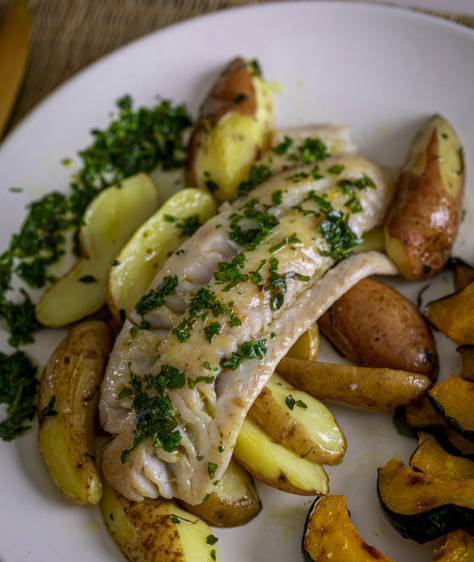
RECIPE: Pan-Seared Tautog with Salsa Verde and Roasted Fingerlings
- Yield: Serves 4
Ingredients
For the roasted potatoes:
- 1 pound fingerling potatoes
- 3 sprigs fresh rosemary
- 4 sprigs fresh thyme
- 3 tablespoons extra virgin olive oil
- Sea salt
- Freshly ground black pepper
For the salsa verde:
- 2 medium cloves garlic
- 1 teaspoon sea salt
- 1 teaspoon orange zest
- 1 teaspoon lemon zest
- 2 tablespoons fresh lemon juice
- 1/2 cup extra virgin olive oil
- 1/2 cup loosely packed chopped fresh flat-leaf parsley
- 1/2 cup loosely packed chopped fresh basil
- Freshly ground black pepper
For the tautog:
- 4 tautog fillets
- Sea salt
- Freshly ground black pepper
- 3 tablespoons extra virgin olive oil
Instructions
For the potatoes:
- Preheat the oven to 425°F.
- Halve the potatoes and place on a parchment-lined baking sheet. Add the sprigs of rosemary, thyme, olive oil, salt and pepper, and toss to combine. Spread out on the baking sheet and place in the oven.
- Roast the potatoes, tossing once or twice during cooking, until the potatoes are cooked through and golden brown in parts, about 45 minutes.
For the salsa verde:
- Meanwhile, place the garlic cloves on a cutting board. Using the side of a chef’s knife, press to crush the garlic. Add the salt to the garlic and continue to chop and press with the side of the knife until a paste forms.
- Transfer the salted garlic to a bowl along with the orange zest, lemon zest, lemon juice, and olive oil. Stir in the parsley and basil, and season to taste with pepper. Set aside.
For the tautog:
- Remove the fish from the refrigerator and transfer plate lined with paper towel. Let stand for 15 minutes at room temperature. Before frying, make sure the surface of the fish is very dry, using paper towels to wipe up any additional moisture. Season both sides of the fish with salt and pepper.
- Heat a large 12-inch cast-iron or non-stick skillet over medium-high heat. Add the oil and heat until it shimmers.
- Carefully add the tautog fish to the skillet, presentation side down. Lightly press down on the fish to create a nice sear, do not move the fish. Cook until golden brown on the surface, 4 to 5 minutes. Use a fish spatula to carefully flip the fish and continue to cook 2 to 3 minutes until just opaque.